Reasons Behind the French Authorities’ Insistence on Disavowing Ségolène Royal’s Visit to Algeria?
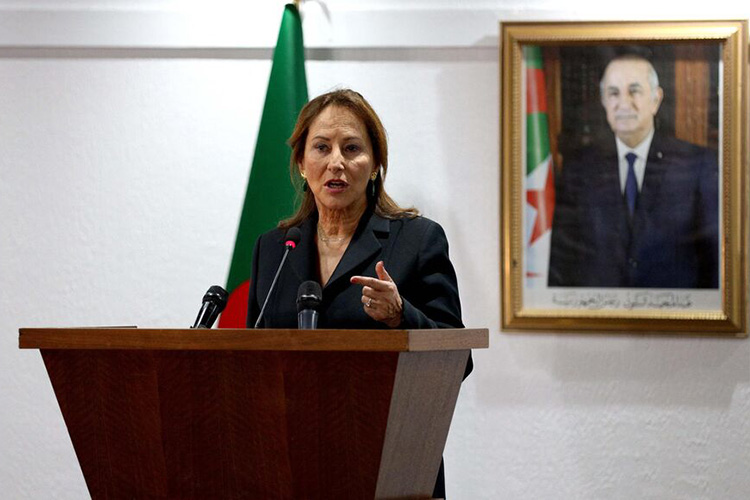
Since the arrival of Ségolène Royal, president of the “France-Algeria Association,” in Algiers, French officials have been careful to emphasise that the French authorities did not authorise her visit.
This was reiterated by both Foreign Minister Jean-Noël Barrot and Interior Minister Laurent Nuñez, raising several questions, especially given that the association headed by Ségolène Royal is not just an ordinary association, but an institution with far-reaching implications.
The France-Algeria Association was founded by General de Gaulle one year after Algeria’s independence on June 20, 1963. It aimed to maintain ties between France and newly independent Algeria. The association’s founders, including former French Justice Minister Edmond Michelet, believed that Algerian independence did not mean severing ties with France, but rather the beginning of a new era based on mutual respect and appreciation.
Among the prominent figures behind the idea were Germaine Tillion, Geneviève de Gaulle-Anthonioz, and the renowned French writer François Mauriac, as well as journalists like Jean Daniel, founder of Le Nouvel Observateur, and French military officers who criticised the actions of the French occupation army in Algeria.
Among the presidents who have served in Algeria are Edmond Michelet, Minister of Justice in de Gaulle’s government from 1963 to 1967; Pierre Joxe (who held the portfolios of Defence and the Interior Ministries); Jean-Pierre Chevènement (who also held the portfolios of Defence and the Interior Ministries); and Arnaud Montebourg, who served as Minister of the Economy. The current president was the Socialist Party’s candidate in the 2007 presidential election; Royal lost to Nicolas Sarkozy. She has held several ministerial portfolios, including Education, Environment, and Family.
However, despite French officials’ insistence that Royal’s visit to Algeria was not official, they readily embraced some of its outcomes. Chief among these was the former Socialist presidential candidate’s success in persuading Algerian authorities to respond to the demands of the family of Christophe Gleizes, a French citizen sentenced to seven years in prison in Algeria, by transferring him to a prison closer to the capital Algiers, where he can have visits. This came after Algerian authorities expressed anger at depriving the Algerian diplomat of visits after he was unjustly imprisoned in France.
Commenting on the French officials’ handling of Royal’s visit, Redouane Bouhidel, a professor of political science at the University of Algiers, believes that the visit of the head of the Algeria-France Association at this time carries more than one dimension. He explained that “Ségolène Royal was a candidate in the French presidential elections and remains a potential candidate in the upcoming presidential elections, which gives her visit a different character, even though she is not part of the government and is not a replacement for the Ministry of Foreign Affairs.”
The political analyst told Echorouk that the emphasis on the unofficial nature of the former French minister’s visit to Algeria “stems solely from the legal and institutional distinction. The association headed by Royal is non-governmental, while official state representatives are the president, the foreign minister, ambassadors, and consular missions. Even if headed by politicians, associations and organisations remain unofficial bodies.”
Redouane Bouhidel explains: “When the French media, quoting officials, say that Ségolène Royal does not represent the state, they are referring to the institutional distinction: she is an association, not an official authority, and therefore cannot exercise official powers or institutions,” even though “this visit reflects a desire among a large segment of the French population to revive the strained bilateral relations.”
Royal’s stances on the crisis between the two countries, which differ significantly from those of French state institutions, particularly the presidency, also contributed to French officials’ reluctance to participate in the visit. “The statements made by the Algerian guest put French officials in a very awkward position, especially since she addressed highly sensitive issues, such as the historical memory file and war crimes from 1830 to 1962, as well as several economic and immigration matters.”
In this context, a professor of political science at the University of Algiers emphasises the symbolic significance of the “France-Algeria Association” and the personality of its president. These are factors that “cannot be underestimated. The president’s role can be summarised as one of soft diplomacy; she acts as a bridge between civil society in both countries, facilitating dialogue and serving as a platform for understanding and addressing the sensitive issue of historical memory, without imposing any commitments on the Macron government.”
Redouane Bouhidel concluded that the association, headed by Ségolène Royal, “is the voice of French public opinion that supports cooperation between the two countries. Some of the figures who have headed the association in the past have a political history, even if they do not officially represent France and do not have a mandate from the government.”