Rezzag-Bara: “National Human Rights’ Council Won’t Yield To Leverage”

-
-
453
-
0
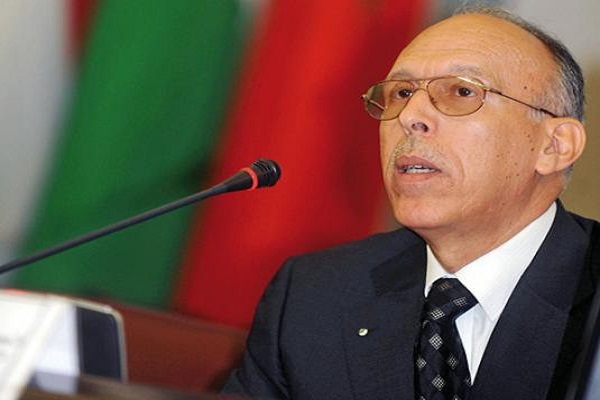
Shortly before the official installation of the National Council of Human Rights, the guest of the morning program of the editorial staff of channel 3 of the Algerian Radio, namely Mr. Kamal Rezzag-Bara was invited on the air to comment on certain of the prerogatives with which this new CNDH council will henceforth be endowed.
For this Adviser to the Presidency of the Republic, the creation of this body represents the culmination of a long process, which he recalls had passed from the national tragedy of the 90s, marked by the existence then of a human Rights’ Observatory, which he had to preside over at that time, followed by that of Civil Concord, and then of National Reconciliation.
After these various phases, he added, and in a bid to foster “a more participative and inclusive governance”, the last constitutional revision extended it to constitutional rights and freedoms by endowing this new human rights’ Council with large prerogatives in conformity with the norms of the United Nations.
The National Human Rights Council, he said, is an independent body under the auspices of the head of state as the latter is the country’s first magistrate.
“It is an independent body,” he insisted, endowed with complete autonomy, both in terms of its management and its functioning.
He further stated that the scope of the CNDH is very broad in that it has a right of self-referral allowing it to issue “at its own initiative” or “at the request of the Government or of the Parliament “, opinions, recommendations or proposals on human rights matters.
Mr Rezzag-Bara also pointed out that the Council, which had a mandate to mediate and visit places of detention, is also empowered to carry out investigations, adding that the latter plays the role of “sentinel” to ensure the respect of human rights and their promotion.
Alongside other national and foreign groups working for the protection of human rights, he said that this structure, as “an advisory body”, he said, will convey to the relevant authorities, “in particular judicial” its observations, Its findings and its recommendations, so that the executive or judicial branches could “take the appropriate preventive and repressive measures, if any”.