Ségolène Royal to Visit Algeria This Monday
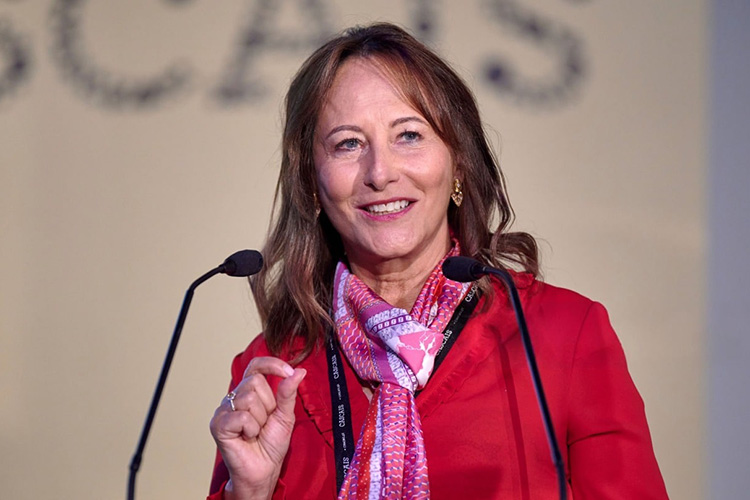
Amid the escalating political and diplomatic crisis between Algeria and France, former French presidential candidate and head of the “France-Algeria” association, Ségolène Royal, is visiting Algeria here on Monday for a mission that appears almost impossible: to de-escalate tensions between the two countries in one of the most serious crises that hit bilateral relations in decades.
On the eve of her visit to Algeria, Ségolène Royal tweeted on her X platform account: “We owe reconciliation to the youth on both sides of the Mediterranean, between France and Algeria, the largest country on the African continent, to build successful projects in productive sectors with a promising future. I will be there on Monday to listen and build something positive.” However, she did not provide any details about her program, such as whether she would be meeting with government officials, politicians, MPs or others!
The visit of the former French minister comes just two days after the Algerian Foreign Ministry summoned the French ambassy’s chargé d’affaires in Algiers, Gilles Bourbao, to protest a television program broadcast last Thursday by France 2, which included insults and provocations against symbols of sensitive institutions in the Algerian state.
Ségolène Royal is among the French figures who have not been involved in any offence against Algeria. Her positions have always been honourable when it comes to Franco-Algerian relations, and she has consistently countered the attacks and provocations of the right wing and far right, who have made targeting Algeria an electoral platform. However, her visit comes at a very sensitive time, caused by the French side, which seems to tend to create crises whenever it senses a move towards de-escalation. Will Ségolène Royal’s visit contribute anything new to this de-escalation, or will it be merely a protocol visit?
Abdelwahab Benkhelif, a professor of political science at the University of Algiers, said that Ségolène Royal’s visit is “an attempt to mend the rift and bring the two countries closer through her anticipated meetings with some Algerian officials, especially given her positive stances towards Algeria and Algerians.”
The political analyst, speaking to Echorouk newspaper, believes that “the former presidential candidate’s stances will help her mend fences with Algeria. She has previously expressed her rejection of France’s occupation of Algeria, emphasising that colonisation severely harmed Algeria through the crimes committed. She has also criticised Paris’s policies over the past two years, which, as is well known, damaged relations with Algeria, and has consistently stressed the need to restore bilateral relationships”.
Abdelwahab Benkhelif did not rule out the possibility that Ségolène Royal’s visit would have positive results for bilateral relations, which have reached their lowest point in decades and should ideally be much better, given the social dimension (the Algerian community residing in France) and the geographical distance. He explained that the current crisis must be resolved through understandings between the Algerian and French authorities.
For his part, Redouane Bouhidel, a professor of political science at the University of Algiers, believes that Ségolène Royal’s visit, given her rise to political prominence, aims to “open an alternative channel of communication between Algeria and Paris, following the tension and escalation by France towards everything Algerian, in a highly charged context after the broadcast of a television program on a French public channel. This program contained insults, provocations, and misinformation, relying on individuals with no legitimate authority to slander and defame Algeria.”
According to the professor at the Institute of Political Studies, Ségolène Royal, who has previously criticized French President Emmanuel Macron for damaging relations between Algiers and Paris, is better positioned than others to play a role in de-escalating tensions, based on her conviction that the Élysée Palace “mismanaged the crisis in an attempt to divert the attention of the French public from internal failures.”