Summer Book : Ahlam Mosteghanemi, “Memory in the Flesh”

الشروق أونلاين
-
-
6183
-
0
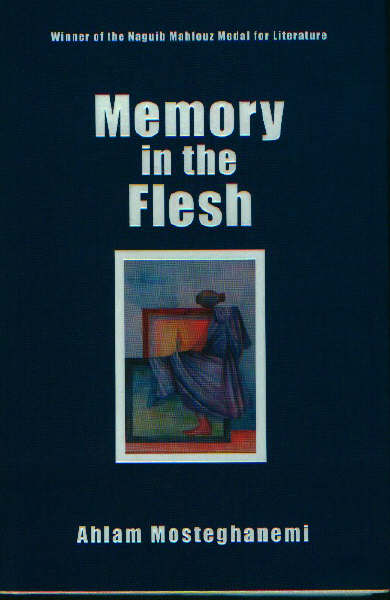
Memory in the Flesh is the first novel written by an Algerian woman in Arabic that has become a best seller. It was awarded the Naguib Mahfouz Medal for Literature in 1998 in recognition of its distinction. Ahlam Mosteghanemi is able to represent more than four decades of Algerian history as they interweave with the characters' trajectories and memories, from the revolt of 1945 in East Algeria to 1988 when, Khaled, the protagonist-narrator is writing a memoir of his in the form of the novel we read.
- Memory in the Flesh is dedicated to both the author’s militant father, who was engaged in the national liberation struggle, and to her literary father, the Francophone Algerian poet and novelist, Malek Haddad (1927-78), who decided after the independence of Algeria in 1962 not to write in a foreign language any more, and he ended up not writing at all. Haddad’s verbal traces in Memory in the Flesh, whether in allusions or intertextual references, attest to the literary kinship between the two writers. The issue of filiation and affiliation is a prominent motif in this novel.
- Ahlam Mosteghanemi articulates the drama of contemporary Algeria in the language denied to colonized Algerians. Her novel partakes in cultural decolonization of her country on two levels: it reappropriates Algerian history and presents the ravages of colonialism from the point of view of its victims; and also she repossesses the mother tongue by writing in the language of the victims with passion and mastery. But the novel is not only about the Algerian struggle against foreign domination, it is also about the complex post-independence problems facing the emerging nation. Ahlam Mosteghanemi exposes, with a postcolonial awareness, the disappointments, deviations and displacements of revolutionary ideals. However, she does not dwell on these social and political predicaments directly; she uses them as a narrative framework for the passionate affair between Khaled, the militant middle-aged Algerian, who turns to painting after losing his left arm in the struggle, and Hayat, the novelist and the young daughter of his friend and political leader. Hayat ends up marrying a character that embodies Algerian new bourgeois class, set on accumulating wealth and status symbols.
- Each character in this novel is realistically portrayed, and at the same time seems to stand for a type encountered in our contemporary world. Hassan, Khaled’s brother, presents an individualized case of demoralized Algerians who turn to religion for relief. Nasser, the heroine’s brother, rejects the marriage of convenience between his sister and the successful businessman. The Palestinian poet Ziad, who taught in Algeria and comes to visit his old friend Khaled in Paris, meets Hayat and a mutual fascination between the younger writers takes place, disturbing the older Khaled, before he learns of the tragic death of Ziad in Lebanon during the Israeli invasion in 1982.
- Building a nation proves to be not an easy task after one hundred and thirty years of colonialism, which undermined the native social structure. Disappointed intellectuals, like Khaled, look beyond national borders to make a niche for themselves abroad and gradually the dream of Algeria becomes a nightmare. Against this background, personal passions cannot be dissociated from national dramas: Hayat personifies an Algeria that is driven away from her revolutionary glory to its mundane concerns, and yet Mosteghanemi shows that beneath the formal breakdown the revolutionary spark is alive symbolized in the unfulfilled love between the protagonists.
- The novel is narrated in the first person by the male protagonist Khaled, in a lyrical stream-of-consciousness style, with frequent flashbacks. The protagonist knew Hayat, the heroine, when she was a child living in Tunis away from the war zone in Algeria. Entrusted once by Hayat’s father to him to complete the formalities for her civil registration, Khaled meets her again two decades later when she is a young woman adorned by traditional Algerian jewelry in the opening of an exhibit of his paintings in Paris. Her bracelet reminds him of his dead mother and the very identity of Hayat as the daughter of a militant martyr brings back to Khaled’s mind the past of Algeria and the present disappointments. Hayat, on the other hand, meets in Khaled someone who knew so intimately her father — whom she rarely met as he was involved in the clandestine struggle — and could tell her about him and what he was like, going beyond the national icon that he has become in the eyes of his family and his country. This cross-referencing of father-daughter and son-mother relations gives the work a psychoanalytic dimension. The return of Khaled to Constantine to participate in the fabulous wedding of Hayat to a nouveau riche points to the frustrations of a lover and an artist as well as indicating the disappointing path taken by Algeria. Khaled’s series of paintings of Constantine’s bridges seems to be more than a representation of natural landscapes; it is an effort to bridge psychological and political chasms. In contrast to his sensuous but not physical relationship with Hayat, Khaled’s relationship with Catherine, the French woman, demonstrates the encounter of sexual convenience, without the complexity of the multi-layered yearnig he harbors for the Algerian Hayat.