The 2022 Arab Opinion Index: Zionist Entity, FranceThreaten Algerians The Most
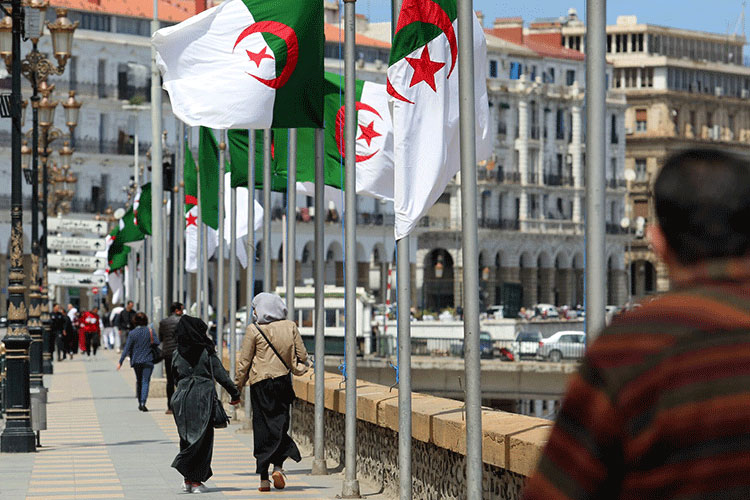
The majority of Algerian respondents to the 2022 Arab Opinion Index consider that the greatest threat to the country is the “Zionist entity” and France. They do not believe that there is a threat from USA, Iran or Turkey, but there is a threat from neighbouring Arab countries, while the majority also believe that the economic situation is good.
The Arab Center for Research and Policy Studies published the results of the Arab Opinion Index 2022, which monitors the attitudes of Arab citizens on political and economic issues, as well as their positions on regional issues.
The monitoring included 14 countries, in the Maghreb (Arab West), Algeria, Tunisia, Mauritania and Morocco, and in the Nile Valley, Egypt and Sudan, and in the Gulf are Saudi Arabia, Kuwait and Qatar, while in the Arab Mashreq (East), we find Lebanon, Palestine, Jordan and Iraq.
Regarding the question related to the most threatening countries to respondents’ home countries, 44% of Algerians say that the Zionist occupation state is the worst to Arab countries’ stability, followed by France with 42%, then America with 4%, and then other neighbouring or regional Arab states. Algerians do not believe there are threats from Iran, Turkey or Russia, not even armed organizations.
Peoples of Palestine, Egypt, Lebanon, Jordan and Sudan share with the Algerians that the Zionist entity is the source of the first threat to their countries. The largest percentage was in Palestine with 79%, then Lebanon with 53%.
It was remarkable in the results of the positions expressed by Moroccans that only 6% believe that the Zionist entity constitutes a source of threat to the Kingdom, on the other hand, they are under the illusion that the greatest threat to them by 22% comes from Arab countries.
In a close context, 89% of Algerians say that the Palestinian cause should remain the issue of all Arabs and not only a Palestinian issue, while 8% said that it should be a Palestinian issue only.
On the other side, Moroccans recorded the exception, as 59% (the least among Arabs) said that the Palestinian cause should be a cause for Palestinians only.
In international issues, specifically the Russian-Ukrainian war, 3% of Algerians say it is very justified, 2% say it is somewhat justified, and the majority, 94% either refuse to answer or say they do not know.
According to the 54-page index, 77% of Algerians confirm that the economic situation in Algeria is good, 1% think that it is very good, 19% say it is bad, and only 1% consider it very bad.
As for the extent to which social media is used to interact with political issues, half of Algerians do not interact with politicians, while the survey showed that 81% of Algerians do not follow the content of “influencers,” and only 5% permanently follow influencers.
The 2022 Arab Opinion Index is the eighth in a series of public opinion surveys across the Arab world conducted by the Arab Center for Research and Policy Studies in Doha, Qatar. It is based on the findings from face-to-face interviews conducted between June and December 2022 with 33,300 individual respondents in 14 Arab countries: Algeria, Egypt, Iraq, Jordan, Kuwait, Lebanon, Libya, Mauritania, Morocco, Palestine, Qatar, Saudi Arabia, Sudan, and Tunisia.
Sampling followed a randomized, stratified, multi-stage, self-weighted clustered approach, giving an overall margin of error between +/- 2 % and 3% for the individual country samples. The overall samples guarantee probability-proportional-to-
The Arab Opinion Index remains the largest public opinion survey in the Arab world. The fieldwork was carried out by an overall team of 920 individuals, equally balanced by gender, who conducted 72,000 hours of face-to-face interviews. The team covered a total of 890,000 kilometres (approximately 553,000 miles) across the population clusters sampled.