Western Sahara: Three UNSC Meetings To Be Hold This October
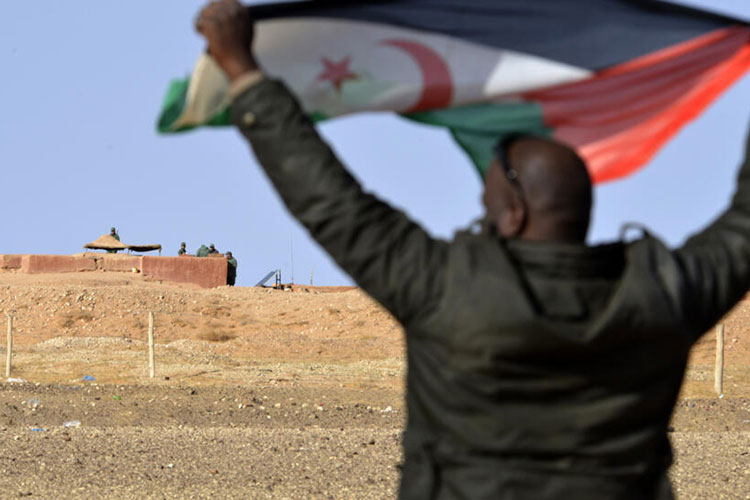
The United Nations Security Council devoted three meetings to the Western Sahara issue this October for the presentation of a report prepared by the Personal Envoy of the UN Secretary-General, the Swedish-Italian diplomat Staffan de Mistura, in addition to voting on the extension of the United Nations Mission for the Referendum in Western Sahara (MINURSO) by the UN Council in the last week of October.
These meetings are chaired by Switzerland, which holds the rotating presidency of the Security Council this October. The program revealed on Tuesday, calls for a meeting on October 10, where the UN Secretary-General’s Personal Envoy for Western Sahara, Staffan de Mistura, will inform the 15 member states of the Council, including Algeria, of the latest developments in this issue that lasted for more than four decades.
On October 16, the Special Representative of the Secretary-General in Western Sahara and Head of the United Nations Mission for the Referendum in Western Sahara (MINURSO), Russian Alexander Ivanko, will brief members of the UN Security Council and countries contributing to the UN mission’s budget on the situation in Western Sahara, as well as the obstacles facing the peacekeeping mission in carrying out its duties in the disputed region between the Moroccan regime and the Sahrawi Arab Republic.
The third meeting, scheduled for October 30, will be devoted, according to the decision of the Swiss presidency, to voting on the adoption of a new resolution to extend the mandate of the United Nations Mission for the Referendum in Western Sahara (MINURSO) for another year, noting that the party working on preparing the draft resolution is the United States of America, as the pen holder.
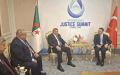
In preparation for the October deadlines, the Personal Envoy of the Secretary-General of the United Nations for Western Sahara began consultations with both parties to the Western Sahara crisis. De Mistura’s first meeting in this context was with the Minister of Foreign Affairs of the Moroccan regime, Nasser Bourita, in New York, on the sidelines of the 79th session of the United Nations General Assembly.
It was striking in this meeting that the representative of the Moroccan regime demanded respect for the “ceasefire” in Western Sahara, which caused the collapse of the UN resolution on the ceasefire signed in 1991, when the Moroccan army and gendarmerie forces attacked the Sahrawi youth who were peacefully protesting at the Guerguerat crossing in November 2020, demanding their legitimate rights to organize a self-determination referendum, based on the UN resolution, which the Alawite regime in Rabat retracted and put forward its internationally rejected project, the autonomy plan.
This Thursday, the UN envoy will travel to the Tindouf camps in southwestern Algeria, to meet with representatives of the Sahrawi Arab Republic, according to a statement issued by the Polisario Front, which spoke of “discussing ways to relaunch the peace process in occupied Western Sahara, supervised by the United Nations,” which “is facing a dead end” due to the positions of the Moroccan regime, which still refuses to comply with the UN decisions and regulations, most notably the resolution signed in 1991 to resolve the conflict, which established, as is known, the ceasefire decision that Morocco violated in November 2020, in addition to holding a referendum to determine the fate of the Sahrawi people, which has become more than urgent to save the Maghreb region from the scurge of security and political unrest.
The Swedish diplomat Staffan De Mistura may request a meeting with representatives of Algeria and Mauritania, as they are two neighbouring countries and observers in the Western Sahara issue, with other countries that are permanent members of the UN Security Council. The “round tables” became a past detail after the Algerian authorities confirmed they were no longer concerned with these meetings because they became the Moroccan regime’s tool to “buy time.”