Why Has the Return of the Algerian Ambassador to Paris Been Delayed?
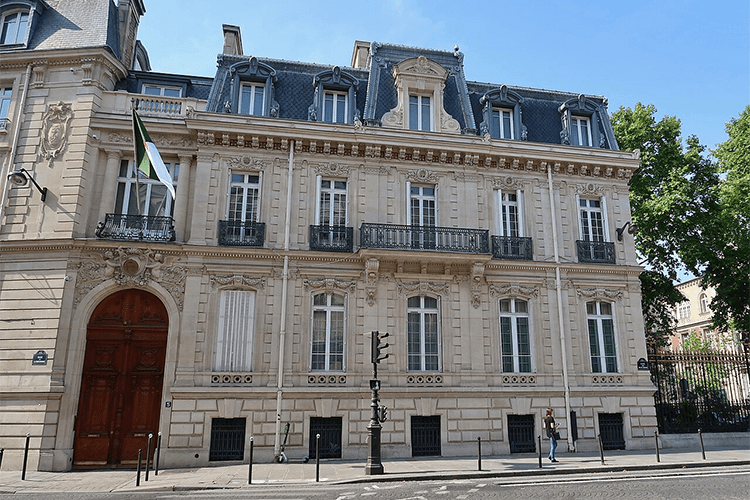
More than a month has passed since the French ambassador, Stéphane Romatet, returned to Algeria to resume his duties, while the Algerian Embassy in Paris has remained without an ambassador for nearly two years. This comes in the aftermath of a diplomatic and political crisis triggered by French President Emmanuel Macron’s openly perceived alignment with Morocco’s plan in the Western Sahara.
Many observers had believed that the resumption of official visits between officials from the two countries since last February — most recently the visit of Algeria’s Minister of Interior, Local Authorities and Transport, Saïd Sayoud, to France in response to an invitation from his French counterpart Laurent Nuñez, who had visited Algeria around four months earlier — signaled a gradual improvement in relations.
However, the Algerian side’s failure, at least so far, to appoint a new ambassador to France has raised a number of questions about the reasons behind this decision. The situation has created uncertainty among those who had been optimistic about the return of Algerian-French relations to normal, prompting them to reconsider the interpretations they had developed in recent weeks.
How should Algerian authorities’ apparent lack of urgency in appointing a new ambassador to Paris be understood, especially since communication channels between the two countries have resumed in several ministerial sectors? Is the delay simply a matter of timing and internal arrangements, particularly regarding the selection of the right person for the position after the previous ambassador was appointed to Algeria’s embassy in Portugal? Or does it reflect deeper issues within bilateral relations, with Algeria still dissatisfied with France’s position on unresolved matters?
In an attempt to explore possible explanations for this situation, Echorouk spoke with a retired diplomatic analyst who previously represented Algeria in France. He offered a measured assessment of an issue that has increasingly become a topic of discussion among political and diplomatic circles in both Algeria and Paris.
According to the former diplomat, there are two possible approaches to understanding Algeria’s position. The first is that the matter is related to taking time to find the right candidate for the post. The person appointed as ambassador to Paris must meet specific criteria set by decision-makers, given the importance of the position, which differs from that of Algerian diplomatic posts in many other countries around the world.
It should be noted that Algeria’s withdrawal of its ambassador Saïd Moussi from Paris did not occur at the same time as France’s withdrawal of its ambassador. Algeria’s move came nearly a year earlier, following President Emmanuel Macron’s support for Morocco’s autonomy plan for Western Sahara in July 2024. Meanwhile, France withdrew its ambassador, Stéphane Romatet, from Algeria in April 2025 over a separate dispute involving the expulsion of 12 French consular staff members in response to French provocations.
The second interpretation, according to the diplomatic expert, is based on the possibility that Algeria remains dissatisfied with the French side despite France sending three ministers on official missions in an effort to rebuild communication channels between the two capitals. These officials included Interior Minister Laurent Nuñez, French Minister Delegate for the Armed Forces Alice Rufo, and Justice Minister Gérald Moussa Darmanin.
Another diplomatic specialist who spoke to Echorouk noted that Algeria’s decision not to appoint a new ambassador to Paris sends a message to France: “Although bilateral relations have begun to move toward a more normal course in recent weeks through reciprocal official visits, they have not yet reached the level of normality that would justify appointing a new ambassador to an embassy that is unlike any other.”
Many Algerian demands remain unresolved on the French side, including both long-standing and recent issues. These include the continued detention of an Algerian consular employee — with even conditional release being refused — which Algeria considers contrary to diplomatic and consular norms.
Other unresolved matters concern the broader issue of historical memory, including France’s continued refusal to compensate victims of nuclear tests despite the existence of legal mechanisms to do so; its failure to assume responsibility for cleaning areas affected by nuclear and chemical tests from radioactive waste and contamination; its refusal to provide maps showing the locations of buried waste; as well as the issue of Algerian archives taken during the colonial period.