World Bank Prevails Investment In Algeria With False Reports

-
-
2003
-
1
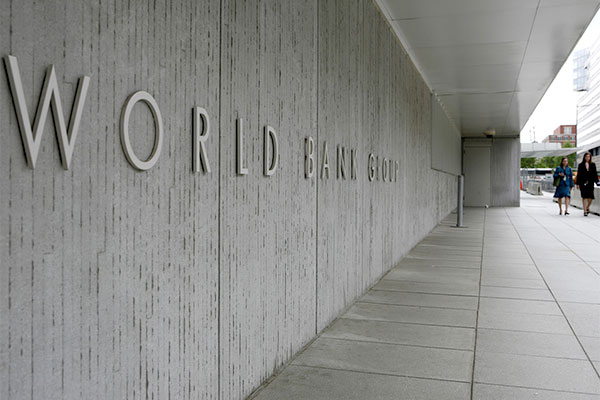
Algerian authorities informed the World Bank representatives about its protest against the reports that were published about the global economy and investment, which ranked Algeria in the bottom.
Algerian Government informed, through the Industry and Mines Ministry “Bretton Woods” of its dissatisfaction and said that the bank is biased against Algeria and described its reports as false and unfair, asserting in the text of its protest that these reports did not take into account the recent reforms that were made by Algeria to improve the investment climate.
Industry and Mines Minister, Abdessalam Bouchouareb, expressed, on the sidelines of his meeting with the new representative of the World Bank in Algeria, Demba Ba, deep regret for the classification of Algeria at the bottom of this organisation’s ranking, in terms of investment climate, despite the efforts that were made by the Algerian state, for the advancement and improvement of the business climate and encouraging investment, expressing regret for what he called the bias of the bank, despite the significant improvements that were achieved by Algeria in this area.
According to a statement that was issued by the Ministry of Industry and Mines, the two parties focused, during Thursday’s meeting, on the relationships between the Ministry of Industry and the World Bank, particularly with regard to the business environment and technical assistance on the Bank’s projects in Algeria.
To this regard, the Minister of Industry and Mines confirmed the importance that Algeria is giving to the presence of the representation of the World Bank in the country, and this in order to promote cooperation and allow this international financial institution to make a more accurate picture of Algeria, especially for the business climate.
Bouchoureb viewed the economic reforms that were initiated by Algeria since two years ago, especially those that are guaranteed by the new constitution, which took a final position regarding the national economy, which led to the new investment law, which was approved by the parliament chambers, which aims to introduce a new generation of economic reforms that aim to change the pattern of growth in the context of the policy of diversifying the economy that was adopted by the government.
This new law controlled the framework for foreign direct investment in a way that allows adjusting it with the position which is occupied by foreign capital in the national economy, by providing an effective framework that is able to eliminate the negative aspects that come from the country’s least useful activities, especially the import and purchase for the purpose of resale, and to re-examine and address the rules that make up the control of foreign direct investment in three directions, especially those attached to the transfer of some illegal rules, like investment promotion, and giving up some of the other rules, due to the impracticability and futility, as well as conditioning the foreign investment framework with the development of various other rules that have affected the systems and encourage investment.