15 GW in Nine Years: Algeria Bets Big on Solar Power
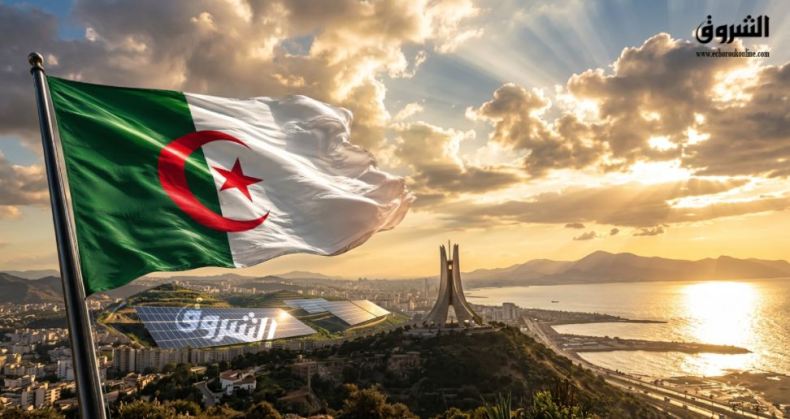
The government has already launched the first phase of the program, targeting 3.2 GW through the development of up to 20 utility-scale solar projects across 12 provinces.
The expansion is designed to meet rapidly growing domestic electricity demand, reduce carbon emissions, and free up larger volumes of natural gas for export. Industry stakeholders say achieving these objectives will require accelerating investment and transitioning to an Independent Power Producer (IPP) model, opening the electricity market to private investors and international developers.
Reflecting the growing momentum of the sector, the African Solar Industry Association (AFSIA) estimates that Algeria currently has 2.87 GW of solar capacity in the project pipeline, with 2.6 GW already under active construction. Despite this progress, solar power remains a relatively small contributor to the country’s electricity mix. Natural gas continues to dominate generation, producing around 95 terawatt-hours (TWh) annually, compared with just 0.87 TWh from solar, according to the latest available data.
State-owned utility Sonelgaz is supporting the expansion by identifying grid connection points for future power plants and advancing plans for an 800-kilometre “electricity highway” linking northern and southern Algeria. The transmission corridor is intended to strengthen the national grid while laying the foundation for future electricity exports through interconnections with neighbouring countries and European markets.
Energy experts note that Algeria’s transition differs from those of many other countries. Unlike fuel-importing economies, Algeria benefits from abundant domestic natural gas production, which is supplied locally at subsidized prices while generating significant export revenues. This has reduced the urgency of deploying renewable energy compared with several neighboring North African states.
According to Ghazi Koubaa, Projects Director at LONGi Middle East & North Africa (LONGi MENA), the country’s primary motivation is to preserve more natural gas for higher-value exports while preparing for potential carbon-related trade measures in European markets. He added that renewable energy deployment accelerates when investment frameworks are structured to meet the requirements of commercial lenders and bank financing.
Meanwhile, Boukhalfa Yaïci, Director of the Green Energy Cluster in Algeria, said the country is positioning itself to secure international financing, supported by recent amendments to Algeria’s finance law. He expects the projects that follow the initial 3.2 GW program to receive direct backing from international financial institutions and development partners.
From an investment perspective, Yacine Boulfrad, Technical Development Director at Scatec, argued that the sector’s greatest challenge lies not in technology but in the regulatory and investment environment. He identified five key pillars for success: stable government policies, bankable power purchase agreements (PPAs), competitive tenders, streamlined permitting processes, and strong public-private partnerships.
Boulfrad also pointed to the potential for highly competitive electricity pricing. He noted that Scatec has helped reduce solar electricity tariffs in Tunisia to below US$0.03 per kilowatt-hour, adding that Algeria could achieve similar—or even lower—prices by fully embracing the IPP model and moving away from the traditional Engineering, Procurement and Construction (EPC) approach, under which the government finances and owns projects. Developers, he said, are now awaiting clear government announcements that provide long-term visibility on investment rules and project guarantees.