300 Historians And Researchers Support Holding An Anti-Colonial Forum
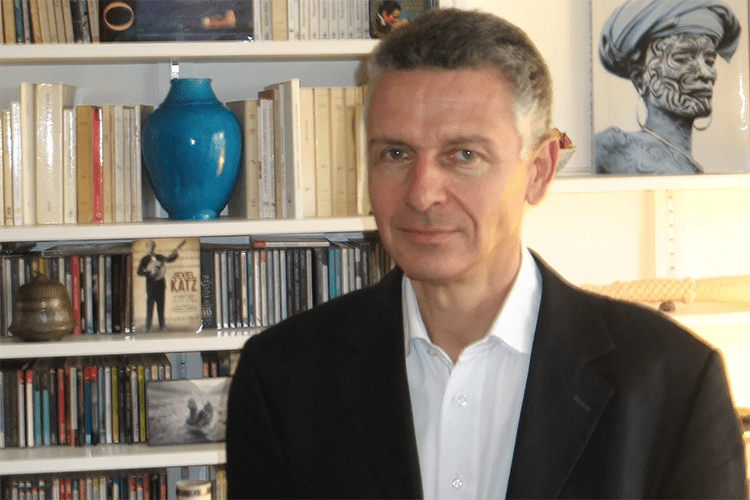
French historian Olivier Le Cour Grandmaison, known for his criticisms of colonialism and specifically French colonialism, has issued a call for the establishment of an anti-colonial forum. This initiative is directed toward activists and those involved in the struggle against colonialism, led by researchers and historians demanding the criminalization of brutal occupation practices.
The call was made via the anti-colonial historian’s account on the “Facebook” platform on Wednesday, and the initiative received approximately 300 endorsing signatures. These included academics, researchers, lawyers, anti-racism and decolonization activists, in addition to trade union activists.
According to the post, the historian started from the massacres committed by French colonialism in Algeria from its beginning until independence. He specifically mentioned General Bugeaud’s massacres immediately following the occupation of Algeria, which were practices that extended, as he said, over 132 years, causing the loss of hundreds of thousands of billions, not to mention the loss of many innocent lives.
The historian states in the post that the massacres of the French occupation did not stop at the bloody events of May 8, 1945, in Sétif, Guelma, and Kherrata, but even extended to the “humanitarian catastrophe” that occurred at the end of the liberation revolution or what the French call (the Algerian War), referring to the massacres of October 17, 1961, in the French capital near the Seine River.
These had been preceded by other massacres in Indochina, which also left hundreds of millions of victims at the hands of the French army as well.
Le Cour Grandmaison also paused at the events in Madagascar following the outbreak of the 1947 uprising, which left horrific massacres where the number of victims reached tens of thousands. This was also the case in Haiti, Africa, Asia, Kanaky (New Caledonia), French Polynesia, the Antilles, Guyana, and various territories occupied before 1885…
He said that “France, the colonial state, carried out horrific acts of violence, yesterday and today as well. Colonialism also destroyed lands and led to many crimes of genocide due to nuclear testing and the exploitation of occupied lands for that purpose without regulations,” and chlordecone was used scandalously in the Antilles departments.
Historian Le Cour Grandmaison called for a major mobilization to “create a common space for reflection and action in the face of current events surrounding colonial history, discrimination, and the legacy of the French Empire, which caused tragedies for millions of people who were victims of its harsh colonization.”
Historian Le Cour Grandmaison is considered, along with other French historians such as Benjamin Stora and Fabrice Riceputi, among the most prominent researchers of the colonial phenomenon and its opponents. They have expressed on more than one occasion their hope that France would follow the example of countries that preceded it in apologizing for the crimes of the colonial past, particularly in Algeria.
However, successive French presidents have not responded to this demand, including the current president, Emmanuel Macron, who showed an encouraging direction in this regard at the beginning of his first term, but fell into the trap of circles rejecting any reconciliation with Algeria and the memory file.