68,000 billion to subsidize fuel in Algeria per year

-
-
1700
-
0
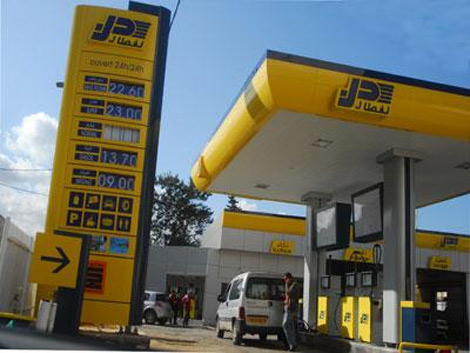
Former director of energy products at the Algerian energy ministry Khaled Boukhlifa criticized those who hold smuggling responsible for the lack of energy refined products in the national market.
“It is difficult for oil specialists to believe that 5 million tons are smuggled every year because it is a huge quantity and needs the State’s means to carry it out of borders,” Boukhlifa told Echorouk.
“The real reason behind imbalance in the refined products market is old investment. The last refinery with international standards entered into service in Algeria in 1980. It is Skikda refinery which has 15 million tons capacity,” he added.
Korea’s Samsung is working on maintenance of the Skikda refinery to increase its production capacities by about 1.6 million tons to reach 16.6 million tons. Yet, this quantity does not represent anything compared to car imports which went up by 40 percent in January-June, according to the Bank of Algeria.
Algeria has experienced a fuel crisis since 2010 due to high consumption and fall of local refined products because of low investment.
Algeria has theory refining capacities of 22 million tons per year. Yet, they decreased as many units stopped operating due to maintenance works.
Energy prices subsidy in Algeria cost the government $10.6 billion in 2010. That means 606 percent of GDP. A total of $2.13 billion was allocated to subsidize electricity and $8.46 billion to fuel prices. “Theoretically speaking, that is sufficient to build two middle sized refineries per year,” the oil expert said.
He added that refining sectors has been the last invested activities in Algeria since its independence compared to national oil industry. “Smuggling factors is not sufficient to cover the national policy failure as it does not have a vision in energy sector.”
Earlier, CEO of Algeria’s energy group Sonatrach Abdelhamid Zerguine said the government will continue importing refined products until the end of 2016 to cover the deficit due to the fall of national refining capacities.
According to Boukhlifa, prices fixed by the government to final consumers and public subsidy policy do not encourage to optimize a consumption model. Algerian individuals are encouraged by abundance and low prices to waste huge quantities of fuel and different subsidized energy products. “The government can not apply the real price policy on refined products.”