Pope’s Algeria Visit: Western Praise, French Unease
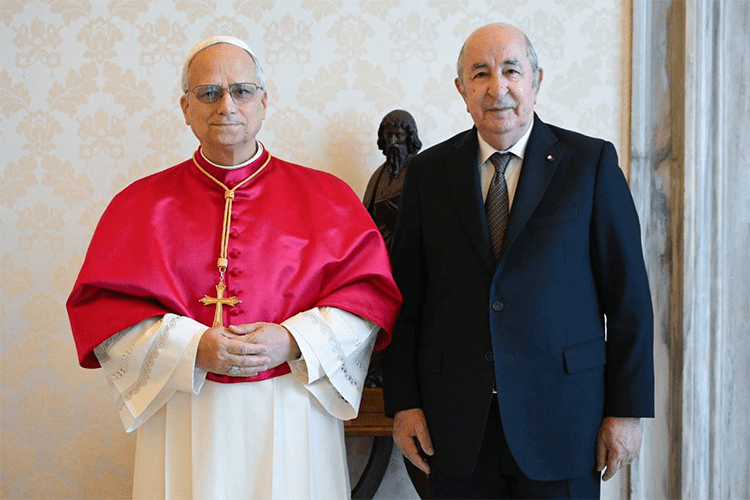
Pope Leo XIV’s upcoming visit to Algeria on Monday has prompted discontent in some French circles, while also attracting significant attention and enthusiasm from the European and Western media, which considers it of ‘political importance.’
Similarly, the Italian press has focused on this visit. For example, last week, “La Repubblica” discussed its relevance to “interfaith dialogue in the Mediterranean basin.” The newspaper described Algeria as a “diplomatic laboratory” where migration, historical memory, and religion intersect. Building on this, different media in Europe have highlighted distinct facets of the visit.
While other western media paid important attention, the French press’s coverage of Pope Leo XIV’s visit to Algeria was limited, except at “Le Monde” which highlighted the diplomatic dimension of the visit at the end of last week, emphasising that it “reflects the Vatican’s desire to rebalance its relations with the Islamic world by favouring partners perceived as stable.”
Furthermore, France’s leading newspaper added another dimension to the visit. It is considered Algeria’s choice as the Pope’s first Maghreb destination, an acknowledgement by the leader of the Catholic world of Algeria’s significant influence, especially in “regional mediation.”
Likewise, La Croix, a French daily specialising in religious affairs, noted that “the Pope is coming first and foremost to meet a witnessing Church, rooted in dialogue,” highlighting an aspect often overlooked in geopolitical analyses. This perspective complements earlier assessments focused on diplomatic and regional significance.
The visit also resonated with the Spanish press. Notably, El País explained that the Catholic Church, through the Vatican, is adopting a new approach to increase its influence in Africa. The newspaper described Africa as growing rapidly in both population and religious activity, adding that “this strategic choice reflects a Church in transition, now focusing on the Global South.” These observations add to the broader European coverage and reflect diverse priorities.
Meanwhile, the Anglo-Saxon press approached the Pope’s anticipated visit from a different perspective, one heavily influenced by a distant historical dimension dating back to the pre-Islamic era. This angle adds a layer of historical context to the predominantly diplomatic and religious analyses found elsewhere.
Among outlets with this view was The Guardian, a well-known British newspaper. It stated that Algeria was an early stronghold of Christianity. The paper cited Saint Augustine, born in Annaba in eastern Algeria, as a key figure in Christian history, further connecting the visit to Algeria’s ancient Christian roots.
Commenting on Leo XIV’s mission to Algeria, the newspaper said, “By visiting Annaba, the Pope is reviving a memory long marginalised in contemporary Western narratives.” The article’s author argued that this was an attempt “to redefine the symbolic geography of Catholicism.” This interpretation provides yet another dimension to the multi-layered media responses.
The Pope’s visit to Algeria also drew attention in the United States. The New York Times, in an article published Thursday, called the visit “a gesture of dialogue in a fractured world.” It noted that it represents “a message to the entire Muslim world, in a spirit of mutual respect and coexistence.” This American perspective underscores once again the visit’s global resonance.
In contrast, the French right-wing, obsessed with everything Algerian, attacked the Pope’s visit and claimed it would yield political gains for Algiers. The magazine “Le Point,” via its website, expressed concern that the visit might counter the narrative promoted by the French right and far right. These groups often depict Algeria as intolerant, anti-Western, and affected by religious extremism. The magazine indicated that this long-held view may now be called into question following the visit, highlighting a significant difference from other viewpoints.
The newspaper “Le Figaro” also sided with those unwelcome to the visit, which further contrasts with the generally positive or analytical coverage in other Western countries. The article warned of the need for what it called the Vatican’s caution, citing sensitive historical issues that persist between Algeria and former colonial powers. This was a direct reference to France, which still does not acknowledge its colonial crimes in Algeria. The article spoke of “symbolic diplomacy,” and cautioned that every word and gesture of the Pope would be scrutinised in light of Franco-Algerian history. This cautionary stance further illustrates the spectrum of reactions within the French media landscape.