Algeria Deepens Ties with Italy, Germany, and the U.S. as France Misses Out
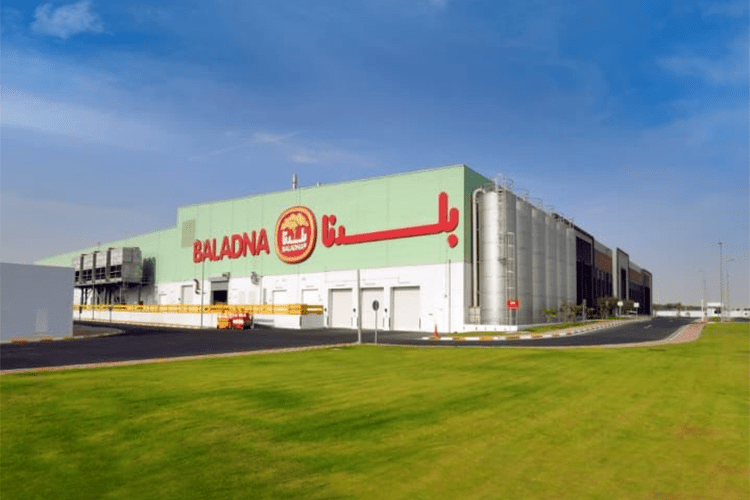
Algerian authorities have selected three major international suppliers to equip the massive Baladna project, launched by the Qatari investor and dedicated to producing powdered milk and red meat in Adrar, southern Algeria.
What stands out is the complete absence of French companies from the project—despite the recent warming of relations between Algeria and France following nearly two years of an unprecedented political and diplomatic crisis.
This point was highlighted by the French magazine for agricultural mechanism Matériel Agricole on Thursday, June 24, under the headline: “FPT to Supply Equipment for a 270,000-Cow Farm in Algeria.”
FPT is a subsidiary of the Fiat group specializing in engines and powertrain technologies. Fiat already operates an automobile manufacturing plant in Oued Tlélat, near Oran in western Algeria.
The Italian company contracted by Baladna Group is responsible for developing and manufacturing engines and transmission systems for Fiat’s commercial and agricultural vehicles, including the well-known New Holland tractor engines, as well as Iveco and Case trucks and agricultural equipment. Under the agreement, the Italian partner will provide technologically advanced engines built to new technical specifications.
According to the same source, the Italian company will manufacture six-cylinder diesel engines—model 13, with a displacement of 12.9 liters—for fifty GP 330 S/I-A power generator units rated at 330 kVA. These systems are assembled by Italian green energy manufacturers and distributed through B Motors and Avoni Industrial.
The total investment in the Algerian-Qatari powdered milk and red meat project is estimated at approximately $3.5 billion. Algeria’s National Investment Fund is also participating.
The project aims to develop more than 117,000 hectares of agricultural land and raise 270,000 dairy cows. Production targets include 100,000 tons of milk annually, with capacity for future expansion, while generating around 5,000 jobs for local residents.
Before selecting the Italian supplier, Baladna had already announced—in April—a large-scale airlift operation to transport 30,000 Holstein cows from the United States, sourced from nine American states.
The transfer, scheduled to begin next November and continue over 10 months, will involve 109 flights as part of the second phase of the powdered milk production project. The estimated value of this operation exceeds $635 million.
The project’s third major partner is Germany, which maintains strong and stable relations with Algeria. In March 2025, Baladna Algeria signed contracts with German industrial giant GEA, a company specializing in food-processing technologies and industrial production lines, including dairy systems, automated milking equipment, milk cooling technologies, and cattle farm infrastructure.
Observers have noted the absence of French firms among the project’s partners despite the recent easing of bilateral tensions. Many still consider the diplomatic thaw fragile, and France’s exclusion from such a strategic investment appears to reflect Algeria’s preference for working with countries where relations are viewed as more stable and driven by mutual economic interests.
Italy has emerged as Algeria’s leading partner in recent years. Rome has become the primary importer of Algerian natural gas and a major gateway for exports to broader European markets. Italy is also currently the only European country engaged in an active automotive manufacturing partnership with Algeria, while the French Renault plant has remained inactive for nearly six years.
Germany likewise remains an important strategic partner. Relations between the two countries have been reinforced by diplomatic cooperation, illustrated by Algerian President Abdelmadjid Tebboune’s response to an appeal from German President Frank-Walter Steinmeier regarding the release of French-Algerian writer Boualem Sansal in November of last year. Unofficial reports also suggest preparations are underway for an official visit next month.
Meanwhile, relations between Algeria and the United States continue to advance—not only through the Baladna project but also through expanding energy cooperation. In recent years, American companies have secured multiple contracts and agreements with Algeria’s state energy company Sonatrach, particularly in the country’s southern regions.