Algeria Eyes $25 Billion Investment to Build a World-Class Hydrogen Industry by 2040
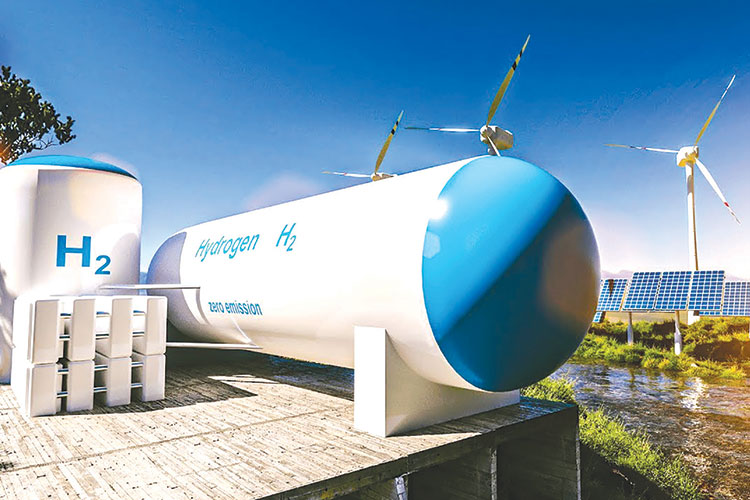
A recent report by the Energy Research Unit has revealed that Algeria will require approximately $25 billion in investments to develop its hydrogen sector and achieve its 2040 targets, enabling the country to produce up to 1.2 million tonnes of green hydrogen annually for export.
According to the report, Algeria’s hydrogen strategy is built on a dual-track approach. The first focuses on producing green hydrogen using renewable energy sources, while the second aims to develop blue hydrogen from natural gas, supported by carbon capture and storage (CCS) technologies. This strategy leverages Algeria’s abundant natural gas reserves while accelerating its transition toward a low-carbon energy future.
To meet its production goals, Algeria plans to install 2.5 GW of electrolyzer capacity, powered by approximately 20 GW of renewable energy by 2040. These investments are expected to support the annual production of 900,000 to 1.2 million tonnes of green hydrogen, primarily for export to European markets. In parallel, the country aims to produce 300,000 tonnes of blue hydrogen annually to meet domestic demand.
The report also notes that Algeria currently has seven announced hydrogen projects, including five green hydrogen and derivative projects and two hydrogen pipeline initiatives. Together, these projects form part of the country’s broader ambition to export one million tonnes of hydrogen per year to Europe by 2040.
However, achieving these objectives will require the rapid deployment of renewable energy projects, substantial financial investment, expanded infrastructure, and a robust regulatory framework capable of attracting both domestic and international investors. These efforts are becoming increasingly important as global competition intensifies in the rapidly growing low-carbon hydrogen market.
The report places Algeria’s ambitions within the broader regional landscape, highlighting the significant investments planned by neighboring countries. Egypt aims to develop between 13 GW and 27 GW of electrolyzer capacity by 2030, supported by investments of up to $60 billion by 2040. Morocco is expected to require between $85 billion and $114 billion by 2050, while Mauritania’s investment needs are estimated at $22.7 billion by 2030, rising to approximately $213 billion by 2050. Tunisia is projected to require cumulative investments of around $130 billion to achieve its green hydrogen objectives by mid-century.
The report concludes that Algeria, alongside Egypt, Morocco, Mauritania, and Tunisia, is well positioned to become a major player in the emerging global hydrogen economy thanks to its exceptional solar and wind resources. Nevertheless, the success of these ambitions will ultimately depend on securing the necessary investments, accelerating project implementation, and developing the infrastructure required to support a competitive and sustainable hydrogen industry.
As the global energy transition gathers pace, hydrogen is expected to play a central role in decarbonizing heavy industry, transport, and power generation. With its strategic geographic location, abundant renewable energy potential, and extensive natural gas infrastructure, Algeria has the opportunity to establish itself as a leading supplier of low-carbon hydrogen to Europe and beyond.