Algerian Diplomat Held Hostage in France in Defiance of the International Law
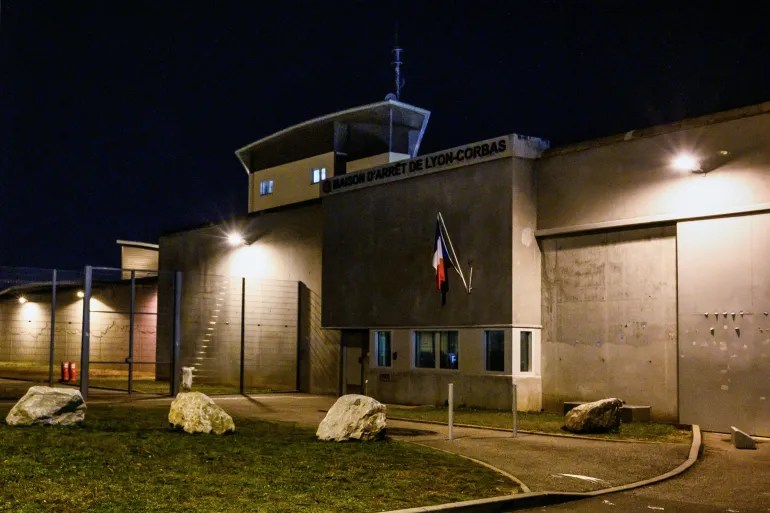
French authorities have been holding Algerian diplomat “Ismail R.” since April 8, 2025, in flagrant violation of international conventions. He has now spent 596 days in pretrial detention, which was extended on March 25, as France continues its relentless campaign against a representative of the Algerian state. The country that prides itself on the Declaration of the Rights of Human Beings has been caught red-handed trampling international law.
Is it necessary to remind anyone that “Ismail R.” is a diplomat protected under the 1961 Vienna Convention, which grants him broad immunity, as well as under the 1963 Convention? As an official representative of the Algerian Republic carrying out his duties on French soil, he cannot lawfully be treated as a common criminal or a delinquent. Yet in this particular case, France appears to have abandoned the principles of diplomacy and the ethics governing international relations. Even more tragically, Paris is forsaking the standards of justice and law that it nevertheless presents as the cornerstones of its republican doctrine on the international stage, reports the Algerian Press Service (APS).
From the very first hearing, the judge reportedly did not hesitate to threaten the Algerian diplomat, telling him: “I will convict you and your government.” The judge, it seems, is nothing more than an instrument in the service of Retailleau.
The Algerian diplomat has reportedly been subjected to humiliation and mistreatment in prison, in an attempt to pressure him into testifying against the Algerian state in exchange for asylum in France—and ultimately to exploit him by turning him into an opponent of his own country.
The case of the Algerian official has exposed France’s double standards: its willingness to set the law aside in favor of politics and to invoke legal principles selectively, whenever doing so serves its interests. The upcoming electoral calendar—the presidential election scheduled for April 2027—may well be one of the decisive factors behind this affair.
In a France mired in a multifaceted crisis, including a political crisis, and bereft of tangible solutions capable of pulling it out of the mire, the far-right’s political wing appears to have found its one and only vehicle to the Élysée Palace in its hatred of Algeria.
Is it not striking that the arrest of “Ismail R.” took place during Bruno Retailleau’s tenure as Interior Minister? Retailleau, the leading figure in France’s political and media-driven anti-Algerian hostility, has worked relentlessly to escalate provocations against Algeria through what he repeatedly calls a “showdown of wills” with the country. He has turned this into an obsession without limits, even if it means violating every principle of political and diplomatic conduct. Moreover, he has played a central role in this dubious case, which defies every rule of the state of law, because the detention of the Algerian diplomat is a scandal both in substance and in procedure.
Is it necessary to recall that the Algerian official was arrested in the street by French security officers in a highly theatrical operation—a deliberately orchestrated spectacle that displayed contempt for French authorities’ own obligations and amounted to a blatant breach of diplomatic conventions and international law governing the protection of diplomatic and consular personnel?
Should we also highlight the unconvincing elements of the investigation that led to his arrest, including the absurd reliance on phone geolocation?
France has now held the Algerian diplomat for 596 days, even though Retailleau has not served as Interior Minister since October 2025. He is now a presidential candidate who declared on November 3 that “relations with Algeria must be normalized.” Yet France continues to detain an Algerian diplomat for 596 days without any compelling justification.
The release of “Ismail.R” has become urgent. This situation must not be allowed to continue. This arbitrary detention, in grave violation of the Vienna Convention, must end. At the very least, the Algerian diplomat must be allowed to return to his country, as is customary in proper diplomatic relations.