970 Patents, 35,000 Citations: Algerian Scientist Karim Zaghib to Lead Lithium Battery Project
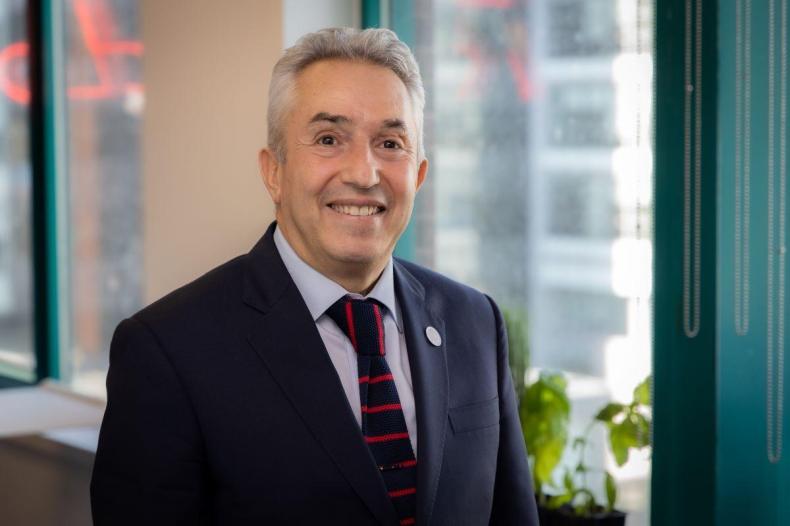
Who Is the Scientist Chosen by President Tebboune to Lead Algeria’s Lithium Battery Project?
From research laboratories in France and Japan to the technology industry in Canada, Algerian scientist Karim Zaghib has built an international reputation as one of the leading figures in lithium batteries and energy storage.
After more than three decades of professional experience, Zaghib has returned to the spotlight in Algeria following his appointment by President Abdelmadjid Tebboune to lead the lithium battery manufacturing plant project, with the aim of leveraging his international expertise to transfer technology and develop a domestic industry in one of the sectors most closely tied to the future of energy and manufacturing.
The Algerian professor’s scientific record includes more than 450 research papers and publications, contributions to the development of more than 970 patents, and significant achievements in battery technologies and energy storage systems. These accomplishments are detailed in his official biography and a 2024 announcement by MDPI concerning his appointment as editor-in-chief of the scientific journal Batteries.
Notably, Zaghib’s work has extended beyond academia. He has helped develop technologies that have reached commercial applications, contributing to Hydro-Québec’s standing in the field of battery technology.
From Constantine and Setif to the World’s Leading Laboratories
Karim Zaghib was born in Constantine in 1963 and grew up in Setif. He later moved to France to pursue postgraduate studies in electrochemistry, earning a Diplôme d’Études Approfondies (DEA) in 1987, followed by a PhD in 1990 from the Grenoble Institute of Technology. In 2002, he obtained his habilitation in physics from Pierre and Marie Curie University in Paris.
His academic qualifications and professional background are documented in his official biography.
He began his career in 1990 as a researcher at France’s National Centre for Scientific Research (CNRS) and battery manufacturer Saft, where his work focused on carbon materials and lithium-related reactions. In 1992, he moved to Japan as a visiting researcher at the National Institute of Industrial Research in Osaka, working on lithium-ion battery research.
The year 1995 marked a turning point in his career when he joined the research institute of Canadian utility Hydro-Québec. This began a 28-year career during which he became one of the key figures in developing materials and technologies used in rechargeable batteries.
What About Electric Vehicle Batteries?
Zaghib’s contributions have not been confined to theoretical research. They have extended to the development of technologies that helped bring lithium batteries from laboratories into industrial applications, particularly lithium iron phosphate (LFP) batteries, which have become an important option for electric vehicles and electricity storage systems.
During his time at Hydro-Québec, he held research management responsibilities in the development of materials for lithium-ion batteries. He contributed to the development of lithium iron phosphate-based electrodes, as well as technologies involving natural graphite anodes and lithium titanate nanomaterials. His contributions to battery research and materials development are also highlighted in MDPI’s profile of Zaghib.
He also led research initiatives and scientific and industrial collaborations aimed at developing large-scale electricity storage systems. These included projects involving Hydro-Québec and Sony, as well as research into solid-state batteries, ionic liquids, and advanced carbon materials.
His professional record indicates that technologies he helped develop have made their way into industrial applications benefiting major companies across the automotive and battery sectors, including Tesla, Ford, Mercedes-Benz, BMW, and BYD, highlighting the reach of his research across the global manufacturing supply chain.
970 Patents and 35,000 Scientific Citations
Zaghib is regarded as one of the most prolific researchers in his field. According to his official biography, his achievements include:
More than 450 scientific publications.
Contributions to the development of more than 970 patents.
62 technology and patent licensing agreements.
An h-index of 100.
More than 35,000 citations of his scientific work.
Contributions to 22 books and scientific reference works.
His scientific achievements are also documented in MDPI’s June 2024 announcement of his appointment as editor-in-chief of Batteries. The publication provides additional recognition of his research career and patent portfolio. Its reported figures reflect an earlier reporting period and may differ from those in his more recent biography.
He also co-authored Lithium Batteries: Science and Technology, a reference book published by Springer in 2016 and translated into Chinese.
These figures reflect his considerable influence in battery research. The Royal Society of Canada also notes that his patents have been licensed to 62 companies worldwide.
From Hydro-Québec to Concordia University
After 28 years at Hydro-Québec, Zaghib joined Concordia University in Canada in 2022, where he serves as a professor of chemical and materials engineering and leads collaborative centres focused on energy and the energy transition.
In 2023, he was appointed chief executive officer of Volt-Age, a research initiative led by Concordia University that focuses on electrifying society and reducing carbon emissions. The programme brings together researchers and institutions from various disciplines to develop solutions for transportation, energy, and smart buildings.
The initiative received C$123 million in research funding from the federal government, one of the largest research grants in the university’s history. The funding and programme objectives were outlined in Concordia University’s announcement of Volt-Age’s launch.
Zaghib has also served as a strategic adviser to Investissement Québec and as a professor of practice at McGill University, where he contributed to efforts to develop Quebec’s battery industry supply chain, from mining to electric vehicles.
Awards and Honours Reflecting His Scientific Standing
Throughout his career, Zaghib has received recognition from prestigious academic and industrial institutions, in addition to his patents and scientific publications. These honours include:
The 2019 Lionel Boulet Award, presented by the Government of Quebec in recognition of his contributions to industrial research and development.
Election to the Canadian Academy of Engineering in 2017.
Election to the Royal Society of Canada in 2021.
The 2022 Kalev Pugi Award from the Society of Chemical Industry.
The 2024 Research Award from the Battery Division of the Electrochemical Society.
Appointment as an Officer of the Order of Canada on April 17, 2025. (Official Order of Canada record).
The Canadian magazine L’actualité also named Zaghib its Personality of the Year on November 29, 2023, in recognition of his contribution to the development of Quebec’s electric battery industry.
President Tebboune Selects Him to Lead Algeria’s Lithium Battery Project
In the latest chapter of his career, Karim Zaghib has once again come into the spotlight in Algeria after President Abdelmadjid Tebboune appointed him on November 23, 2026, to head the project to establish a lithium battery manufacturing plant. He has been tasked with overseeing studies and monitoring the technical and technological aspects of the project at every stage of its development.
The project falls under the supervision of the Ministry of Energy and Renewable Energy, through Sonelgaz International, and aims to establish a plant with an annual production capacity of up to 5 gigawatt-hours (GWh). The facility will focus primarily on lithium iron phosphate (LFP) technology, with production intended for both electric vehicle batteries and energy storage systems. Further details about the project’s objectives and technical specifications were also outlined following the presidential meeting.
He further noted that Algeria has significant potential in critical minerals, particularly iron and phosphate, which could be used to develop materials for battery electrodes. This would make it possible to establish a domestic manufacturing value chain rather than relying solely on imports of finished products.
The project is not intended to serve the Algerian market alone. Zaghib also spoke of the possibility of targeting international markets, including those in Africa, Europe, Asia, and North America.