Ban Ki-moon Refuses to Visit Morocco

-
-
383
-
0
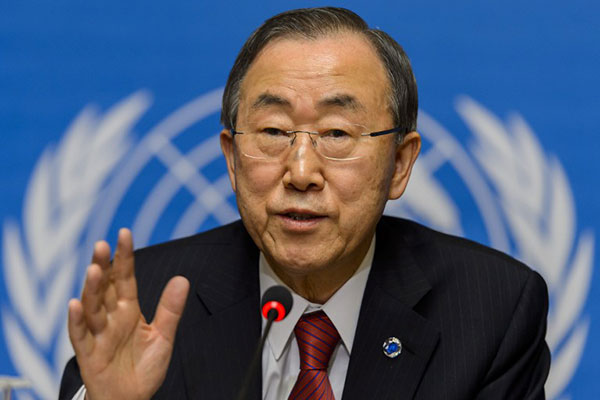
United Nations announced officially, on Friday, that its General-Secretary, Ban Ki-moon, and contrary to what was previously planned, will not visit Morocco next week, as part of the tour, which he allocates for the North Africa region, in order to support the settlement on the conflict in Western Sahara.
Spokesman for the International Organization, Stéphane Dujarric, said: “Ban Ki-moon would not go to Rabat, because the King of Morocco will not be there”, which means that Mohammed VI avoids meeting with Ban Ki-moon, and programmed a foreign visit, in line with what was leaked by diplomatic sources that the Moroccan regime has reservations on the Secretary General’s visit to Algeria, and it seems that the UN body has deliberately responded in its own way, through announcing that Ban Ki-moon will not visit Rabat, while his tour will be limited to inspect the humanitarian conditions of the Sahrawi refugees in the Tindouf camps, and visit the United Nations Mission’s offices in Western Sahara, in addition to Burkina Faso and Mauritania, on March 2 and 3, before moving to Algeria on March 4, where he will visit with President, Abdelaziz Bouteflika personally, and he is expected to inform him about the country’s support for all UN efforts to revive direct negotiations between Morocco and the Polisario Front, in order to reach a just and lasting settlement for the Western Sahara issue, as reported, on Saturday, in a letter that was sent by Abdelaziz Bouteflika to his counterpart Mohamed Abdelaziz in the fortieth anniversary of the declaration of the Sahrawi Arab Republic.
First visit by the General-Secretary to the region coincides with the celebrations of the Polisario anniversary of the state’s declaration, and at a time when the Western Sahara diplomatically gains precious targets at the international arena, after it has made significant progress to penetrate the European Union, following the decision of its court to cancel the free exchange of agricultural products and marine agreement, which gathered Morocco with the Union, as it issued an exception for the products that are coming from the occupied Western Sahara, pushing Morocco to the suspension of contacts with the institutions of the Union, and threatening to cut it off completely if the court will not undo the judicial decision, which is quite unlikely to happen, given the independence of the European Court and its place within the Union’s bodies, and before the final decision, the German parliament had strongly condemned,last week, the human rights violations that are committed by the Moroccan State in the occupied territories, while Sweden preceded it, by the end of January, to support the assistance for the benefit of the Sahrawi refugees.
All these developments put the Moroccan regime, today, in a diplomatic pickle, and a position of weakness in the face of the truth, that it is trying in vain, to turn around since the declaration of a cease-fire with the Polisario Front on September 6, 1991, on the basis of self-determination, as the MINURSO mission was created to supervise on the course of this poll, however, the Kingdom of Morocco was dragging its feet in complying with the regulations of the UN legitimacy, backed by some international decision centres, notably France, for common interests, but today the equation seems different on the ground, and the wind of freedom is blowing in favour of the Saharawi independence.