Bill Gates is retiring, sort of

-
-
1388
-
0
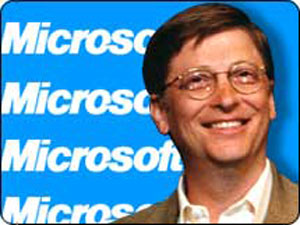
Bill Gates is retiring, sort of. He is still only 52, and he is going off to spend more time guiding the world's richest philanthropy, the Bill and Melinda Gates Foundation. He will still be Microsoft's chairman and largest shareholder, but Friday is his last day as a full-time worker at the software giant, marking the unofficial end of his career as a business leader.
Sure, there are the blockbuster Microsoft products, like Windows and Office, used in offices and homes, everywhere, every day. But beyond that, Gates, and his company, founded 33 years ago, have fundamentally shaped how people think about competition in many industries where technology plays a central role, the behavior of modern markets, and even antitrust.
In a sense, Bill Gates can be seen as the foremost applied economist of the second half of the 20th century.
Yet the old rules of competition, so lucratively mastered by Microsoft, are being altered by the current wave of Internet computing – and Google is the company at the forefront. So far, Microsoft is struggling to adjust, and it will be up to Gates’s successors to overcome the challenge or watch Microsoft’s wealth and leadership in the industry steadily erode.
Whatever the future for Microsoft, the Gates legacy is impressive. The main reason that there are more than a billion copies of the Windows operating system on personal computers around the world, according to industry experts and economists, is that Gates grasped and deployed two related concepts on a scale no one ever did in the past – “network effects” and the creation of a technology “platform.”
Put simply, a network effect is that the value of a product goes up as more people use it. A technology platform is a set of tools or services that others can use to build their own products or services. So building the workbench-like platform encourages more people to join the network, which attracts more interest in the platform, enlarging the network and so on.
For Gates, the strategy started with its first product, Microsoft Basic, a programming language, but really took off with its operating systems, first Microsoft DOS and then the many versions of Windows. Today, there are many thousands of software applications that run on the Windows platform, not just word processing and spreadsheets but the specialized programs in doctors’ offices, factory floors and retail stores mainly run on Windows – a very broad network, on a technology platform.
“Gates saw software as a separate market from hardware before anyone else, but his great insight was recognizing the power of the network effects surrounding the software,” said Michael Cusumano, a professor at the Sloan School of Management at the Massachusetts Institute of Technology.
That, Cusumano added, was the essential difference in the paths of Microsoft and Apple, the early leader in personal computing. Apple, he said, focused on making outstanding products alone, while Microsoft nurtured a growing business ecosystem of outside software developers who use, and are dependent up, Microsoft’s technology.
“Apple has always been a product company, and Microsoft is a platform company,” Cusumano said.
The result, he adds, is that Apple today does make outstanding products, though its market share is small, while more than 90 percent of personal computers run Microsoft software.
Hindsight tends to bring clarity. In the early years, it is unclear how much Gates was pursuing each opportunity as it came as opposed to a grand strategy. He had large ambitions. When he was a Harvard undergraduate, Gates lamented that so many of his fellow students pursued a “narrow track for success,” diligent strivers in safe professions, instead of being willing to “take big risks to do big things,” recalled Michael Katz, who was a Harvard student at the time.
While Gates dropped out of college to found Microsoft, with Paul Allen, Katz went on to become an economist. In fact, he was the co-author of a seminal paper in 1985 on network effects and the use of technology standards as weapons of competition, a paper that would eventually be cited prominently in the landmark U.S. government antitrust suit against Microsoft.
In the early 1980s, when Katz a and a fellow economist, Carl Shapiro, were doing the research for the paper, they looked at technology standards like the rivals in videocassette recording, Sony’s Betamax versus VHS, backed by other Japanese companies. They looked at personal computers, mainly in terms of the competition between Apple and IBM-compatible personal computers. They were aware of Microsoft’s role, as an operating system supplier, Katz said, but had no inkling how things would play out.