British Museum 'is Britain's most popular attraction'

-
-
796
-
0
The British Museum has overtaken Blackpool Pleasure Beach and the Tate Modern to become the nation's most popular cultural attraction.
In its 249th year, the Bloomsbury institution claimed it had achieved a record high, attracting 6.04 million people, an increase of more than one million on the previous 12 months.
Figures for Blackpool, the northern capital of the British entertainment industry, and the Tate in the former Bankside power station, paled in comparison in 2007 – 5.5 million and 5.23 million respectively.
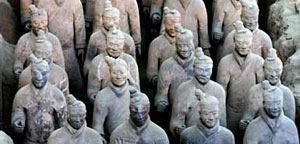
The museum’s blockbuster on China’s First Emperor, with its lifesize terracotta warriors among more than 120 objects lent from the tomb of Qin Shihuangdi, exceeded initial expectations twice over, with more
It has become its most successful temporary exhibition since Tutankhamun had them queuing around the block more than 30 years ago, sparking the birth of the modern blockbuster that continues to power the budgets of the big museums and galleries.
Niall FitzGerald, its chairman, revealed yesterday that the Chinese exhibition had seen a full capacity through its entire run.
Such was the demand for tickets that the museum was extending opening-times “later, later and later”, he said.
While the box-office was inundated with as many as 180 calls an hour, hordes of visitors queued from as early as 5.30am to be sure of getting one of the 500 day tickets released almost four hours later.
On February 9, as many as 35,000 visitors descended on the museum to celebrate Chinese New Year. Such was the crush that staff had to close the doors.
The museum’s crowd-pulling, crowd-pleasing success goes beyond Britain. Its exhibition in Shanghai on the ancient Olympic Games is currently drawing some 5,000 visitors a day.
The figures were announced yesterday as the British Museum published its annual report and looked ahead to its next series of blockbusters on great leaders of the world.
After Qin Shihuangdi and Hadrian, the Roman emperor whose own show opens later this month – having already seen advance ticket sales topping 10,000 – blockbusters on the Iranian monarch Shah Abbas the Great and the Aztec emperor Moctezuma are planned for next year.
Dozens of items, including the most lavish gold-ground silks, carpets and manuscripts, have been promised by the Iranians for an exhibition that will, for the first time, tell the story of one of Iran’s great kings, Shah Abbas (1587-1629 AD).
With tensions continuing to rise over Iran’s nuclear plans, the British Museum’s curator, Sheila Canby, acknowledged that they could face problems. “It’s a worry. There’s a lot of political risk with this exhibition,” she said.
She added, however, that it will give a broader view of the culture “than all this blah blah blah you hear from politicians”.
However, part of the show will paint a portrait of the Shah as a brutal figure. He was Iran’s answer to Henry VIII, the Museum’s director, Neil MacGregor said, noting that Shah Abbas killed or blinded each of his sons.
In expelling Ottoman and Uzbek troops from Persian soil, the Shah also employed cannibals to eat his enemies alive.
“It was quite disgusting,” said Ms Canby. They would start with the ears and nose and appendages and worked their way in.”
With the Iranian ambassador visiting the British Museum yesterday, she was quick to add that the exhibition will focus on much more than the Shah’s brutality.
It will show him as a man of great piety, a politician and military strategist who was a stabilising force in Iran, following a period of civil war and foreign invasion.
Even larger blockbusters from all over the world are planned once the British Museum constructs its enormous exhibition centre at the back of its historic building. than 850,000 visitors.