Bruno Retailleau has the most to lose from the return of rapprochement between Algeria and France
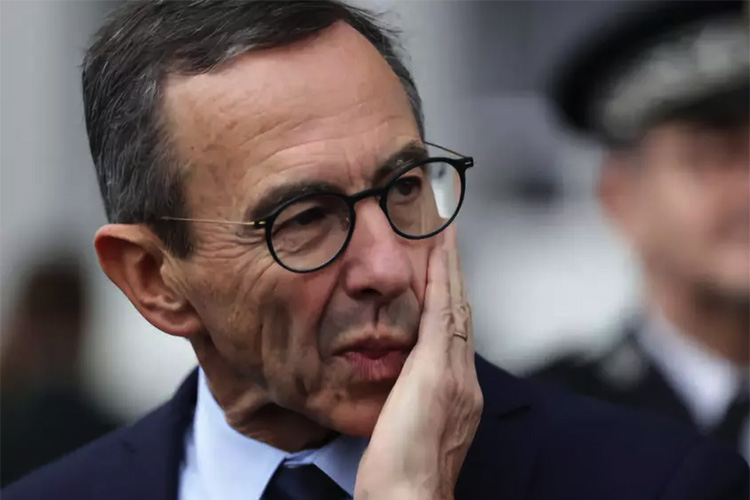
Following Foreign Minister Jean-Noël Barrot’s visit to Algeria, the debate has raged in France about the success of the “iron fist” plan pursued by French Interior Minister Bruno Retailleau, who, as is well known, made it a condition for his continuation in François Bayrou’s fragile government.
After Retailleau became a star in the French media in recent weeks, attacking Algeria more than once a day in provocative and aggressive terms, politicians and media professionals in France are questioning the effectiveness of Retailleau’s approach to managing the crisis with Algeria, based on the results of that policy.
The most prominent political commentary on the way this crisis was managed by the French interior minister came from Bruno Retailleau’s rival and rival for the presidency of the right-wing Republicans party, Laurent Fouquet, about a month from now, who accused him of “surrendering” to Algeria, as he characterized it.
Without naming his rival, Fouquet said: “For several weeks we enjoyed pretending that we were going to have a show of strength with Algeria. “Algeria has humiliated us. We decide to surrender,” he said, referring to Retailleau, who claimed he could resolve the crisis with Algeria the way he wanted: with an iron fist.
The French newspaper Le Parisien commented: “Not Bruno Retailleau but the head of French diplomacy, Jean-Noël Barrot, will go to Algeria to ”give a quick boost“ to bilateral relations after months of crisis,” mocking Rautaillot once again: “French Justice Minister Gerald Darmanin is also scheduled to visit Algeria soon to relaunch judicial cooperation. But not Bruno Retailleau, who had to say again on France 2: “I am still present in the file (the crisis with Algeria).”
The French interior minister had threatened to resign if the iron fist option was not adopted with Algeria, a statement that followed his meeting with French President Emmanuel Macron, which witnessed the withdrawal of the crisis file from Retailleau and placing it in the hands of the Elysee Palace (the French presidency) and the Quai D’Orsay (the foreign ministry).
A source in Bruno Retailleau’s party (the Republicans) insists that France has gained nothing from the iron fist policy that the French interior minister tried to impose: “We have a feeling of resuming relations without any results,” while French interests in Algeria have suffered a setback.
In an implicit response to accusations against him, such as his involvement in raising the level of tension in relations with Algeria and complicating the case of Franco-Algerian writer Boualem Sansal, who was sentenced to five years in prison, Retailleau said in a more modest language that “everyone played a role in their place,” but behind the scenes, he claims that his way works.
He has lost much of his credibility by remaining in his position despite being deprived of participation in the handling of the crisis file, and has even become the most criticized minister in François Bayrou’s government, most recently by Foreign Minister Jean-Noel Barrot, who described the Interior Minister’s repeated outbursts as unacceptable and intolerable statements, stressing that “nothing would have been possible without the expertise of French diplomacy.