Focus Turns to Algeria’s New Government as Continuity Appears Most Likely
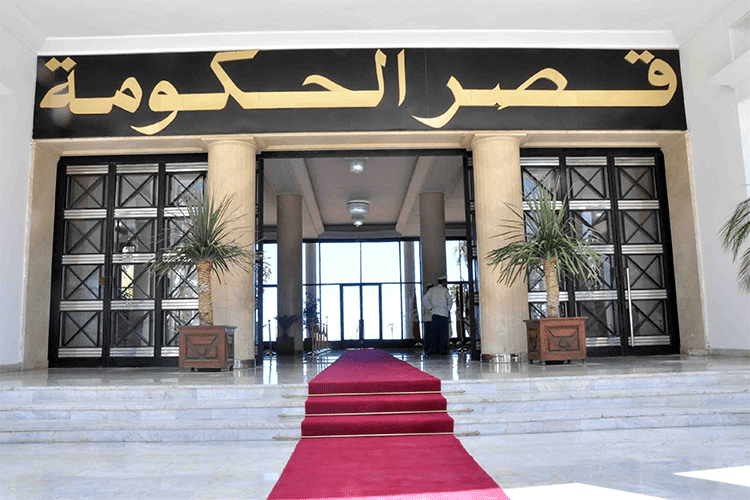
With the Constitutional Court having officially validated the final results of Algeria’s legislative elections, attention is now turning to the formation of the country’s next government. President Abdelmadjid Tebboune is expected to decide in the coming days on the composition of the new cabinet and the future of the Prime Minister, amid growing speculation over whether he will retain members of the current government, appoint political figures, or once again rely on technocrats drawn from the public administration, academia and state institutions.
Political and constitutional indicators suggest that continuity is the most likely outcome. Throughout President Tebboune’s two terms, successive governments have been shaped largely around senior civil servants, academics and technical experts, while political parties have played only a limited role in cabinet appointments.
The latest parliamentary elections did little to alter that equation. Rather than producing a rival parliamentary majority capable of imposing a partisan government, the vote consolidated a presidential majority that remained broadly supportive of the President’s programme. The elections also reignited criticism of political parties, many of which were blamed for the low voter turnout, reinforcing the argument for maintaining a government built on expertise rather than party representation.
Speaking to Echorouk, political analyst Ali Hachani said any discussion over the composition of the next government must first be understood through the constitutional framework governing executive appointments.
“The Constitution provides for two distinct scenarios,” he explained. “If a parliamentary majority emerges that differs from the presidential majority, the President appoints a Head of Government from that bloc. However, when Parliament is dominated by parties supporting the President’s programme, the Constitution provides for the appointment of a Prime Minister. That is the situation Algeria has experienced in recent years.”
According to Hachani, the results of the latest legislative elections clearly fall into the second category. The winning parties did not create an alternative parliamentary majority but instead strengthened the presidential coalition, which continues to command the majority of seats in the National People’s Assembly. Consequently, he believes the constitutional path points toward retaining the current model, with a Prime Minister heading the government, while leaving open the possibility that other political forces could eventually join the presidential majority.
Against that backdrop, Hachani does not expect the incoming cabinet to take on a distinctly political or partisan character. Experience over the past several years, he argued, has shown that President Tebboune consistently prioritizes professional competence and administrative experience over party affiliation when selecting ministers, resulting in governments dominated by technocrats rather than politicians.
He acknowledged that parties aligned with the presidential majority may submit names for ministerial positions, but stressed that such proposals remain purely consultative. Under the Constitution, the appointment of ministers is an exclusive presidential prerogative, leaving the final decision entirely in the hands of the Head of State.
Hachani also expects the anticipated cabinet reshuffle to remain limited in scope. Rather than a sweeping overhaul, he believes any changes will likely affect only ministries that, in the President’s assessment, have fallen short of expectations or failed to adequately implement his programme.
President Tebboune, he noted, has consistently favoured stability within the executive branch over frequent ministerial reshuffles, arguing that continuity in government has proven more effective than repeated changes in leadership.
As for the future of the Prime Minister, Hachani considers his continuation the most probable outcome, given the existence of a parliamentary majority that supports the President’s agenda. As required by established constitutional practice, the Prime Minister may submit his resignation following the elections. Should the President decide to retain him, he would simply reappoint him; if not, the resignation would be accepted and a successor designated.
Another possibility, Hachani added, is for the President to accept the resignation while asking the outgoing Prime Minister to remain in a caretaker capacity as consultations begin on the formation of a new government. Those consultations could take into account candidates proposed by parties within the presidential majority, alongside respected national experts, although the President would ultimately retain sole authority over the final appointments and could also consult the Prime Minister on setting the government’s priorities.
Hachani concluded that President Tebboune now finds himself in a constitutional position that grants him broad discretion in appointing both the Prime Minister and cabinet ministers. As a result, he argued, the next phase is likely to be defined less by political bargaining over ministerial portfolios than by the government’s ability to implement state policies and deliver on the President’s programme.
In his view, that reality offers the clearest indication of what the next government will look like: a cabinet built primarily on competence, professional expertise and institutional experience, tasked with meeting citizens’ expectations while advancing the President’s reform agenda.