Russia Calls on Mali to Revive the 2015 Algiers Peace and Reconciliation Accord
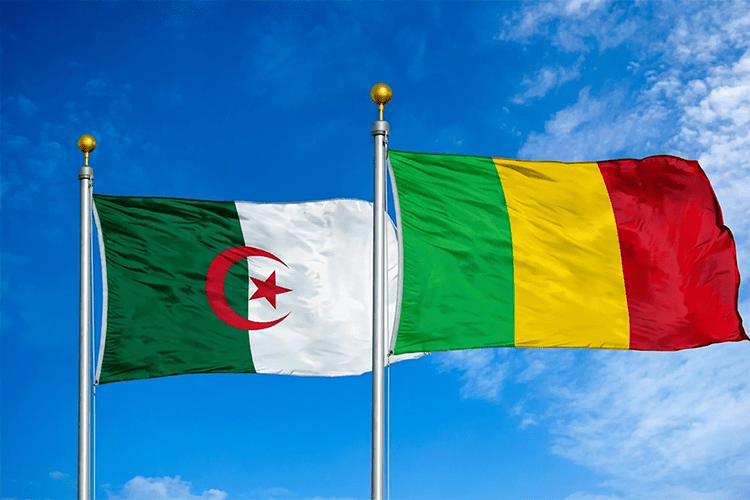
The unexpected diplomatic reconciliation between Algeria and Mali continues to attract attention and spark interest among observers because of its implications for the security situation in the strategically sensitive Sahel region, which has become an arena for competition among major powers seeking to expand their influence in the former colonies of a weakened French state.
France appears to have been among the countries most unsettled by the rapprochement, which is seen as running counter to Paris’s interests in the region. French officials had reportedly counted on their ally, the Moroccan regime, to maintain strained relations with the regimes of the Sahel. However, the sudden reconciliation between Algeria and Mali disrupted those calculations, prompting French policymakers to examine the circumstances behind the breakthrough and reassess their approach in light of the changing regional dynamics.
According to an investigation by the French newspaper Le Monde, the reconciliation dealt a significant blow to France’s already diminished presence in the Sahel. The restoration of ties between Algeria and Mali is viewed as strengthening Algerian influence alongside that of Russia, further eroding France’s traditional role in a region long regarded as strategically important to Paris.
Citing unnamed sources, Le Monde reported that the de-escalation between Algiers and Bamako has also helped stabilize Russia’s position in Mali and the wider region. Following setbacks suffered by the Russian Africa Corps—which has been supporting the Malian armed forces since last spring—Moscow reportedly concluded that resolving the crisis would require Algeria to play a central role, given its longstanding ability to influence the conflict and its repeated mediation efforts over several decades.
Russian authorities have ultimately come to believe that the conflict in Mali cannot be brought to an end without reviving the 2015 Algiers Peace and Reconciliation Agreement, signed under United Nations auspices and facilitated by Algeria. The conclusion reportedly reflects growing recognition that a purely military solution is unlikely to succeed—an assessment Algeria has consistently advocated.
Le Monde quoted a source in Mali as saying that Russian Foreign Minister Sergey Lavrov reiterated this position during a summit with his counterparts from the Sahel states in Niamey, Niger, on July 8—two days before the reconciliation with Algeria was publicly announced. Lavrov told the ministers that “a purely military solution is not a good solution” and that “Mali needs reconciliation with Algeria.”
The reported shift in both Russian and Malian positions is said to have followed a series of military setbacks suffered by the Africa Corps and Malian regular forces since last spring during fighting on the outskirts of Bamako. The clashes reportedly resulted in the deaths of Mali’s defense minister and intelligence chief. Fighting resumed earlier this month across several cities in central, northern, and northeastern Mali, with armed opposition groups capturing a number of towns and taking control of strategic routes leading to major urban centers such as Timbuktu.
Commenting on these developments, Toufik Bougaada, a professor of political science and international relations at the University of Algiers 3, argued that if Le Monde’s reporting is accurate, Moscow’s renewed interest in the peace agreement reflects a recognition that continued instability in Mali undermines Russia’s own regional interests. He suggested that a prolonged conflict would impose mounting costs on both the Russian Africa Corps and the Malian armed forces.
Bougaada noted that the Algiers Agreement, brokered under UN auspices, had contributed to stability in northern Mali. However, he argued that its provisions were never fully implemented, particularly following the political changes in Bamako after the military coups that began in 2020, which disrupted efforts to carry out the accord.
He further suggested that Russia may have gradually concluded that Algeria—drawing on decades of experience mediating between the Azawad movements in northern Mali and successive governments in Bamako—is uniquely positioned to bridge the divide between the Malian authorities and the Tuareg-led opposition. Algeria has sponsored a series of peace initiatives dating back to the 1960s, including the 1991 accords and culminating in the 2015 Accord for Peace and Reconciliation in Mali.
According to Bougaada, Algeria remains the only actor capable of helping resolve the deep political disagreements between the Malian government and the Azawad movements, which seek greater participation in state governance as well as a more equitable distribution of national wealth and development resources.
He concluded that the reconciliation reached approximately a week ago between Algeria and Mali was ultimately predictable given the failure of an exclusively security-based approach to a crisis rooted in political grievances. In his view, the Malian conflict should have been addressed through dialogue from the outset, building on the lessons of previous crises that were ultimately resolved through negotiation rather than military force.