Foreign Carmakers Keen On Algeria market

-
-
844
-
0
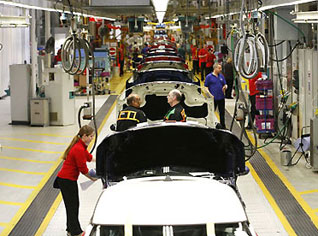
In March 2011, German carmaker Daimler announced a new joint venture (JV) bus and truck assembly plant in Algeria as part of its North African expansion. This is in line with BMI's view that as long as large-scale political upheaval can be avoided, Algeria is one of the most attractive growth markets for the auto sector in the region.
- The project has been largely facilitated by Daimler’s Abu Dhabi-based stakeholder Aabar Investment, which has formed a JV with the Algerian government in Rouiba. The JV will have management control of the plant, while Daimler will provide the parts for production of trucks and buses. Exact vehicle models are as yet unknown, as is the size of the investment.
-
For Daimler, it is the growth potential of Algeria, for all vehicle segments, which has secured the project. According to Peter Alexander Trettin, head of sales for Mercedes-Benz in Central and Eastern Europe, Africa and Asia, Daimler plans to strengthen its North African presence and will be ‘exploiting the Algerian market’s growth potential’.
-
This potential means that the auto sector has actually bucked the trend for subdued foreign investment. In November 2010, French carmaker Renault said it had returned to a shelved plan to build a production plant in Algeria, after changing certain details of the project to secure the government’s backing. With one existing plant, and another in the pipeline, in Morocco, the North African region features heavily in Renault’s overseas strategy.
-
Similarly, Volkswagen (VW) has approached the country’s authorities as part of its goal to become the world’s leading carmaker by 2018. While Renault’s revisited plan looks set to win the approval of the Algerian government, planning is still in the early stages for VW, but there is a suggestion that the country would serve as a base for the wider region.
-
BMI believes North Africa will develop into a hub for carmakers spreading into the wider African region and with uncertainty currently surrounding industry policy in Egypt during the transition of power, there are opportunities for Algeria and Morocco to win investment, which may have been previously intended for the larger market. BMI also sees valuable sales growth potential in the two markets: with average annual growth of at least 7% from 2011-2015 in Algeria and 12% in Morocco.
-
Market Overview:
- Renault is the market leader in the country by a comfortable margin. The French firm, operating under its local sales and distribution subsidiary Renault Algérie, sold a total of 63,359 new vehicles in Algeria in 2010, inclusive of 44,786 vehicles under its main banner, and 18,573 vehicles belonging to the Automobile Dacia brand. This amounts to a combined market share of 28.5% of new vehicle sales in Algeria for the year. There is a considerable gap between Renault Algérie and the number two auto company operating in Algeria, Hyundai Motor.
- The Japanese firm sold 31,681 vehicles through its local distributor Hyundai Motor Algérie in 2010, giving it a market share of 14.3%. In third place is Peugeot, which sold 22,839 vehicles in 2010, for a market share of 10.3%. In fourth place is Toyota Algérie, which sold a total of 21,389 vehicles (19,453 under its main banner, plus a further 1,936 Daihatsu models), for a market share of 9.6%, with Chevrolet rounding up the top five, with 2010 sales of 19,810 units giving the US car company a market share of 8.9%. This report includes a SWOT analysis for both Renault Algérie and Toyota Algérie.