Foreign investments decline due to Algerian banks passivity, says Laksaci

-
-
1017
-
0
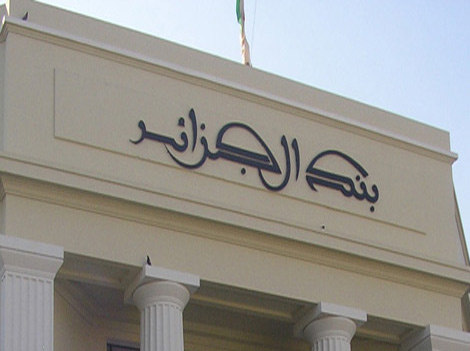
Algeria’s foreign monetary reserves jumped to $91.66 billion by the end of 2012 out of gold. Those reserves cover 39 months of importing at the current pace, according to Mohamed Laksaci, governor of the Bank of Algeria.
“The foreign current situation enabled to end exterior shocks caused by the world crisis since 2009,” Laksaci said in an economic conference.
“Cautious management of the reserves enabled Algeria to face the crisis negative impact in a better way than previous situations following the 1986’s crisis or the 1998’s crisis which destroyed the Algerian economy,” he added.
Net transfers reached $2.99 billion and the country’s current account surplus was estimated at $5.05 billion in 2012 compared to $19.8 billion in 2011. “This is due to hydrocarbon exports decline.”
According to the governor of the Bank of Algeria, the country’s imports reached a new record of $59.08 billion. Of it, $10.81 billion of service imports and $27.48 billion of commodity imports. Hydrocarbon exports were estimated at $59.70 billion out of total exports which reached $57.75 billion.
The Bank continues its strict exchange policy which enabled to protect the national currency against exchange rates turbulences.
Speaking about inflation, Laksaci said it went up by 8.8 percent on an annual basis due to fresh agricultural product and meat prices raise in January 2012. That explains the 69 percent-annual-inflation which has nothing to do with imported inflation.
He criticized banks passive role and the delay in the democratization of modern boosting means although there have been sophisticated infrastructures since 2006.