Royal Warns Paris Against Destroying Bridges of Communication with Algeria
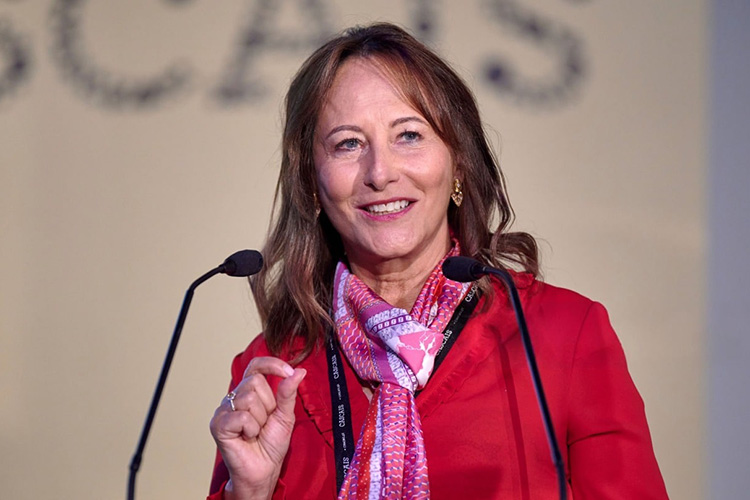
Ségolène Royal, president of the “France-Algeria Association,” sensed that her achievements were under threat during her visit to Algeria at the end of January and in early February. She implicitly warned the French side that President Emmanuel Macron’s “forward-looking” policy toward Algeria could be dangerous. Royal perceives that such an approach risks alienating Algeria by disregarding long-standing grievances and failing to address historical sensitivities, which could result in further diplomatic estrangement, hinder cooperation on key issues like security and migration, and destabilise already fragile bilateral trust.
The former French minister, referring to Pope Leo XIV’s visit to Algeria next week, tweeted on Tuesday, April 7th, from the “X” platform, lamenting the decline in bilateral relations and holding the French side responsible for repeated offences and provocations against Algeria.
The former Socialist candidate for the French presidential elections wrote on Twitter about the Pope’s visit to Algeria. She stated: “Relations between Algeria and France are experiencing regrettable tension, a tension that threatens global stability and peace. The Pope’s visit to Algeria reminds us that history and culture, along with faith, are effective tools for dialogue.” The upcoming visit by the Pope holds special significance in the current diplomatic context. As a global religious leader, the Pope’s presence serves as a powerful symbol of reconciliation and dialogue. It is expected to highlight the potential to heal historical wounds and foster renewed understanding between the two nations, especially as their relationship is under strain.
Ségolène Royal strongly criticised the French authorities upon her return from Algeria, particularly Interior Minister Laurent Nuñez, who initially set conditions for his visit.
In a previous interview with the private television channel BFMTV, following the visit, Royal said, “When he sets conditions, he doesn’t want to go. The Interior Minister should go. They are waiting for him.” President Tebboune received Nuñez during his visit to Algeria.
She had also previously criticised the French president for his approach to Algeria, urging him to take steps regarding the unresolved issue of historical memory. She reiterated this call in a tweet, saying, “As president of the France-Algeria Association, which Germaine Tillion founded in 1963 under the auspices of General de Gaulle to heal wounds and work towards repairing relations between our two peoples, I hope that this historic visit (of the Pope) will finally awaken consciences.”
Ségolène Royal expressed caution in her tweet about the crisis in bilateral relations. Right-wing and far-right politicians and their media outlets waged a campaign against her during her recent visit to Algeria. Her visit did not garner consensus in France. Later, after she returned from Algeria, she requested a meeting with President Emmanuel Macron but received no response from the Élysée Palace.
The main issue is that, after a period of calm following French Interior Minister Laurent Nuñez’s visit to Algeria, tensions between France and Algeria have renewed. This escalation was triggered by several specific actions from Paris, including the French court’s decision to extend the imprisonment of an Algerian consular employee, remarks made by France’s anti-terrorism prosecutor Olivier Christen that were deemed provocative by Algerian authorities, as well as the French judiciary’s lack of cooperation on numerous judicial requests related to embezzlement and terrorism cases. These developments erased prior progress and reignited the crisis, as highlighted by a tweet from the head of the “France-Algeria Association.”
Last week, the Algerian Foreign Ministry summoned the French chargé d’affaires in Algiers to convey Algeria’s protest, stating that the French court’s decision to extend the unjust imprisonment of an Algerian consular employee for another year violated diplomatic norms and blatantly contradicted the 1961 Vienna Convention on Diplomatic Relations.
Bilateral relations deteriorated further after the Algerian Council of Ministers issued a statement earlier this week addressing provocations emanating from France, specifically the serious remarks made by anti-terrorism prosecutor Olivier Christen last Friday.
In response, the Algerian side revealed the French judiciary’s lack of cooperation with its Algerian counterpart. There were 61 judicial requests related to embezzlement and terrorism cases. This embarrassed the French side, leading to leaks via the website of the newspaper “Le Figaro” on the evening of Monday, April 6, 2026. Anonymous sources claimed that the French authorities oppose the number of requests submitted by Algeria, but have offered their cooperation. This was seen as an attempt to justify their position. The persistent failure to process these requests has broader consequences for diplomatic relations, eroding mutual trust and signalling a lack of goodwill on sensitive cross-border issues. In the absence of effective judicial cooperation, both countries face obstacles in combating organised crime and terrorism, and this institutional deadlock is perceived as a reflection of deeper political tensions, further hindering any progress in bilateral engagement.
Le Figaro reports on an upcoming visit by Anne-Claire Legendre, director of the Arab World Institute in Paris and a former advisor to the Élysée Palace on North African and Middle Eastern affairs. She succeeded Jack Lang, who was disgraced by the Epstein scandal. However, recent developments in bilateral relations suggest this visit is now in doubt due to Algerian anger over French provocations. These actions now threaten a diplomatic break more than ever before. Should the visit be cancelled or postponed, it would signal a significant escalation in the crisis between the two countries, marking a clear deterioration in diplomatic engagement. The suspension of such high-level exchanges would halt ongoing dialogue, impede efforts to resolve disputes, and likely delay cooperation on critical issues, including security, migration, and economic partnership. This would not only impact immediate bilateral relations but could set back trust-building initiatives for months or even years, making a return to normal diplomatic channels more difficult.