French Calm and Caution Over Growing Algerian-German Rapprochement
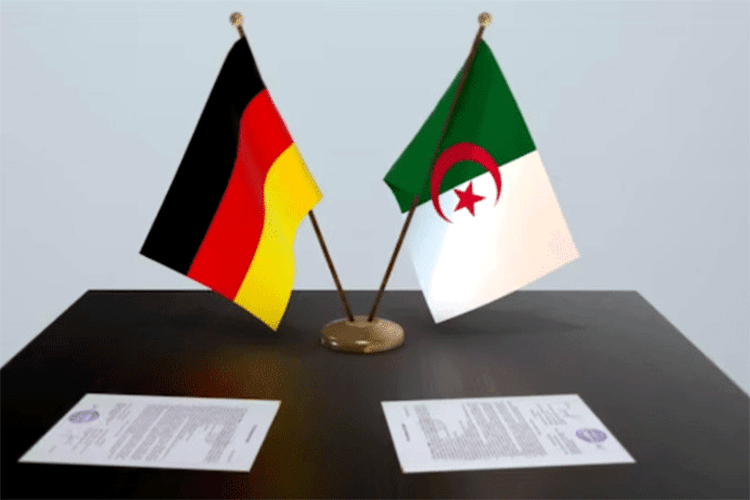
The French are closely monitoring the Algerian-German partnership, which has witnessed remarkable development in recent years. This cooperation has expanded into sensitive sectors, including various forms of energy — both fossil fuels and clean energy — as well as the automotive industry, a sector that until recently was largely considered a domain dominated by French industrial exports.
French media have highlighted Algeria’s notable rapprochement with Berlin, which is seen as a strong competitor to Paris in a country that France had long considered a vital sphere of influence. In this regard, Radio France Internationale noted on Sunday, June 12, that “several memorandums of understanding have been signed in various sectors, including industry and digital technology.”
The same source pointed to the growing number of agreements signed between Algeria and Germany in recent years, particularly those aimed at diversifying Algeria’s energy production and exporting part of it to Europe. These developments follow the outcomes of the first Algerian-German investment summit held last year.
French observers expect relations between Algeria and Berlin to strengthen further during the official visit of Algerian President Abdelmadjid Tebboune to Germany in mid-July. According to Radio France Internationale, this visit had not yet been officially announced by the Algerian side at the time of the report.
Although the article notes that the main joint project between the two countries goes beyond traditional bilateral cooperation — referring to the “South 2” corridor, a 3,300-kilometre gas pipeline project that is expected in the future to transport green hydrogen from North Africa to Europe — Germany is emerging as the leading partner in this ambitious future project.
Last week, the Algerian-German Chamber of Commerce and Industry announced that six German industrial companies would arrive in Algeria at the end of June to explore opportunities in the Algerian automotive sector. The delegation, specialized in automobile manufacturing and subcontracting, was sent at the request of Germany’s Ministry of Economic Affairs, Trade and Industry.
The two countries have also signed two agreements in Algeria in recent days. The first, financed by Germany’s Federal Ministry for Economic Cooperation and Development, aims to digitize and modernize Algeria’s electricity network. The second, signed between Algeria’s Sonatrach and Germany’s VNG AG, focuses on developing green hydrogen projects to reduce methane emissions in the country.
The French feel they are losing a friendly country and a promising nearby market due to the political and diplomatic disputes that have affected bilateral relations in recent years. According to official Algerian positions, France bears responsibility for these tensions, with Algeria repeatedly finding itself in a defensive position.
Meanwhile, Italy has managed to establish a strong economic relationship with Algeria, largely driven by the strategic energy market under current circumstances, as well as the automotive sector. The Italian brand Fiat is currently the only global car brand producing vehicles in Algeria and marketing them locally. In contrast, the Renault factory in Oued Tlelat near Oran, western Algeria, has been shut down for nearly six years due to what the Ministry of Industry described as a failure to meet contractual obligations.
According to a statement from the Algerian-German Chamber of Commerce and Industry, Germany’s automotive sector is expected to enter the Algerian market soon following the planned visit of the “specialized delegation in automobile manufacturing and subcontracting,” scheduled between June 28 and July 3. This comes amid a shared political will in both Algeria and Germany to expand the prospects of bilateral cooperation.
France remains, among Algeria’s European partners, the biggest loser compared with its Italian, Spanish, and German neighbours, who have managed to maintain more balanced political relations with their Maghreb counterpart. In contrast, France’s political calculations have cost it significant interests in Algeria.