French Foreign Minister To A Le Pen’s Party MP: “You Are Obsessed With Algeria”
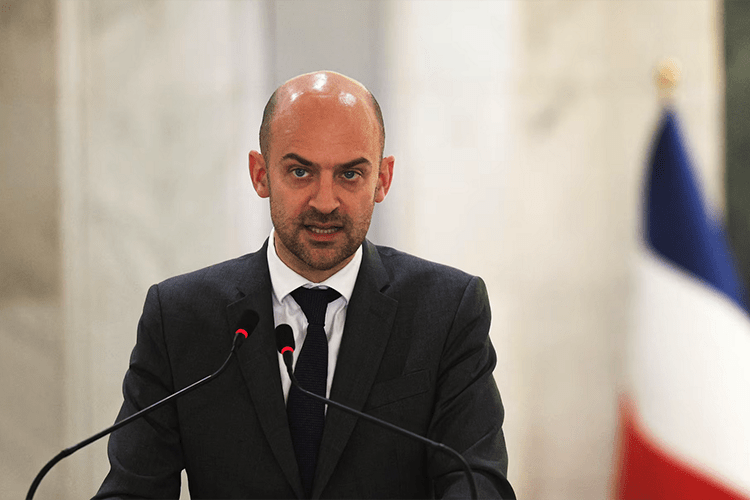
Algeria was dragged early into the propaganda campaign of the French far-right in anticipation of the upcoming presidential elections, causing trouble for Emmanuel Macron’s administration, which rushed through its Foreign Minister, Jean-Noel Barrot, to accuse this political current of being “obsessed with Algeria”, in response to a parliamentary question regarding recent statements by the French ambassador about the number of visas granted to Algerians.
Despite admitting to reducing the number by 20%, the French government, under pressure from deputies of Marine Le Pen’s extremist party, rushed to distance itself from the decline in the number of visas granted to Algerians, and attempted to justify this decline by the repercussions of the political and diplomatic crisis that has plagued bilateral relations since 2024, and the resulting mutual expulsion of consular staff.
In a premature election campaign on the backs of Algerians, Edwige Diaz, a member of Parliament and vice-president of the National Rally party, claimed in her question to the French Foreign Minister “that 40% of Algerians over the age of 15 do not work, do not study, and are not retired”, and represent “43% of those who receive medical care at the expense of the French government”.
The French minister perceived an unjustified prejudice by the vice-president of the National Rally party against Algerians, responding to her by saying: “You are obsessed with Algeria and Algerians…”, he also defended the steps being taken by the French government regarding pending issues with Algeria, including the case of the citizen Christophe Gleizes, who is serving a seven-year prison sentence due to his involvement in cases related to supporting and praising terrorism.
In the briefing provided by the French Foreign Minister, Jean-Noel Barrot, last Tuesday before the members of the French National Assembly (the lower house of parliament), he said that the number of visas granted to Algerians decreased by 20% since 2024, which corresponds to the beginning of the crisis caused by the French President, Emmanuel Macron, by his decision to support the Moroccan regime’s occupation of Western Sahara.
Jean-Noel Barrot explained: “Regarding the issue of visas, I would like to start by saying that since the outbreak of the crisis with Algeria, the issuance of visas has decreased by 20%, last year compared to the year before, and this is primarily due to the restrictions imposed by the Algerian government on our diplomatic network”.
The French official added: “Since then, we have engaged in a new dynamic with the Algerian authorities, in the service of the interests of France and its people, as we have interests to defend in matters of migration, security, and the fight against drug trafficking and terrorism.
There are no specific numerical targets, as our policy is not based on quantity or quotas, but on assessing how to protect our interests. Re-engaging with Algeria is a gradual and reversible process, and depends on the results we achieve”.
The head of French diplomacy attributed this decrease in granting visas to what he described as “the strict decisions taken by the Algerian government against our diplomatic network. But apart from that, we have not set specific numerical targets. Our policy is not based on quantity or quotas, but on an assessment of our interests and the evolving relationship”.
The percentage of decline in the number of visas granted to Algerians constitutes one-fifth of the total number, as the number decreased from 250,000 visas per year to only 200,000, which is a large figure that cannot be justified by the expulsion of a number of French consular staff working in Algeria, or by the withdrawal of the French ambassador, because the three consulates (Algiers, Annaba, and Oran) continued their work normally without harassment.
Confirming the lack of credibility of those statements, the French President, Emmanuel Macron, had previously called for reducing the number of visas granted to Algeria by 30%, before the outbreak of the crisis over the French position on the Western Sahara issue, which indicates that the justifications provided by the master of the “Quai d’Orsay” palace remain mere words.