French Parliament Rejects Depriving Algerians of the Activity Allowance
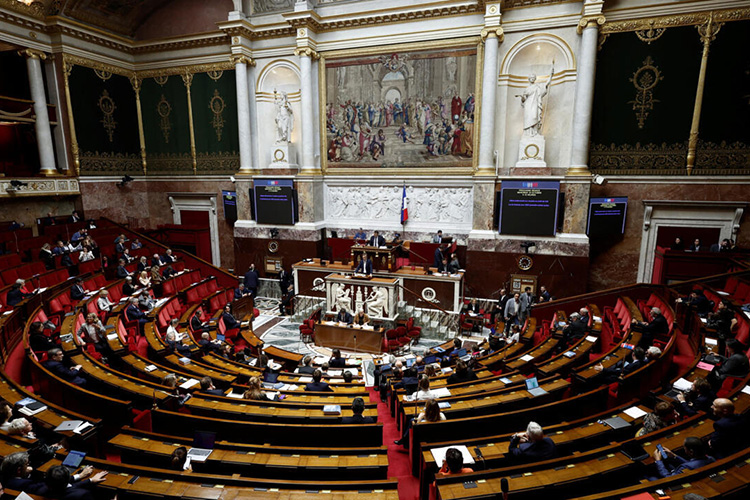
The Committee on Finance, General Economy, and Budgetary Control of the French National Assembly (the lower house of parliament) rejected an amendment proposed by a member of President Emmanuel Macron’s party, Charles Rodwell.
The amendment aimed to deprive Algerians residing in France of access to the activity allowance by introducing an explicit change to the social security law that would have affected the legal benefits stemming from the 1968 immigration agreement between Algeria and France.
This amendment, proposed by MP Charles Rodwell on November 6, 2025, and reviewed by Echourouk, was rejected during the review of the 2026 Finance Bill. It would have added a new paragraph to Article L.842-2 of the Social Security Code, stipulating that residence permits granted under the December 27, 1968, agreement would be treated exactly like other residence permits held by non-EU nationals when applying for the activity allowance.
This amendment would have subjected Algerians to the same procedures as other nationalities, thus abolishing the historical relations that have been in place for over half a century under the 1968 agreement. However, due to this rejection, the 1968 agreement remains in effect. Algerians residing in France will continue to benefit from the activity allowance under the current conditions, despite escalating political and media pressure.
Although the amendment came amidst a political campaign led by some French MPs demanding a review or cancellation of the 1968 agreement, the Finance Committee rejected it, thus maintaining the legal status of Algerians in France unchanged, particularly regarding the social benefits they receive.
The background to the amendment reveals that the initiative was not isolated, but rather came directly after the publication of a joint report by MPs Charles Rodwell and Mathieu Lefèvre concerning what they claimed were the “legal and budgetary implications of the bilateral agreements concluded between France and Algeria regarding movement, residence, work, health and employment. This amendment called for a review of the legal framework governing the status of Algerians. However, the parliamentary rejection clearly demonstrated that tampering with the agreement is not a simple matter and lacks institutional consensus within France.
Despite the far-right National Rally party’s attempt to push for the abrogation of the 1968 agreement through a symbolic vote held at the end of last month, the decision had no legal effect and was merely a political move. This rejection confirms the continued validity of the agreement.
The rejection of the Rodwell amendment clearly indicates that official France remains cautious in its handling of this issue, even though the amendment was initiated by President Macron’s party. This suggests an official inclination within the Paris leadership to avoid abrogating the agreement but negotiating with Algeria.
This comes as five prominent French legal and human rights organizations, known for their defence for migrants—including the Syndicate of Lawyers in France (SAF), Association for the Defense of Foreigners’ Rights (ADDE), the Human Rights League (LDH), the Information and Support Group for Migrants (GISTI), and the CIMADE, an association for solidarity and political aid for migrants, refugees and displaced—recently revealed that Paris has effectively unilaterally withdrawn from certain sensitive clauses of the agreement, while Algeria continues to demand a return to the negotiating table to review it, as if nothing had changed.
In this context, the aforementioned organisations signed a joint statement entitled “The Franco-Algerian Agreement (1968 Agreement) Under Attack from All Sides: Is the Judicial System Giving Way to Politics?” The statement condemned “the unprecedented attacks on the Franco-Algerian Agreement, spearheaded in particular by the far right and those nostalgic for French Algeria.”
The source revealed a resounding scandal, which was represented by the French side’s dropping of some clauses in the 1968 agreement, particularly those relating to residence permits for Algerians, which the agreement had regulated tightly. The source did not rule out the involvement of the French judiciary in this scandal in the service of political agendas, which “Echorouk” had previously addressed in detail in a previous issue.