Interview- FIS ex-member: this what happened to my family after I had quitted FIS (part 8)

الشروق أونلاين
-
-
1350
-
0
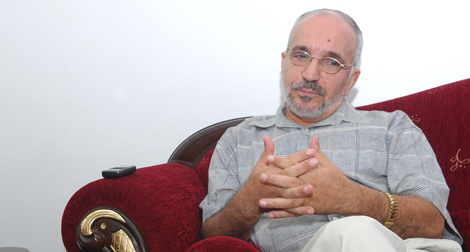
(part 8)
What did the FIS’ non arrested members do?
When Abbassi was jailed, Said Kechi was angry on him. He came back to Algiers and tried to gather the party’s members. He also tried to contact Ghezali to allow the FIS operating legally. Unfortunately, the Djazaara clan emerged and fuelled the situation. Mohamed Said’s fellows took control on Abdelkader Hachani and excluded the rest of the party’s founders who had different opinions from theirs.
Was Hachani prosecuted by security forces?
He was not prosecuted but he was on the run with no justification. Said Kechi asked him many times to attend a meeting to examine the prisoners and the FIS issue but he disappeared. No order was issued to arrest him.
Why were the rest of the FIS’ members arrested?
The arrest order touched five members for signing a communiqué inciting to clashes. It was found in Kamel Guenazi’s bag. The communiqué urges for civil disobedience and carrying out attacks on military barracks and police stations. It was not just a communiqué. It was a declaration of war against the State and people.
When they were arrested, why didn’t you come back to the consultation council membership?
Said Kechi tried to come back to do something but he could not. I made my decision and quitted the party.
Certainly, pressure was put on you and Bachir Fekih because you criticized Abbassi on TV.
No one behaved in a bad way with us because they knew we were right. The problem was with Abbassi and Ali Belhadj’s attitudes. Ali Belhadj blamed us for making those statements on the state-owned TV station. I told him I had already made those statements in the consultation council but no one listened to us.
Abbassi misled people telling them he would establish the Islamic State in the coming summer. In my courses at mosque, I told people he was lying.
Following the TV talk show, did people bother you in the street?
In the first few weeks, I walked in the street and no bothered me. Yet, an incident happened to me when I went out from a mosque in Casbah. Some people insulted me but they were stopped and it was over. When things went viral in the country, I faced many assassination attempts. Because of that, I stayed at home.
You held many positions after you had quitted the FIS.
I had stayed at home for six months. It was the most difficult period in my life. Later on, the head of government Sid Ahmed Ghezali appointed me as his adviser as I was experienced with mosques management.
But you proved that you worked for authorities when you accepted that appointment.
I did not ask for it though I needed a job. At that time, there was tension in mosques. Hachani preached in a mosque in Bab El Oued in Algiers. The mosque was surrounded by the police. He described the situation as the Al Aqsa mosque surrounded by Israelis. In fact, that hurt me. Because of that, I wanted to see the head of government. I advised him to not use a power struggle at mosques because that would provoke prayers. I told him many things should have been treated with imams inside mosques and wrongdoings must have been treated outside mosques because they should not have been involved in the political conflict.
What did Ghezali tell you?
He had listened to me for more than a half an hour without uttering a word. When he started talking, he surprised me.
He suggested to appoint me as religious affairs minister so that I would treat tension at mosques. I was surprised and told him I just came to advise you. I had never thought of becoming a minister.
So, you rejected the position in 1992.
I told him I was not ready for that position. He complained about the religious affairs minister at that time. Yet, I rejected the position. He asked me to think about that. Actually, all the officials knew about my difficult social situation. I was told that Ghezali received instructions to insure my safety.
So, you had got a body guard and a position.
Shortly before the announcement of February 1992’s cabinet reshuffle, Ghezali asked to meet me in his office. He told me he reshuffled his cabinet and he appointed me as an adviser to help the new minister.
You did not criticize authorities when people were detained in the desert camps.
I was not a minister. I was an adviser but no one asked for my consultation. I was protected because my life and my family were threatened. I earned a salary because I needed a job. It was impossible for me to resume my business. Twenty years later, everyone realized that I was not against the FIS. I defended my country in my religious way. Islam rejects bloodshed.
I said my word in spite of assassination attempts.
How was Bachir Fekih killed?
Bachir Fekih was killed in an accident. According to witnesses, he was coming with two of his friends from the province of Oran (west of Algiers) to the capital. His neck was broken and he was totally paralyzed. He had stayed in hospital for 3 months and died there.
Who was the wisest leading member in the FIS?
It was cheikh Said Kechi. He was a wise man. He participated in the national revolution against the French occupation at the age of 12. He was the first who had the idea of creating the FIS.
How did he die?
He had been the minister of employment for months. Then, he went to Mecca where he had stayed for years. In 2001, he was killed in an accident. He was buried there.
In 1996, you were appointed as religious affairs minister, Said Kechi as employment minister and Yahia Boukliha was your adviser. It was as if you obtained the deal price, according to your opponents.
Anyone can analyze this as he likes. Everyone can take any position according to his convictions.
Your senior positions seemed as rewards, according to your opponents.
I had worked with senior officials to sensitize people since 1992. I washed hands and I do not care about what people say.
Some blame you for not taking a severe position toward the ban of the electoral process and the FIS.
The ban of the electoral process is not the end of the world. The president of the republic has the prerogatives to dissolve Parliament. This is my opinion and it was even published on Le Figaro newspaper. I said neither the continuation nor the ban of the electoral process was the end of the world. Even if the electoral process continued and the FIS reached Parliament, the president of the respublic had all the prerogatives to dissolve Parliament after 3 months. He would declare emergency state. I am against those who said if the FIS reached power, a disaster would have taken place in the country. I am also against those who said the ban of the electoral process was behind the violence wave in Algeria. The most serious question is: what did we do to be in such a situation?
What would be your answer to that question?
In the beginning, officials were not wise in dealing with the situation. Authorities could have stopped elections from the beginning. The Constitution and the legal system should have been fixed in an impartial way.
According to Ghezali, the elections were transparent and the FIS won the majority. Then, the elections were banned and the winner party was dissolved.
Authorities and security forces had the identity of all those who had carried out violent acts previously. They thought if they arrested them, violence would have been stopped. Authorities thought armed people were few and would have been eliminated. Khaled Nezzar had said: “There are few groups. We will take them to the desert and the problem is over.” Those ideas were superficial and stupid because the armed people were not identified. They were aged between 18 and 20 and they were manipulated.