Italian Study: Partnership with Algeria Linked to National Security
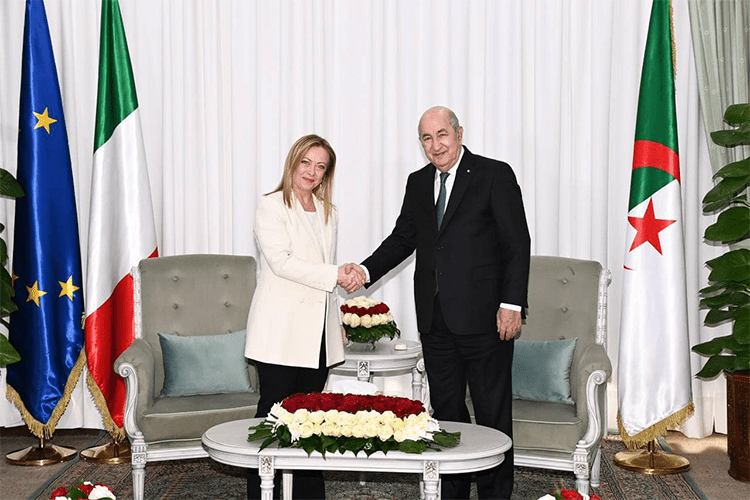
An Italian analytical study has confirmed that Algeria, now a key focus of Rome’s energy policy, holds strategic value that goes beyond its commercial importance, particularly in relation to national security.
The study highlights that, despite geopolitical challenges, Algeria offers Rome greater predictability compared to other regions. It notes that, although Algeria maintains close ties with Russia, China, and the European Union, it possesses a non-negotiable sovereign decision-making power.
In this context, a comprehensive analytical study published on Monday by the Italian economics and finance website “LaMia Finanza,” authored by Professor Marco Pacini and lawyer Francesco Serra, asserts that the relationship between Italy and Algeria has emerged as a crucial pillar of energy policy in the Mediterranean.
The study emphasizes that this relationship transcends mere commercial interests, acquiring strategic significance due to its ties to national security, supply stability, Italy’s expansion into North Africa, and Southern Europe’s efforts to mitigate vulnerabilities stemming from geopolitical divisions related to the war in Ukraine, tensions in the Middle East, and global competition for vital infrastructure.
The document suggests that discussing Algerian gas is fundamentally about addressing Mediterranean dynamics, strategic independence, economic intelligence, and a state’s capacity to interpret subtle signals that may precede crises.
The study highlights that after 2022, Algeria emerged as a key element in Italy’s energy diversification strategy. The gradual reduction in Russian gas supplies, culminating in the halt of transit through Ukraine starting January 1, 2025, compelled Europe to reevaluate its supply chains. Italy aimed to turn this vulnerability into a geopolitical advantage, capitalizing on its geographical position and extensive connections within the Mediterranean region.
The Transmed pipeline, which connects Algeria to Italy via Tunisia, serves as a vital link between Africa and Europe, influencing industrial competitiveness, supply security, and a nation’s global standing.
The authors of the analytical document assert that the partnership with Algeria becomes even more valuable in light of the rising instability in the Middle East. They note that tensions in the Gulf region, frequent disruptions to liquefied natural gas (LNG) routes, and the sensitivity of the Strait of Hormuz highlight that energy security now relies on managing complex, interconnected challenges through traditional approaches.
The study indicates that the gas market is now influenced by factors beyond just supply and demand. It is also affected by the security of maritime routes, governmental stability, suppliers’ production capacities, external pressures, and the vulnerability of the digital infrastructure that manages extraction, transportation, and distribution.
The document highlights that Algeria provides Italy with more predictability compared to other regions in North Africa. However, the authors stress that this potential requires thorough analysis. Algeria follows an independent foreign policy, has historical military ties with Russia, and maintains significant economic relationships with China, while remaining open to cooperation with Europe without compromising its sovereignty.
For Rome, this study emphasizes the importance of operating within a framework that prioritizes political realism, diplomatic continuity, and analytical capability. While Algeria is a valuable partner, it also operates as a sovereign entity within a complex balance of power. As such, our relationship with Algeria should be approached as a strategic priority rather than just a commercial transaction.
The document highlights Algeria as a case study in the evolving concept of security. National security now extends beyond borders and military defense to include energy, data, infrastructure, supply chains, technology, essential resources, ports, submarine cables, digital networks, and industrial capabilities. It notes that the energy crisis can significantly affect industry, inflation, competitiveness, social stability, and diplomatic relations.
The authors of the document concluded that Rome’s relationship with Algeria serves as a measure of Italy’s strategic maturity. They argue that a partnership based solely on emergency measures is unlikely to endure, while one founded on investment, training, technology, joint development, and energy transition can create lasting value. Thus, the “Mattei Plan” emerges as a crucial framework, provided it successfully transforms energy into a comprehensive political and economic cooperation initiative.
The study asserts that Italy cannot enhance its role as a Mediterranean energy hub without a proactive policy that enables it to identify risks before they escalate into crises. The Russian gas crisis highlighted the costs of neglecting long-term risks, while a strategically managed partnership with Algeria could serve as a model for diversification, stability, and the reconfiguration of European energy security.
In the study’s conclusion, the authors emphasized that, following the 2022 crisis, Italy recognized that energy dependence could become a strategic vulnerability. However, there is now an opportunity to convert it into a strength, understanding that diversification involves creating a flexible system capable of addressing challenges, rather than merely substituting one resource for another. Consequently, the relationship with Algeria transcends a simple gas agreement; it tests Italy’s ability to integrate economic security into its national security strategy.