Mohamed Loukal: “Closing Hard Currency Black Market Is Not Yet Decided”

-
-
1066
-
0
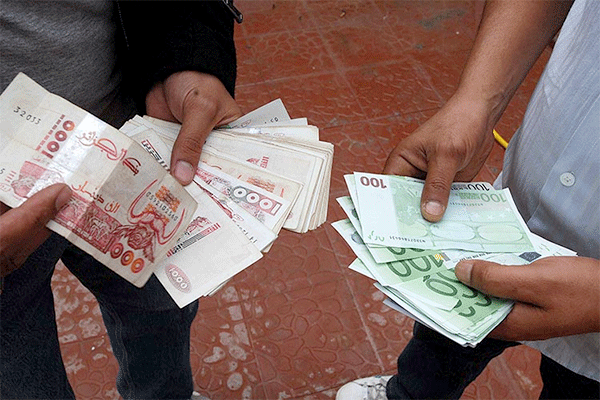
Governor of the Algeria Bank, Mohamed Loukal, confirmed the impossibility of closing the black market for the hard currency “Square” for the time being.
He acknowledged the failure of the official exchange office project despite the incentives, and the number of 35 licences that are granted but they were canceled.
This was attributed to the unwillingness of cashiers to make legal provisions.
In a press statement on the sidelines of his participation in the tripartite meeting at the headquarters of the central syndicate to sign the partnership agreement between the public and private sectors, Loukal said that the process of attracting the black market traders to go to the legitimate offices and encourage them to stop the chaos of hard currency, did not succeed because of several factors, including the unwillingness of cashiers to adopt legal licences.
“Algeria Bank provided 35 licences to the exchange offices, but most of these funds were waived by the owners. It is certain that cashiers prefer the black market in such circumstances” .
“Algeria Bank is going to find a new system for the establishment of exchange offices, and the black market traders will gradually integrate into this system because the country’s financial conditions dictates this. We have to arrange things and take advantage of all the money that exists outside the official frameworks”.
In terms of figures, the size of the total amount of cash for Algeria is DZD 14.000 Billion, of which 32% are located outside the official frameworks.
“Money that is traded in the parallel market represents DZD 4700 billion, including DZD 2700 billion on the black market, and between DZD 1500 billion to DZD 2000 billion are kept by Algerians in their homes”.
“The re-polarization of parallel market funds requires the improvement of banking services and their development”.
The governor of Algeria Bank announced on the opening of five branches of Algeria External Bank in France in the beginning of 2018, which would raise the value of funds from the Algerian immigrants to exceed $2 billion a year.
“National currency will not change. The elimination of the financial crisis that the country is experiencing due to the decline in its revenues from foreign currency calls for the elimination of its causes and the replacement of the currency will not be a solution, since the reason for the devaluation of the dinar is not the currency”.
He also denied the revision of the value of the travel grant only if the price of a barrel of oil will exceed $100.
In his justifications for the government’s refusal to raise the travel grant, he responded: “The current financial situation in Algeria does not allow us to raise the value of the travel grant, especially as the government is striving to stop the bleeding of hard currency. The annual value of the travel grant has recently fallen to the equivalent of 105 euros, due to the historical collapse of the dinar against foreign currencies”.