Money Printing To Be Monitored To Avoid A Purchasing Power Collapse

-
-
1018
-
0
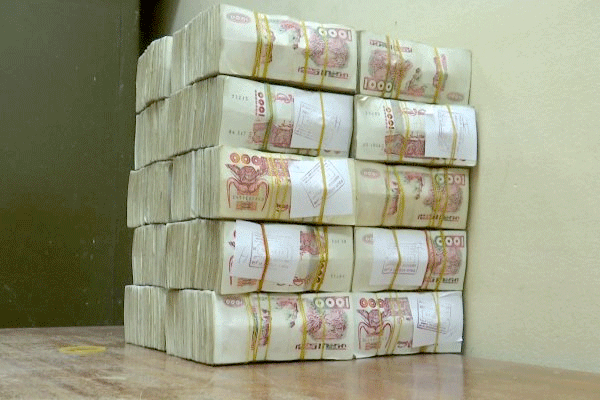
Bank of Algeria launches a partnership with the Finance Ministry, to place mechanisms of controlling the performance and impacts of nontraditional financing, or what is known as the credit operations for the public treasury, as they agree on a set of standards that regulate control and that is related basically to the cash which is traded in market and the level of inflation, the banks’ liquidity and the exchange market.
Finance Ministry’s official sources told Echorouk that there is a series of meetings between the Minister, Abderrahman Raouia, and officials from the ministry with the Governor of the Bank of Algeria, Mohammed Loukal, and his assistants, in order to prepare for activating the non-traditional funding mechanism, or what is known as credit cash for the public treasury from the Bank of Algeria, which will allow overcoming the funding hurdle that was behind the freezing of many development projects, from it was which decided to lift the freeze, especially in the health and education sectors.
“Both parties agreed that these financing operations would not take place outside of the annual financial laws, as public expenditure is within the limits of the finance laws and the use of this tool will only be within this framework”.
“Finance Ministry and the Bank of Algeria are studying the new financing from all sides to avoid any potential shock to the process. It was agreed in principle to secure field follow-up through a supervisory framework at the level of the Finance Ministry, which creates a committee with the main task to monitor the effects of non-conventional financing, or what is known as the printing of money on the treasury of the state. It will also be carried out at the level of the Bank of Algeria in parallel through bilateral monitoring of the performance and effects of this mechanism on the monetary mass, inflation, liquidity of the banks, and the exchange rate as well, for better use and redirection of this special funding if it does not achieve its objectives”.
“This proactive coordination process that was launched by the Finance Ministry and the Bank of Algeria was reinforced by an ongoing study on the impact of the new mechanism for financing projects and covering the budget deficit on inflation, in order to avoid all the factors that give rise to this phenomenon. As these accounts forced the Finance Ministry to take into account the indicators that came within the estimates of the draft financial law for the next year, and the following three years as well”.
Government expected a downward inflation rate in the coming years, as inflation, according to a document, which copy is available to Echorouk, that will reach 5.5% in the coming year, i.e, the same proportion is expected by the end of the current year, to retreat to 4% in 2019, and will continue to decline in 2020 to reach 3.5%.