Moroccan Royal Court’s Intellectual Tahar Ben Jelloun Woefully Defends Sansal
Some Franco-Moroccan writers and elites, who revolve around the Alawite palace, found in the letter from German President Frank-Walter Steinmeier regarding Boualem Sansal an opportunity to target Algeria and attempt to undermine its judiciary. Meanwhile, these individuals lacked the sufficient courage to criticize the deteriorating human rights situation in their own country, where thousands languish in prisons without trial, most recently the youth of “Generation Z”.
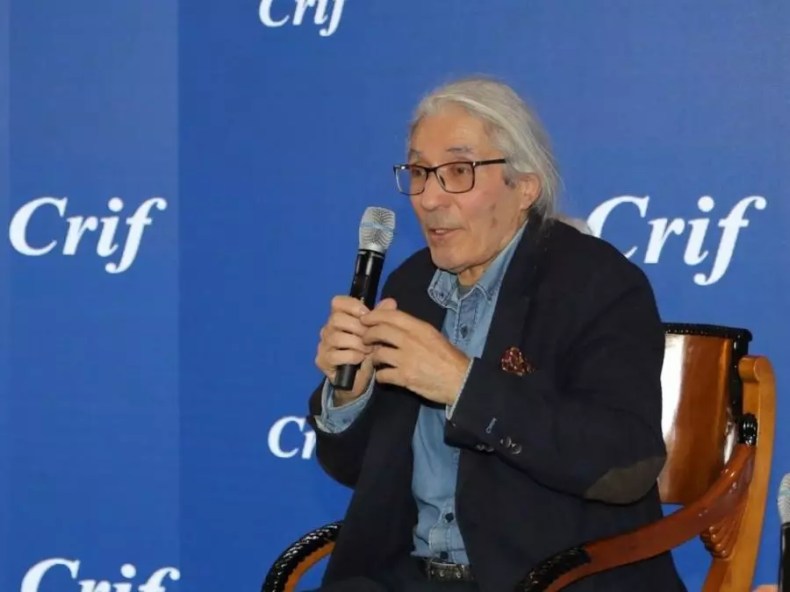
Among these is the Royal court intellectual of the Alawite Kingdom, Tahar Ben Jelloun, winner of the “Goncourt” prize (awarded only to Francophiles), who proceeded to defend Sansal and criticize the Algerian judiciary’s decision to imprison him, while remaining completely silent on a heinous case in which the Moroccan regime was involved: the imprisonment of human rights activist and lawyer, Mohamed Ziane, who is over 82 years old and has been imprisoned for nearly three years despite his illness.
In an article on the website of the French weekly “Le Point”, the Makhzen intellectual, Tahar Ben Jelloun, wrote an article on the evening of Monday, November 10, titled: “Quickly, release Boualem Sansal!”, in which he lamented the year Boualem Sansal spent in prison in Algeria, in a case where no two people would disagree that it leads its perpetrator to prison, as he deliberately harmed the territorial integrity of the state whose nationality he holds, in addition to other serious charges for which he could have been prosecuted, such as the charge of espionage, which remains proven by documented evidence.
Based on the case of Boualem Sansal, for which he was sentenced to five years in prison with leniency, the Moroccan Francophile intellectual attacked the Algerian authorities, describing the convicted defendant as “a tremendous innocent man”, in an attempt to bestow a cloak of sanctity upon Boualem Sansal and criticizing the decision to imprison him: “A year in prison. Deprivation of liberty, a permanent humiliation of law and justice. A year during which Boualem Sansal could have written one or two books. At least, to bear witness to his time and his wounds.”
In the midst of his defense of his Francophile comrade, Tahar Ben Jelloun delved into finding justifications to exonerate Sansal from the punishment he was convicted of, writing: “Boualem Sansal did not utter a defamatory word, but rather recalled a historical event dating back to the time when French colonialism annexed Moroccan or Tunisian cities and regions to enrich Algeria,” in a blatant distortion of historical truth, and amidst suspicious silence from the French media, which in turn did not dare to criticize the Moroccan regime in the Ziane case, who also holds the nationality of a European country, Spain, where he was born to a Spanish mother and a Moroccan father.
It was clear from the words of the Moroccan court intellectual that his defense of Sansal was not out of a desire to champion freedom of expression, but rather for considerations related to his attempt to harm the territorial integrity of Algeria, which is considered by the Alawite palace, its entourage, and court intellectuals like Tahar Ben Jelloun, an enemy state, as the former consul of Oran said, but rather a source of annoyance for them, given its glorious and heroic history, unlike the Alawite Kingdom, which was established by the French Governor-General, Hubert Lyautey, whose statue still stands in the heart of Morocco’s largest city, Casablanca.
What is striking is that Tahar Ben Jelloun, who claims to defend freedom and human rights, did not dare to write even a single word about the Moroccan human rights activist, Mohamed Ziane, who is serving a five-year prison sentence in one fabricated case while awaiting the rest of the other cases.
He is over 82 years old, simply because he asked the Moroccan King, Mohammed VI, to hand over power to his successor, due to his continuous absence from the Kingdom and his semi-permanent residence in France and Gabon.