New Provocations Against Algeria From Macron’s Camp!
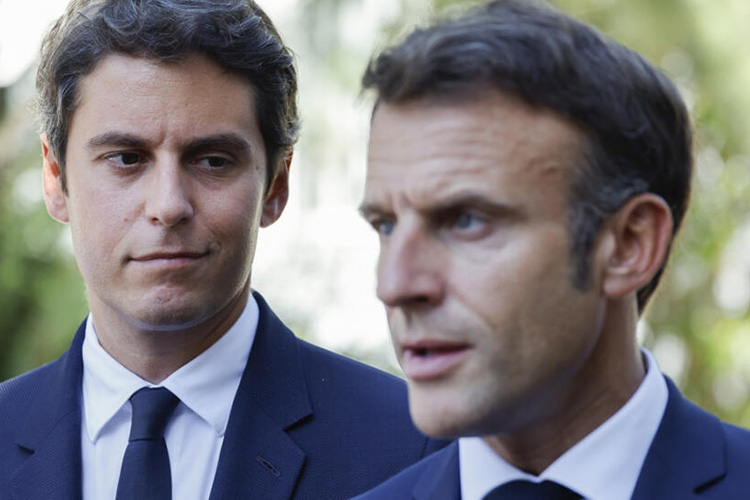
Once again, French politicians, including those who lead the camp of their president, Emmanuel Macron, confirm that they are not serious about complying with the option of appeasement that this camp has been pushing for over many months, and the latest provocation that will undoubtedly leave effects on the rapprochement between the two capitals is what was issued by Gabriel Attal, former prime minister and head of the “Renaissance” party, which Macron founded about eight years ago.
In a speech before a gathering of his party, Gabriel Attal, a French politician of Jewish origin, made fiery statements against Algeria, accusing it of “reactionary”, in the latest slip of a politician from the pillars of the French president’s rule, and it is interesting that this provocation coincided with the presence of Paris Foreign Minister Jean-Noel Barrot in Algeria on an official visit.
In his speech, which was carried by various French media outlets, including the private TV channel BFMTV, Gabriel Attal said, “We are facing an unprecedented attack: “We are facing an unprecedented attack by reactionaries, those who stifle freedom of expression, question democracy, reject the flag, absent women and exclude minorities (he was interrupted by boos).”
After describing them, Gabriel Attal, whom Macron appointed as prime minister last summer, told a crowd of his party’s supporters: “They are the ones in Algeria who imprison our compatriot Boualem Sansal (also booed), criminalize him because he writes and thinks freely, criminalize him because he is French. Once again I say it loudly, I call on the Algerian president to give him his freedom.”
The prominent man in the French presidential camp put Algeria alongside the Russians, who he said are fighting Ukrainians because they want to live in freedom and democracy, the Americans, who he said “reject freedom and diversity,” and Hungary, where “the rights of women and LGBT people are violated and they want to silence the freedom of the press.”
This provocation confused many who follow the rapprochement between the two countries, because it coincided with the presence of the French Minister of Europe and Foreign Affairs, Jean-Noel Barrot, in Algeria on an official visit mandated by the president in the context of de-escalation efforts, more than eight months after the crisis erupted, following the change in the French position on the Sahrawi issue, which was considered a deviation and an unfriendly position in Algeria.
The leading position occupied by Gabriel Attal in the presidential camp in France (head of the president’s party) also increased Algerians’ doubts about the seriousness of the French side, led by Macron himself, to follow the line of de-escalation according to the outcomes of the phone call that took place between the two presidents on the first day of Eid al-Fitr.
Gabriel Attal’s statement raises questions about the backgrounds of this statement, because it is not about someone like Interior Minister Bruno Retalleau, who is known for his extreme right-wing orientations and his positions hostile to Algeria and its interests, according to a diplomatic analyst who spoke to Al-Shorouk, but about someone close to President Macron.
This may be related to the multiple sources of decision-making in France, which explains the inconsistency in statements and positions on Algeria, the diplomatic specialist added, but this does not justify targeting Algeria every time, even at a time when Foreign Minister Jean-Noël Barrot is on an official visit to the country targeted by this statement.
The French provocations against Algeria are merely an exchange of roles between different political actors. The question to be asked here is whether the Algerian side should respond to these harassments, which reveal the other side’s lack of willingness to establish friendly relations, even if some try to link this to democratic traditions, which remain a mere pretext to continue the provocations.
The recent crisis between Algeria and Paris has shown that politicians and even the press on the other side of the Mediterranean attack Algeria when asked to do so, and vice versa, which was recorded by following the largest right-wing media outlets, represented by Le Figaro, in which the number of articles attacking Algeria per day exceeded 20 articles when bridges of communication were cut off, i.e. at the height of the crisis, but after the call between the two presidents, the number of articles decreased to only one or two per day with a reduction in the intensity of the provocation, raising more than one question about French media independence and follow-up.
The French provocations did not stop at statements, but are moving towards actions. The reference here is to the upcoming visit of French Interior Minister Bruno Retailleau to the Kingdom of Morocco on the 14th of this month, which indicates that Paris is playing both sides of the fence, a tactic that has become trite in the eyes of Algerian officials and will undoubtedly cast a shadow on the rapprochement between the two countries.
This is a real test for the French side, because what was revealed during Jean-Noël Barrot’s visit is only a declaration of principles, but its realization remains hostage to the extent to which Paris respects its pledges and commitments, and respects the establishment of friendly relations based on a win-win basis, and not the logic based on “bazaar” considerations, i.e. making Algeria a mere market for its goods while focusing on investing in the services sector such as banking and insurance, without taking responsibility for its obligations in productive investment and technology transfer, based on the “exceptional partnership” rule that exists between the two countries.
The current scene of Algerian-French relations is almost identical to the stage that followed Emmanuel Macron’s visit to Algeria in the summer of 2022, with some differences, as the two countries agreed then to strengthen cooperation in various fields and sectors, followed by the visit of former Prime Minister Elisabeth Borne to Algeria in the fall of the same year at the head of a large delegation of ministers, in anticipation of signing agreements profitable for France but not for Algeria, a visit that did not achieve its goals.