October 17, 1961 Repression: “Colonial France killed millions of Algerians not just 172”

-
-
1591
-
0
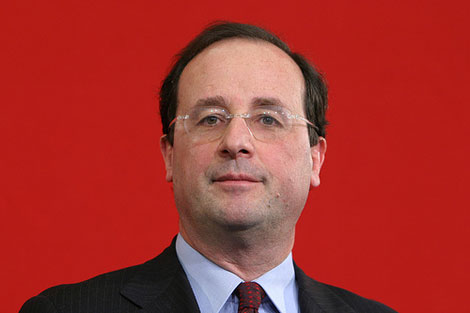
Several Algerian Mudjahidine or war veterans have reacted to the official recognition this week by French President François Hollande of the brutal killings of hundreds of peaceful Algerian protesters by French police on October 17, 1963 in Paris.
- “The French republic clearly recognizes these facts. Fifty-one years after this tragedy, I pay tribute to the memories of the Algerian victims,” President François Hollande declared.
- A member of the mudjahidine organization Mr Aomar Belhadj told Echorouk that this official recognition sealed just one of the many chapters in France’s somber and haunting colonial history.
He said that colonial France had mercilessly killed millions of Algerians and the 172 recorded victims of French repression on October 17, 1961 in Paris were only a drop in the ocean, as he put it, if we register all the barbaric crimes committed by the French colonial yoke during the 132 year-long harsh occupation of Algeria.
France officially“recognises” 1961 Paris bloody Massacre/ - For the first time since the 1961 massacre of hundreds of unarmed Algerians in Paris, France has officially acknowledged the heinous killings.
- In a communiqué published by the Elysee Palace on Wednesday, President Francois Hollande said: “On October 17, 1961, Algerians who were protesting for independence were killed in a bloody repression. The French Republic recognises these horrendous facts with lucidity. I pay homage to the victims fifty-one years later.”
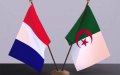
- This official acknowledgement of the brutal killings comes a few weeks before Mr. Hollande is due to pay a state visit to Algeria in early December.
- Algiers satisfied/
-
Algiers, however, did express its “satisfaction” at the turn of events. Historian Jean-Luc Einaudi, who first documented the killings in his book The Battle for Paris, said the labour of reconciliation could now finally begin. - Until now, the official version has admitted to only two deaths and since documents relating to the incident remain classified, the actual number of Algerian victims remains vague but it is estimated to exceed 200.
- The October 17th 1963 Paris killings could be compared to India’s Jalianwala Bagh massacre, in which unarmed civilians protesting the colonial presence were mercilessly killed by overzealous colonial officers.
- The French equivalent to General Dyer was a Nazi sympathizer called Maurice Papon, the then Prefect of Paris
- As the war for independence intensified in Algeria, Mr. Papon imposed a curfew on Algerians living in France. Algerian leaders called on the community to defy the curfew and protest peacefully for Algeria’s legitimate right to freedom and independence.
-
On October 17 1961, scores of Algerian protesters in Paris were rounded up, indiscriminately beaten and tortured by French police forces. Many of them were callously thrown alive — their hands tied behind their backs — into the river Seine.
- Mr. Papon served as a senior civil servant right through the Nazi occupation of France during World War II and into the 60s.
- In 1998, Maurice Papon was convicted of crimes against humanity for his misdeeds during World war II.
Mr. Hollande’s decision to officially acknowledge the bloody French repression of October 17th 1963 in Paris is not without political risk.
It has the French Right and extreme-Right frothing at the mouth. The National Front leader Jean-Marie Le Pen always opposed Algerian independence (he reportedly tortured Algerian moudjahidine or freedom fighters during the Franco-Algerian war) and his daughter Marine Le Pen, who now presides over the National Front’s fortunes, has also criticized Mr. Hollande.
- The parliamentary leader of the rightist Union for a Popular Movement (UMP) party, Christian Jacob, said, quote: “It is unacceptable to blame the state police and with them the whole Republic, unquote.”
- Last July, Algeria celebrated 50 years of a hard-won independence from France. A hundred and thirty two years of harsh colonial rule and a bloody independence war have left a bitter, divisive legacy in both countries.
-
There has never been official acknowledgement of that repression thus far. Mr. Hollande had pledged to change that. On 26 March 2012, he said he would atone in an official capacity for these woeful events.
- “The truth must be known. It is important to recognize what occurred,” Mr. Hollande wrote in a letter. An apology from the French President would be momentous and is unlikely to come soon. Recognition is just the very first small step in that direction.