Parliament Adheres to the Powers to Decide on Immunity Withdrawal
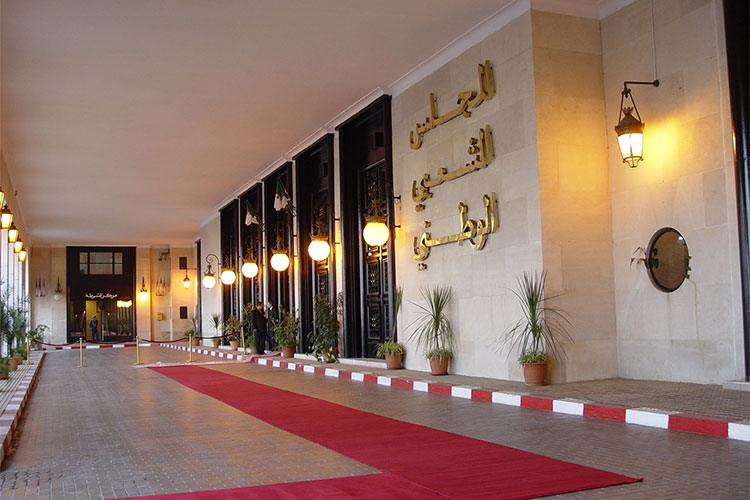
The preliminary report on the draft internal regulations of the National People’s Assembly specified, in its latest version, the cases of withdrawing parliamentary immunity from the elected representatives, as well as the legal procedures followed to strip him of parliamentary term.
The new draft, expected to be presented to the MPs soon, also detailed the methods for notifying the Constitutional Court if there would be an automatic waiver.
The draft internal regulations for the lower chamber of Parliament will see the light soon after it is decided to refer the new version to the MPs to review its content and plan it for discussion soon. The preliminary report,-checked out by Echorouk-, detailed the methods of waiving parliamentary immunity and withdrawing it from the MPs, as well as the methods of notifying the Constitutional Court if it is automatically waived.
According to the text of Article 174 of the preliminary report, “The MP may voluntarily waive her/his parliamentary immunity either by submitting an explicit waiver to the competent judicial authority or by depositing this waiver with the Council’s office, in this case, the Speaker of the Council will notify the relevant authorities of that decision.”
If the Council’s Office is notified by the relevant authorities of the arrest of an MP in flagrante delicto, as Article 175 stipulates that the office shall meet immediately upon being notified, and if the Speaker of the Council is absent, the oldest MP from the present MPs shall act on his behalf. The Council Office may request the release of the MP and the suspension of the judicial follow-up.
In all cases, the report adds, if the MP does not waive the parliamentary immunity, the relevant notification authorities in this regard can notify the Constitutional Court of the decision.
If the parliamentary term is dropped, Article 177 stipulates that the Council’s office, upon notification from the Minister in charge of Justice, can carry out procedures to revoke the MP’s parliamentary term following the provisions of Article 162 of the Constitution, as the Legal Affairs Committee studies the request to drop the parliamentary term based on a referral from the Council’s Office. The latter listens to the concerned MP, who can seek the assistance of one of the MPs.
According to the new draft, the committee also prepares a report on the matter and submits it to the council’s office. This report is presented in a closed public session after listening to the committee’s rapporteur and then the concerned MP, who can seek the assistance of one of the other MPs from the Council’s representatives to vote on it by secret ballot with a majority of its members.
As for the exclusion procedures, according to Article 178, the Council can exclude one of its members if a judicial ruling is issued against an MP because of committing an act that violates the honour of his/her parliamentary term. The Council’s office proposes to strip the concerned MP of his/her parliamentary term based on a notification from the Minister in charge of Justice and refers the file to the Legal Affairs Committee.
According to the report, the competent committee studies the request to disqualify the MP against whom a final judicial ruling of conviction was issued and prepares a report on the matter that is presented in a closed public session by the committee’s rapporteur to vote by secret ballot by a majority of its members. If the MP in question is excluded, he/she is immediately notified of the exclusion decision and the relevant authorities are notified of the vacancy of the seat.
The new draft clarified the procedures for withdrawing the parliamentary term from an MP, as Article 179 stipulates that an MP can be stripped of his/her parliamentary term if there is a voluntary change of party affiliation based on which he/she was elected following the announcement of the Constitutional Court.
In this case, the Council’s office refers the concerned MP to the Legal and Administrative Affairs, Freedoms and Human Rights Committee for study for the preparation of a report on him/her that is presented for approval in a public session. The concerned MP is immediately notified of the withdrawal decision and the relevant authorities are notified of the vacancy of his/her parliamentary seat.