Pasteur Institute is unable to diagnose “Zika” Virus and Algerians are in jeopardy!

-
-
283
-
0
Algeria is not safe from the very nefarious effects of the “Zika” Virus. All vectors of transmission are in the offing in the country. Health specialists are warning the authorities to take early deterrent measures.
The authorities must take urgent steps to deal with the appearance of the dangerous “Zika” virus, agreed to say health experts to this effect.
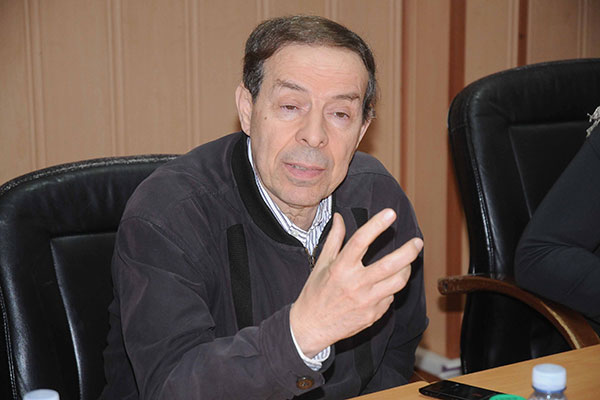
“An inter-ministerial commission must be set up swiftly to intervene on the preventive aspect. For now, there is nothing concrete on the matter,” said Professor Mustapha Khiati, President of the National Foundation for Health Promotion and Research Development (FOREM) in a statement to Echorouk.
According to Professor Khiati, “we are facing a real health challenge. This is a top priority according to the World Health Organization (WHO). The appropriate answer to this potential risk is to work out an adequate and timely response, and not be confined to a lame technical solution. “
Concurrently, Professor Yahia Mekki, head of the Claude-Bernard health department at the University Hospital of Lyon in France, and medical expert from the WHO, considers that all the conditions are met in Algeria for a possible outbreak and spread of the “Zika” Virus.
Contrary to the assurances from the Ministry of Health which recently argued that the mosquito “Aedes aegypti”, responsible for the transmission of this virus is not met in Algeria, Dr Mekki says this mosquito does really exist in Algeria as in other countries. He believes that “stopping the spread of this mosquito is to curtail the risk of damage.”
Without wishing to alarm the national public opinion, Dr Mekki pointed out that “owing to its geographical position, Algeria is a country at risk especially since the virus first appeared in Africa.”
He specified in this line that “the potential threat exists in Algeria and when the conditions are met the disease will spread as a result.”
Health experts recommend, among other things to reduce the risk entailed by “Zika” by duly informing people against mosquitoes, eliminating standing waters and wastewaters, strengthening controls at ports and airports, tightly screening containers, cleaning public markets, ensuring hygiene and sanitation and protecting the border areas.
The “Zika” virus is transmitted, according to the latest scientific advances outlined by Dr Mekki by mosquito bites, but also through blood transfusions and sexual intercourse.