Signs of Crisis Escalate in Morocco on Multiple Fronts
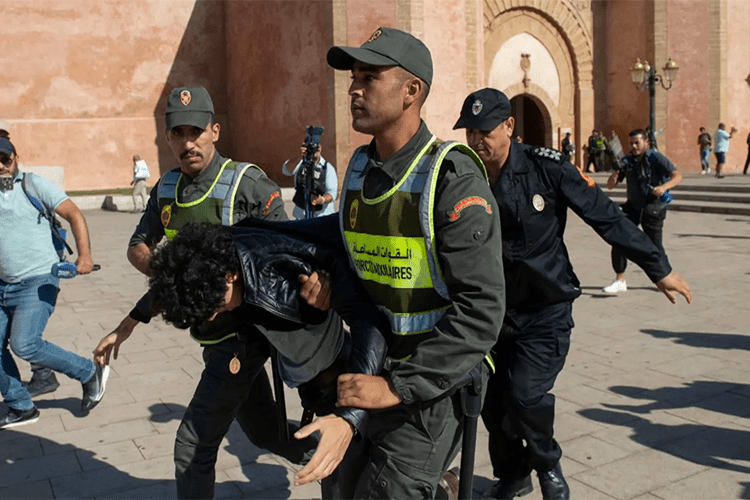
The signs of crisis within Morocco are mounting on multiple fronts, as the Makhzen regime continues to fail to respond to the demands of broad segments of society, resorting instead to a policy of ignoring and stalling, and often resorting to repression and intimidation.
In the latest manifestation of this situation, the Court of Appeal in Oujda issued sentences ranging from three months to five years of imprisonment for dozens of citizens in connection with youth protests. Human rights organisations considered this further evidence of the reliance on a punitive approach in dealing with social protests.
The situation doesn’t end there. Tensions continue to rise in the university environment, with the expulsion of students at Ibn Tofail University in Kenitra sparking widespread anger. This comes amidst accusations that the authorities are targeting student union activity and attempting to subject the university to a repressive security-based approach.
In a statement, the Moroccan Association for Human Rights condemned these decisions, which infringe upon syndical rights within the university.
In the same vein, syndical voices are rising within the higher education sector. The National Union of Higher Education and University Residence Employees, affiliated with the Democratic Confederation of Labour, expressed concern about the unjustified delay in issuing the basic statute for administrative and technical staff, warning against attempts to circumvent this issue by promising salary increases without addressing the core problem.
This situation, according to the statement, reflects the continued policy of procrastination that characterises the handling of social issues and exacerbates the growing discontent among employees.
In parallel, the health training sector has emerged as a major source of tension. Dental students in Casablanca denounced the “serious obstacles” affecting the quality of training and threatening patient safety, due to a severe shortage of medical equipment in university treatment centres.
The students did not hesitate to warn of the repercussions of a draft law that would require them to bear the costs of this equipment, considering it a dangerous setback and a blow to the principle of free education, placing institutional burdens on the students.
For their part, professors at the Faculty of Medicine and Pharmacy in Agadir warned of organisational and managerial deficiencies within the university hospital centre and the potential repercussions of closing a regional hospital. Such a move could disrupt the fragile balance of healthcare services in the region, given the weak administrative efficiency and opaque management – further indicators of the depth of the crisis plaguing public facilities.
In light of this rapidly accumulating crisis, it is clear that the approach of repression and disregard is no longer capable of containing the simmering discontent; rather, it contributes to deepening and widening it. This reflects a genuine crisis of governance and places the Makhzen regime before a precarious reality in which trust is eroding, and the circle of resentment is widening.