Strengthening Algerian-German Cooperation in the Automotive and Energy Sectors
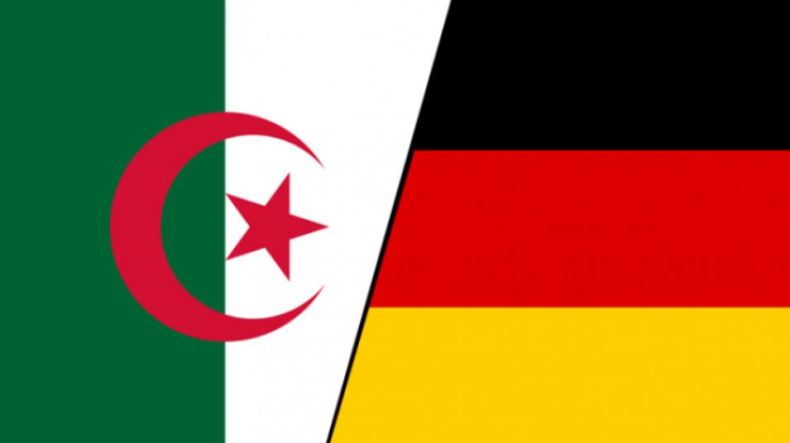
Algeria continues to strengthen its partnerships with major European companies, and this time it is the turn of the German giant, which seems determined to increase its economic presence in Algeria, joining Italy and, to a lesser extent, Spain, which has managed to overcome the crisis. Meanwhile, the French partner is still seeking to regain its lost advantages in Algeria.
Relations between Algeria and Madrid have witnessed significant momentum this week, marked by the signing of an agreement to implement the “DigiEnR” project, which focuses on the digital integration of renewable energy into the national electricity system, in cooperation with the German Agency for International Cooperation (GIZ), according to a statement issued by the Ministry of Energy and Renewable Energies on Tuesday, June 16.
In the same context, the Algerian-German Chamber of Commerce and Industry announced that six German industrial companies will visit Algeria between June 28 and July 3 to explore investment opportunities in the Algerian automotive sector, particularly with regard to establishing an “integrated industrial ecosystem.”
This cooperation is framed by Decree 22-384, which sets the target for local integration within the economy at 30% by the end of 2026. The regulation is being applied in relation to the activities of multinational automotive giant Stellantis in Tafraoui, western Algeria. The two sides are also exploring technology transfer, first- and second-tier partnerships, engineering cooperation, quality certifications, and integrated logistics services.
Commenting on this development, Mohamed Khoudja, former director of the Institute of Political Science and International Relations at the University of Algiers, stated that “Algeria and Berlin are seeking to move beyond the traditional model of commercial partnership toward a geopolitical positioning centered on two crucial issues: Europe’s energy transition — particularly green hydrogen and renewable energies — and digitalization as a tool for reshaping critical infrastructure.”
According to Khoudja, the agreement to implement the “DigiEnR” project between the Ministry of Energy and Renewable Energies and the German Agency for International Cooperation (GIZ) to digitally integrate renewable energy into Algeria’s national electricity system “is not merely a technical project, but rather a step toward redefining Algeria’s position within the European energy security landscape.”
He explained that the agreement aims to develop digital solutions for grid management, improve energy planning tools, and prepare infrastructure to accommodate increasing renewable energy capacities. The project is funded by Germany and technically implemented through GIZ, placing Germany at the center of the modernization of one of Algeria’s most sensitive sovereign infrastructures: the electricity grid.
According to the analyst, this direction aligns with the joint declaration of intent on cooperation in the field of hydrogen and the creation of a bilateral working group, as well as with strategic projects such as the Southern Hydrogen Corridor (“SoutH2 Corridor”) and the Algeria-Europe Hydrogen Alliance (“ALTEH2A”). These initiatives aim to adapt and expand gas pipelines to transport green hydrogen from Algeria toward southern Germany.
As a result, Algeria is gradually shifting from being merely a conventional gas supplier to becoming a partner in Europe’s energy transition system. Meanwhile, Germany is using technical and digital cooperation tools to secure alternative and sustainable energy sources in the post-Russian gas crisis era.
The second dimension, according to Khoudja, is “the emergence of a dense network of economic interests linking Algerian and German economic actors.” This is reflected in the Algerian-German Chamber of Commerce and Industry (AHK Algeria) reaching 700 members in 2026.
This figure demonstrates the expansion of German companies operating in Algeria, as well as Algerian companies becoming integrated into German-European value chains. The relationship is therefore evolving from simple trade exchanges into a broader institutional structure capable of generating joint projects, transferring expertise, and creating soft political momentum in favor of deeper economic cooperation.
The third dimension is “a strategic repositioning of both sides,” Khoudja argues. Algeria is betting on green hydrogen and renewable energies with Germany — and more broadly with Europe — as a means of transitioning from a rent-based economy dependent on oil and gas toward becoming a “green energy exporter” by 2040.
This transformation is supported by European and German commitments to infrastructure development and investment in semi-industrial projects, such as the planned Arzew green hydrogen facility with a capacity of 50 megawatts, western Algeria.
For Germany, Algeria is viewed as part of a broader “energy diversification strategy” aimed at reducing dependence on Russia. However, the objective goes beyond importing gas: it involves building an entire green hydrogen value chain, from production in the southern Mediterranean region to industrial consumption in southern Germany.
The “DigiEnR” project allows Germany not only to strengthen the stability of future renewable energy supplies but also to align Algerian electricity grid standards with European standards, facilitating Algeria’s integration into a Euro-Mediterranean energy space technically and technologically driven by European companies.
The fourth issue concerns the geopolitical dimension of energy digitalization. A project such as “DigiEnR” combines energy and digital technology — two strategic fields at the heart of today’s global competition over sovereignty.
The digitalization of Algeria’s electricity grid introduces a new layer of interdependence with Germany in areas such as software, data management, and control systems. This transforms energy cooperation into a structural partnership involving critical information infrastructure.
Such cooperation could provide Algeria with opportunities to acquire expertise, improve efficiency, and accelerate the integration of renewable energies.
The international relations expert concludes that these projects expand the network of cooperation between Algeria and Germany. Algeria benefits from German expertise, while Germany benefits from greater supply stability and reduced geopolitical risks through deeper institutional ties with Algeria — transforming the country from a mere supplier into a strategic partner.
The Algerian-German rapprochement is becoming increasingly visible, particularly in the economic field, at a time when France’s economic presence in Algeria continues to decline.