The French Ambassador Received A Mandate From His Superiors To Speak About Visas
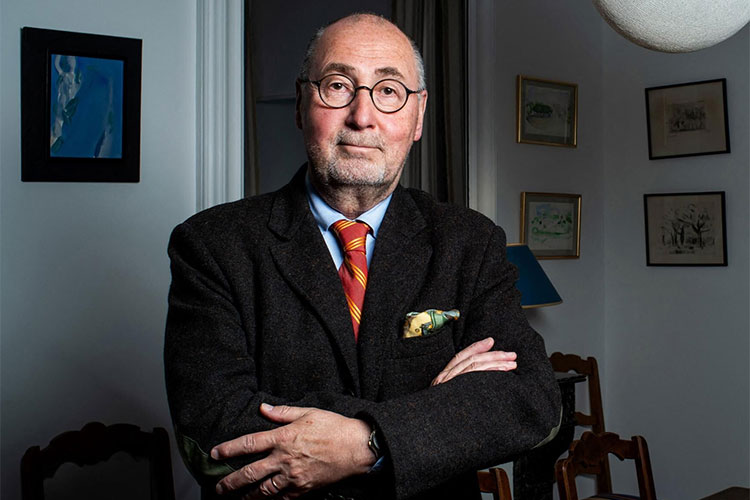
The state of nervousness that characterized the positions of French officials regarding the statements made by the French Ambassador to Algeria, Stephane Romatet, while discussing visas granted to Algerians, revealed that something unknown to the public lies behind this commotion that “demonized” the Ambassador and made him an outcast even by those who appointed him to this position.
However, this secret did not remain hidden for long, and as it has become known to many in Algeria and Paris, the traces of the former French Ambassador, Xavier Driencourt, can be felt to discover that the man is behind every political and media “bombshell”, as is the case for what has become known as the “visa” affair, which seems likely to claim other heads in the near future.
In this regard, the former French Ambassador to Algeria, Xavier Driencourt, dropped a bombshell regarding the “visa controversy” between Algeria and France, confirming that the French Ambassador, Stephane Romatet, when he spoke about his intention to increase the number of visas, did not decide on his own, but rather received a “mandate” from the higher authorities, represented by the French President, Emmanuel Macron.
Driencourt said in a contribution, Wednesday, July 29, 2026, on the website of “Le Journal du Dimanche”, that Ambassador Romatet stated that he “returned to Algeria commissioned by President Macron, in order to put relations between the two countries back on the right track, and to return the number of visas issued to Algerian citizens to pre-crisis levels, i.e., 250,000 visas annually.”
The retired French diplomat explained: “With this seemingly innocent statement, the Ambassador acknowledged two things: first, he confirmed his goal of issuing 250,000 visas from the three French consulates in Algeria; second, he acknowledged receiving this mandate from the President (and therefore from the Ministries of Foreign Affairs and Interior) for this purpose. These two statements are what exposed him to harsh criticism, as well as a correction from the Elysee Palace.”
Immediately after the French Ambassador made those statements, an uproar broke out, and prominent figures in the government and opposition mobilized to attack him. However, what is striking is the campaign he was subjected to by state officials, while opposition criticism remains part of the political practice there.
He was criticized by the Minister Delegate for Europe at the Ministry of Foreign Affairs, Benjamin Haddad, by the Minister of Overseas Territories, Naïma Moutchou, and most strangely by the minister overseeing him, Foreign Minister Jean-Noël Barrot. The matter did not stop there, but even reached the Elysee Palace, where Emmanuel Macron, in a cabinet meeting, tasked the government spokesperson, Maud Bregeon, with refuting the French Ambassador, in an unenviable scene.
In his analysis of this issue, the author of the book “The Double Blindness” wondered: “Why?”, before answering: “Because the issue of visas is an extremely sensitive topic in Algeria, which is no secret to anyone, because the Algerian community in France is the largest of all, and this imposes obligations on Paris that it must fulfill.”
Until now, the French authorities have not announced the dismissal of the Ambassador, nor has the Ambassador himself voluntarily resigned as is customary in a country described as democratic.
This means, among other things, that the French authorities do not believe the Ambassador committed an error justifying his dismissal, nor does the Ambassador believe he committed an error requiring resignation, and therefore he did not. This leads to the hypothesis that what the former Ambassador said is true, which is that the current Ambassador executed what he received from his superiors in Paris.
Here lies the importance of the confirmations issued by President Abdelmadjid Tebboune in his recent meeting with the media, which indicate, among other things, that the storm created by the French Ambassador’s statements about visas is a French-French matter, and that Algeria has no role in it, considering that some might be misled into thinking that Stephane Romatet’s “move” could be misunderstood as having come as a result of suggestions by the host country.
This is what the former French Ambassador debunked by confirming that such statements cannot be issued by the Ambassador without referring back to his superiors in Paris, especially when it comes to a country like Algeria, which has very sensitive relations with the French state.