The French Are Firing The “Coup De Grace” On Bilateral Relations
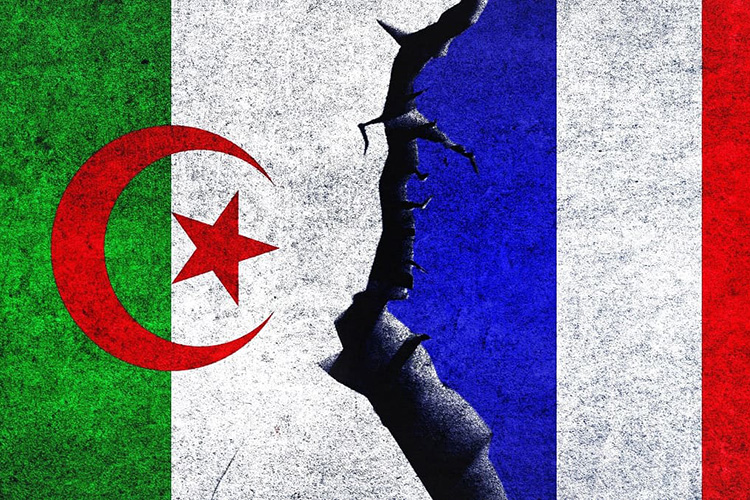
The fragile signs of reconciliation between Algeria and France have collapsed, and the hope of a rapprochement that was not serious from the beginning, especially on the French side, has been set back by pockets of resistance from within the administration of President Emmanuel Macron, led by Interior Minister Bruno Retailleau, who used the Algerian file as a tool to pave his way to the presidency of his right-wing party (the Republicans), in anticipation of what is bigger than his previous bid for the Elysee Palace.
The statement issued by the French Foreign Ministry on Tuesday, April 15, which reiterated Paris’ position on the Western Sahara issue, is the last nail in the coffin of Macron’s policy towards Algeria, because it came at the wrong time and in the wrong direction, exposing the French administration’s poisonous intentions towards Algeria and its vital interests.
“France’s support for the autonomy plan proposed by Morocco in 2007, which enjoys a growing international consensus, is clear and firm. This is the only basis for reaching a just and lasting political solution.” The timing of this statement contains more than one message, because it coincided with a circumstance where the statement had to repair what it had messed up since last summer.
France realizes that the main reason for the tension in its relations with Algeria is due to Macron’s position on the Sahrawi issue, as evidenced by the withdrawal of the Algerian ambassador from Paris following that decision, yet it insisted on going in the wrong direction, unlike Spain, which knew how to contain the dispute over this sensitive file, in a very clever diplomatic way.
The statement revealed beyond any doubt that Paris does not want to lower the level of its provocation towards Algeria. The announcement came in the context of the UN Security Council meeting on Western Sahara, in the midst of an unprecedented escalation between the two countries, characterized by the expulsion by Algeria of 12 French diplomats working at their country’s embassy in Algeria, in response to the imprisonment of an Algerian consular officer in Paris, outside consular norms and against the provisions of the Vienna Convention on Consular Relations of 1963.
Following the visit of French Minister of Europe and Foreign Affairs Jean-Noël Barrot to Algeria, information was leaked about the possibility of a consensus between the two countries on the Saharawi issue.
However, the rise in tension after the French slippage by imprisoning an Algerian consular officer outside the norms in violation of the 1963 convention prompted the French side to pursue a policy of running away from the issue.
Prior to this, French Foreign Minister Jean-Noël Barrot had threatened to escalate tensions against Algeria in an interview with France 2, if it persisted with its decision to expel the 12 French diplomats, whom Algeria considered persona non grata, and asked them to leave the country within 48 hours.
The serious repercussions of the French provocations on bilateral relations began to emerge, the first of which was the decision by the head of the Algerian Economic Renewal Council, Kamel Moula, to cancel a planned visit to France at the invitation of his counterpart, the head of the French business movement MEDEF.
The French Foreign Minister had complained that French economic interests in Algeria were being restricted, and mentioned among the sectors concerned a shipping company, which was advised by the authorities in Paris not to travel to Algeria, indicating a lack of intention on the part of the French side to normalize its relations with Algeria in a logical and equitable manner.
The visit of French Minister of Justice Gerald Moussa Darmanin to Algeria, which was scheduled for next month, is facing an unknown fate, just as the case of Franco-Algerian writer Boualem Sansal sank into the mud of the escalation, as it became a secondary file in the recent French agenda, indicating that this file was only a card to provoke Algeria, as he is not a second-class French citizen.