U.S. Institute of Peace: Algeria Ended State Of Isolation

-
-
511
-
1
Algeria ended the isolation that it experienced in the black decade, as this vision was confirmed based on the return of the Algerian foreign policy to two main bases, which are “Its participation as a key partner in the global war against terrorism after the Sept. 11, 2001 attacks, and the growing role in Africa, especially in the near neighbors”, the United States Carnegie Endowment for International Peace said.
A lengthy report, that was prepared by a researcher who is visiting the Carnegie Middle East Center, Ghanem Yazbek, and which was published on Friday, monitored the developments in Algeria, and focused mainly on the path of reconciliation and the diplomatic work, and for the latter, she wrote I wrote under a sub-title “The end of isolation”, and the role which it played in the process of restoration of peace in Algeria after the black decade, asserting that Bouteflika also revived the country’s foreign policy, and ended the isolation of the country’s diplomacy after the years of terrorism, when the blame was directed to the system because it cancelled the parliamentary elections, and faced an embargo on importing arms, which was imposed by the United States.
“Because of the attacks on the United States, Algeria became, between overnight, an important partner in the fight against terrorism, and succeeded in the Organization of an African Unity to promote the plan to exclude the regulations, which took over the reins of power through coups, as it used its recent experience in the fight against terrorism to pressure towards the adoption a convention by the Organization of African Unity on terrorism”.
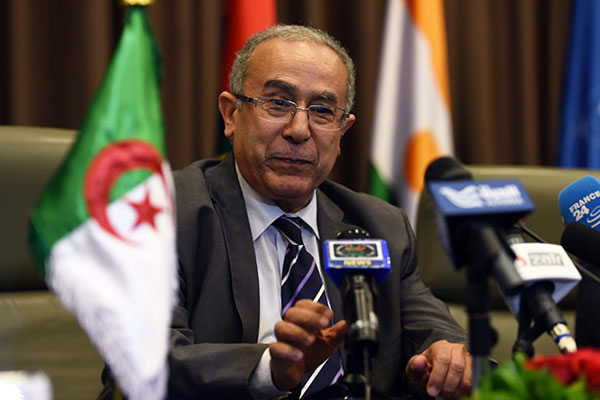
Analysis includes foreign policy actors, who are Abdelkader Messahel and Ramtane Lamamra, and said; “In an indication of the direction that Bouteflika intended to adopt, through establishing an office of the African and Maghreb Affairs at the Foreign Affairs’ Ministry, in the following year, and appointed Messahel, who is a former journalist and political specialist in the African affairs, as its president, likewise, Bouteflika appointed Ramtane Lamamra in September 2013 as Foreign Minister, as he is called by media as “Mr. Africa” and a known diplomat known.
Same study mentioned Algeria’s position on regional issues such as the situation in Tunisia, Libya and Mali.
In conclusion, the researcher ended its study with a prospective glance, and said; “With regard to Algeria’s fixed position in the non-interference, it may also pose problems for the country, considering that the region is changing very quickly, and if Algeria wants to be a factor of stability in a very unstable region, it should review its policy of non-interference in other countries’ affairs.