UN Commissioner for Refugees: Algeria has a long history with liberation movements

الشروق أونلاين
-
-
1279
-
0
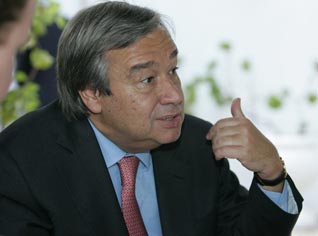
Antonio Manuel De Olivieira
The visit of the UN Commissioner for Refugees Antonio Manuel De Oliviera Guteres to Algeria is raised interest since it is the first of its kind for a top UN official in addition to its humanistic nature, as it aims to supervise the precarious conditions prevailing in the Western Sahara refugees’ camps.
-
-
In a lengthy interview given to “Echourok” the official singled out the role played by the Algerian authorities to support liberation causes cross the world including liberation movements in the Portuguese colonies as well as the support given to the Western Sahara refugees.
-
-
Q: Being the first visit of its kind to Algeria, can you explain the aim of it?
-
-
A: This is my first visit to Algeria as a top UN official though I came here when I was holding other position, that’s why I considered it top important. Being a Portuguese, I was active along with some of my party’s team mates on the Portuguese political scene since they were refugees in Algeria. In addition, Algeria has always stood by the liberation movements in the Portuguese colonies. Let me seize this opportunity to pay tribute to the Algerian people who gave shelter to some of my fellow citizens before returning home to contribute to the democratic process in Portugal.
-
-
Q: Why did you choose to visit the Western Sahara refugees this year?
-
-
A: This community is suffering since more than 30 years, but the Western Sahara cause was overshadowed by other conflicts in the world since everybody talks about Afghanistan and Palestine, but they tend to forget the Western Sahara issue. My duty is to raise the international community’s awareness and shift their focus to look at this cause.
-
-
My visit coincides with the release of a book entitled “The refuge right between the Islamic law and the international refugees’ right: comparative study” written by a group of professors at “Al Azhar”. The book deals with the humanistic way by which Islam deal with refugees.
-
-
Q: What are the Western Sahara people doldrums, and how can the international community make an end to these sufferings? .
-
-
A: The message that I want to send to the Western Sahara people is this one: What can we do to improve the situation? We have to deploy more efforts especially that the Western Sahara cause has been neglected somehow. When I took office, the total financial aid dedicated to the refuges didn’t exceed $ 5 millions a year, we have succeeded to double this sum, though it still not sufficient if we look at reality on the ground. We intend to extend this help and reach $ 12 millions next year but I still believe that this amount is insignificant.
-
-
Q: But why is the Western Sahara people suffering in silence..? Are there pressures from the international community to put aside this cause ?
-
-
A: Frankly speaking… the world agenda today cannot raise one or two issues at the same time according to the media interest, if the cause is not widely treated in major TV channels it sinks into oblivion. That is exactly what happened with this cause leading the decision makers and politicians to forget it because public opinion doesn’t put pressure on them. My visit aims at awaking the public opinion and shifting the focus again to this cause.
-
-
Q: What can you say about the collaboration between the UN Commission for Refugees and the Algerian authorities concerning this issue?
-
-
A: Algeria has assured protection to the refugees and provided help for them, we have to pay homage to the Algerian authorities and express all our gratitude. I have talked with the minister in charge of Maghreban and African affairs Abdelkader Messahel and our collaboration is strong, I’m looking forward for strengthening this collaboration in the future.
-
-
Q: The Palestinian cause is also marginalized by the international community; the right of the Palestinian people to return to their spoiled territories is inalienable, in which way the Commission intends to deal with this issue?
-
-
A: The issue requires a political solution, the Palestinian suffering started in 1948. At that period the UN Commission for Refugees was not created, but once again this question requires a political solution which is not in our competencies.
-