Walid Phares: “America, Europe Made A Big Error By Neglecting Algeria's Black Decade Counter-terrorism”

-
-
2562
-
0
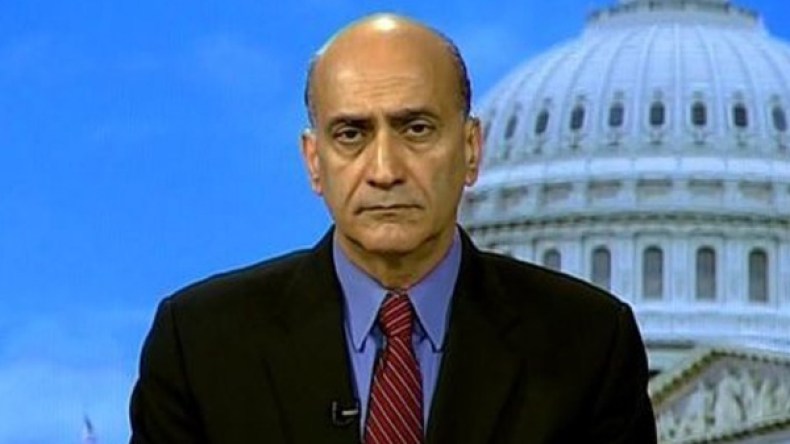
Security developments in the Arab and European regional region, came after the American administration and international alliances fail to eliminate ISIS, Security and Foreign Policy Advisor to the U.S. Congress, Walid Phares, Said in this interview with Echorouk.
“Algeria should be part of the international coalition to counter ISIS threat. America left Algeria alone when leading its fight against terrorism in the nineties”, he asserted.
*New terror attacks hit Brussels. Do you think it’s due to the power of terrorist organizations or to the weakness of the security services in Europe?
– Through the attacks that hit Paris last year, and then the arrests that took place in Europe, and after that the bombings in Brussels, it became clear that the terror cell, whether it comes to ISIS, or al Qaeda, or other radical organizations radical in the Middle East and North Africa, has broad activities in European countries, and this leads me to say that the European and the NATO leaderships should coordinate within Europe to fight against these organizations, and create a cooperation roadmap with North Africa, the Sahel region, and the Middle East, to besiege and counter these organizations, that become more dangerous, and which are stretching more than they did in the past.
*Many questions are asked about ISIS. How did it infiltrated and carried out terror attacks, at least in three continents, meanwhile there are international coalitions against it, the first is led by Washington, the second by Saudi Arabia, and Russia engaged as well. Do you think there is a real will to fight it?
– US-led coalition relies on air strikes in Syria and Iraq, and it made great efforts, but the problem is that this coalition is not a project on the ground, I.e it has no field project that deals with the site that is controlled by the terrorist groups, led by ISIS, and on the other hand it is not carrying out operations with the local force in Syrian territory, while the Islamic coalition, which includes the Kingdom of Saudi Arabia, UAE and other Arab countries, was mainly busy in Yemen, and recently it is trying to put on the ground a force that is capable of performing a joint action against ISIS, and hit the areas that are controlled by the organization.
-I think the problem is that America and the coalition did not implement joint air operations, and there was no coordination, as we know that the Arab League decided to counter ISIS and terrorist organizations, but until today there is no roadmap.
Plus, Obama’s administration had to up its mind since 2014, when ISIS emerged, especially through the development of a regional coalition on the ground in Syria and Iraq, or in the north of the Sahel region, and create an internal front to counter the cells, and play a large and good coordinating work widely that can eliminate these cells.
*The West is accusing Muslims of extremism, but on the other side, it is, led by the U.S. administration, a major cause of feeding extremism, because America occupied Afghanistan and Iraq, and produced a fertile environment for the extremist ideology’s emergence. Could you please explain this idea?
– Terror organizations in the Islamic and Arab world must not justify their attacks on the Western world, under the pretext of defending the Arabs and Muslims, but what was done in Syria and Iraq has nothing to do with the West, in the Sinai, in Libya, Tunisia, and the frequent attacks in Algeria as well.
All of this has nothing to do with the West, this is an assault on the people of this region and its countries. It is true that America has its foreign policy errors, and errors are still ongoing, and these errors were mobilized by regional conflicts, but, talking about millions of people who suffer as a result of America’s actions is not true.
These extremist groups that call themselves “Jihadist” are fighting the West under retaliation to Islam and Muslims, and they are looking for public support by these countries. Therefore, we should not support them. We can criticize the West and the U.S policies’ errors, but we must not give legitimacy and legality for these groups to represent the peoples of the Arab and Islamic region, because they certainly does not.
*You’re well informed of the U.S policy by virtue of your high position in Congress. How does the U.S administration consider Algeria. Is it really a key partner, especially in the field of counter terrorism, or is it just a country that can be exploited for its natural resources?
-National Security is very important in America, and we consider it a priority, and we consider Algeria as an essential and effective partner as well, since Algeria has proven in the nineties, when it confronted the extremist groups alone, and on September,11, there was a massive coordination between several departments, both by the President Bush or Obama’s administrations, and I’m sure whatever the future administration in America will be, whether Republican or Democrat, there would be a continuous coordination and cooperation between the two countries.
It became clear that Algeria is in the international camp against terrorism, and what happened to its citizens and military personnel, is the onslaught of terror against it, now what is required, is a real American-Algerian coordination, on the one hand, and on the other hand, a coordination with the European countries, the Sahel and North Africa.
Coordination should be based on joint action, and each state should do its role in counter terrorism, under a joint role in the framework of a coalition countries’ room to confront extremists.
*You talk about security partnership and foreign alliance. Do you advice the Algerian power of carrying a military action abroad, although it is prohibited by the country’ s Constitution?
We know that the military and political tradition in Algeria prevents the implementation of military operations outside the borders. This is a well-known principal, but I mean something different. I’m talking about the creation of a joint military room and the development of security coordination with neighbouring countries, with Europe and America.
I think that Algeria should go out to the international level in partnership, not to send its troops on behalf of Algeria, and fight outside its borders, this is an Algerian tradition which has nothing wrong, but it can participate in respectable joint units, under the banner of the international coalition, and perhaps even the United Nations, together with African countries, especially since it has a tremendous experience and logistical potential that no country has in North Africa. It can help the international force. I advice it to be involved in a very clear framework, under an international leadership. we call upon Algeria to engage in it.
*U.S armed troops carried out an operation against ISIS in the Libyan Sabratha. Does Washington decide about the military intervention under the pretext of counter terrorism, in light of Algeria’s rejection of foreign military action?
– United States’ action is known, in the final months it did not carried out military action in real terms, I.e any invasive or occupational action, as it happened in Iraq and Afghanistan, and now the Europeans are pressurizing the US administration, in order to help them in a military operation against terrorists in Libya, and here we can ask the following question: If the Libyan army is unable yet, and the international community does not want the involvement of its troops on the ground, except for some special operations, the near neighbouring countries, namely Algeria, Tunisia, and Egypt, which is a very important military power, should decide if they want either to commit themselves to prevent terrorists to penetrate the long border, or to deploy their forces in coordination with the Libyan army, and that after the request of the legitimate government, to counter terrorist groups, because terrorists could reach Libya’s neigbouring countries.
We also know that the national armies do not carry out operations outside the border, but it is best to create a regional project that allows these armies to carry out missions abroad, in the framework of defending the weak brother, and Libya is weak now, in order to help the Libyan armed forces, which are invoking their neighbours.
*There are serious security developments in the recent period, including an attempt to establish the ISIS Emirate at Ben Guerdane, in southern Tunisia, then seizing Stinger missiles by the Algerian forces near the Tunisian border. How could you read these developments, and how does American made dangerous weapons reached terrorists in the region?
-First of all Alhamdoulillah that the Algerian armed forces eliminated the terrorists before the implementation of their criminal plan, especially since they had very dangerous equipment. Second, the American made arms has become a cross-countries and continents, and was purchased from countries in the Middle East, but extremist groups put their hand on it.
In Congress, some of the committees are working on research, audit and investigation on the subject of leaking weapons by US parties for some groups that were considered “moderate” in Libya between 2011 and 2012, but a lot of these military equipment was lost, both in Syria and possibly in other places, and extremist groups may have transferred them to other areas. Which is needed now, is that the U.S administration should resolve the issue of weapons, that should not reach any extremist organization, because it may turn against the US administration and its partners.
On the other and final hand, as we have said, the actual and firm reply, can be made by Libya’s neighbouring countries, which are Algeria, Tunisia, Egypt, and the Sahel region, across the border closure in the face of these extremist groups, and to create a minimum of security and intelligence coordination between these countries, to protect themselves.
*You talked, more than once, about the Algerian armed forces. Do you think Algeria, thanks to its army, is immune from ISIS, and other terrorist organizations like al-Qaeda and the Tawhid and Jihad?
– I think Algeria is a major force in countering extremism, and it must be helped, and enabled to counter these organizations. It is an expert in this area. America and Europe should have helped it in the nineties.
Now the danger is repeated, and America should help Algeria, because ISIS is moving in all directions, and is currently dominating al-Qaeda. It is extending influence in Libya, and it moves in Tunisia and Egypt, and is looking for a foothold in Algiers. Algeria is targeted by ISIS.
*Question is repeatedly asked since the beginning of the so-called Arab Spring, which hit Algeria’s neighbouring countries, like Libya and Tunisia, but Algeria avoid it. Could you tell us why was it impossible to reach Algeria?
-I think, and many other observers as well, that the stiffness of the military and political institution had a significant and powerful role in avoiding the popular movement, and the hardness of the community have contributed to this, the hardness of civil society did not allow extremist forces to destroy the country. In the subject I can say as well, that the relationship between the military and political institutions, and society is considered solid, and this repelled all attempts to create chaos within the country.
There is an intellectual war, before the military war. Civil society sacrificed and countered terrorism and Islamists, and extremists are unable to reach political victories over it, and this a guarantee yet.
*Substantial restructuring touched the military institution, perhaps the most prominent was ending the tasks of intelligence chief General Tawfiq Madine, then the service was finally resolved, and there was a development of security apparatus under the authority of the presidency. How could you describe what is happening in the Algerian military institution?
– It is naturally for the countries of the region, and the countries that face terrorist risks, to cope with the development and growth of the terrorist threat, and the Algerian leadership, in its adjustments and restructuring, at the level of the intelligence and security services, and in the defence system and the security plan, falls within the leadership’s decision to develop according to the evolution of risks, and must confront them with the best ways, and therefore this is an internal affair, and the Algerian citizen should support it, and stand by the side of security and military foundation, because the risk terrorists is large.
*Republican candidate Donald Trump is facing unprecedented and large criticism, and there is a great fear of him in the U.S homeland, and from the Vatican Pope. What prompted you to accept to be his Foreign Policy Advisor?
-This question was asked a lot. Trump is a businessman and is not an ideological person. He did not write books on faith and religion. He is a man who wants to reorganize America, and he wants to communicate with the leaders of the region. He opposed the regime’s change if it does not derive from the intern. He is against extremist groups and sees what leaders of the region do, and what stable leadership think in favour of stability, and countering terrorism.
The problem is that Trump, at the end of last year, made statements that created concern, and laid the concern to the Arab and Muslim public opinion, and in America, the Middle East and North Africa. Trump will modify this speech, to fit with the Arab and Muslim anti-terror concept, and will move to the region and meet with its leaders. He is open-minded, and wants to create a partnership between America and the Arab region, the Gulf and North Africa. His speech will fit with his successes amid the close elections.
*What about Algeria, if he became President of America?
As an adviser, my advice is to be close and supportive of each Arab countries, and Middle East countries that are fighting terrorism, and want to achieve stability, which is his goal as well. Concerning Algeria, I’ll tell him to establish a good dialogue with the Algerian leadership, and provide support of the Algerian armed forces, and assess a strong and effective economic partnership, especially as he was a businessman, and that there would be economic and financial alliances, to boost the role of Algeria in the region.