What is changing in Algeria constitution

الشروق أونلاين
-
-
1108
-
0
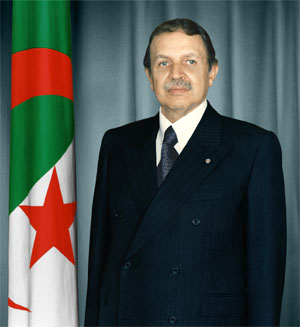
Here is what is to be changed in Algeria constitution. Echorouk reveals the draft bill submitted to parliament for vote next Wednesady. All the substituted articles
-
Article one: Article 5 of the constitution is amended. The national flag and the national anthem are part of the revolution’s gains. They can not be changed
-
They are revolution’s symbols. They are symbols of the republic and are as follows :
-
1- Algeria flag is green and white with a red star and crescent.
-
2- The national anthem as a whole is Qassaman.
-
The law determines the State’s seal.
-
Article 2 : Article 31 bis is added. It is written as follows :
-
Article 31 bis : the state will have to promote women’s political rights through widening their opportunities to be represented in the elected assemblies.
-
An organic law will determine implementation of this law.
-
Article 3 : Article 62 of the constitution is amended and is written as follows:
-
Article 62 : Every citizen has to perform his duties towards the national community.
-
The commitment of the citizen towards his country and the obligatory participation in defending it are permanent sacred duties.
-
The state guaranties respect to the symbols of revolution and martyrs’ souls as well as their relatives’ dignity and to war veterans’.
-
It has also to promote writing history and teaching it to next generations.
-
Article 4 : Article 74 is amended and is written as follows :
-
Article 74 : presidential mandate is 5 years. The president of the republic can be re-elected.
-
Article 5 : Article 77 of the constitution is amended and written as follows :
-
In addition to the prerogatives in other articles of the constitution, the president of the republic is entrusted with the following authorities :
-
Is responsible of the national defence.
-
Determines foreign policy and orientates it.
-
Presides over the ministerial council.
-
Appoints the prime minister and ministers and dismiss them.
-
The president of the republic can delegate some of his prerogatives to the prime minister to preside over cabinet meetings in accordance with article 87 of the constitution.
-
He appoints deputy or deputies to the prime minister to help him in his mission and can dismiss them.
-
He signs presidential decrees.
-
He has the right to issue amnesty and the right to reduce penalties or change them.
-
He can resort to people’s vote about any issue through referendum.
-
He hands over the state’s medals, decorations and merit awards.
-
Article 6: article 79 of the constitution is amended and written as follows :
-
Article 79: The president of the republic appoints the cabinet members after consulting the prime minister.
-
The prime minister implements the president’s program and coordinates for that the cabinet work.
-
The prime minister sets up a plan of action to implement it. He presents it before the ministerial meeting.
-
Article 7: Article 80 of the constitution is amended and written as follows:
-
The prime minister presents his plan of action to the national assembly for approval. The national assembly will open a general debate for that.
-
The prime minister can adjust his plan of action based on this debate concerting the president of the republic.
-
The prime minister presents his plan of action as approved by the national assembly to the council of nation.
-
The council of nation can issue a statement.
-
Article 8: article 81 of the constitution is amended and written as follows :
-
The prime minister will present his resignation to the president of the republic if the national assembly rejected his plan of action.
-
The president of the republic re-appoints a prime minister in the same way.
-
Article 9: article 85 of the constitution is amended and written as follows :
-
Article 85: In addition to the prerogatives clearly defined in other articles of the constitution, the prime minister is entrusted with the following prerogatives :
-
Distributes prerogatives to the cabinet members in accordance with the constitution
-
Watch over implementation of law and organization.
-
Signs executive decrees after the president’s approval.
-
Appoints to state position after president’s approval, in accordance with articles 77 and 78 mentioned earlier.
-
Watch over good run of public administration.
-
Article 10: article 87 of the constitution is amended and written as follows :
-
Article 87: the president of the republic can never delegate his authority of appointing the prime minister and cabinet members as well as the presidents of the constitutional institutions and their members when the constitution does not mention other ways they are appointed.
-
He also can not delegate his authority to resort to referendum and to dissolve the national assembly and to decide early legislative elections and the implementation of articles 77 and 78 and 91 and from 93 to 95 and 97 and 124 and 126 and 127 and 128 of the constitution.
-
Article 11: article 90 of the constitution is amended and written as follows :
-
Article 90 : the cabinet can not be dismissed or reshuffled in the case the president of the republic is unable to undertake his mission or died or resigned until the new president of the republic is in office.
-
The prime minister must resign if he runs of presidential elections. A cabinet member appointed by the head of state will undertake his mission.
-
During the 45 days and 60 days provided in articles 88 and 89, paragraphs 7 and 8 of article 77 and articles 91, 93, 94, 95, 97 of the constitution can not be implemented.
-
During these two periods, articles 91, 93, 94, 95, 97 of the constitution can not be implemented unless parliament approves in a two house session after consulting the constitutional council and the high Security Council.
-
Article 12: article 178 of the constitution is amended and written as follows :
-
Article 178 : Any amendment of the constitution can not change the following :
-
1- the republican character of the state.
-
2- the democratic multi party system.
-
3- Islam as the religion of the state.
-
4- Arabic as the national and official language.
-
5- fundamental liberties, human and citizen’s rights.
-
6- Security and unity of national territory.
-
7- The national flag and the national anthem as symbols of the revolution and the republic.
-
Article 13 : The position of head of government is substituted by the position of prime minister in articles 83, 84, 86, 91, 116, 118, 119, 120, 125, 129, 137, 158 of the constitution.
-
Article 14 : this law pertaining to the amendment of the constitution is published in the official journal of the peoples’ democratic republic of Algeria.