Ayad: authorities pushed FIS for escalation to dissolve it (part 10)

-
-
915
-
0
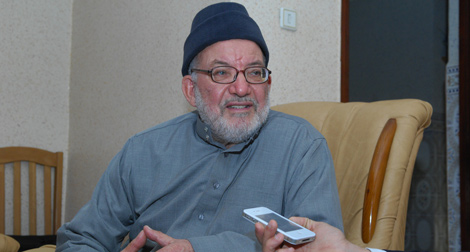
Boudjemaa Ayad, one of Islamist movement founders in Algeria talks to Echorouk about the ban of electoral process in Algeria and his last meeting with Nahnah shortly before his death.
Why did the FIS go on political strike?
The strike came because of internal and external pressure on the FIS command.
What do you mean by pressure?
Internally, some founders of the FIS started complaining about its tendency. They formed a block inside the party and asked for reviewing its plans. Other tendencies started coordination with us. A commission was formed between us and them. We reached a deal and we fixed the date to announce our agreement. Yet, Abbassi surprised us, saying: “you are not allowed to form a block inside the FIS.” We held a second meeting but it was unsuccessful.
Furthermore, authorities pushed the FIS into escalation so that they would have a strong reason to surround the party and dissolve it or arrest its leaders.
Was that the reason behind the strike?
I believe that the FIS did that to foil the attempt of changing its tendency.
What happened during the strike?
It was a tragedy. Transportation was blocked. Clashes took place and thousands of people were arrested. Houses were searched. The FIS was dissolved and its leaders were arrested. Finally, the electoral process was banned.
How was the MSP’s secret office created before the electoral process had been stopped?
The office was established in two phases. The first one was in 1980. The second phase was in 1984. Meetings were held in our homes. New members joined the office.
How was your announced action?
We did not find difficulties in announced activities because we had started political action secretly since a long time. We had experience, organizational structures and human resources. Yet, the ban of the electoral process was a surprise to us.
What was your position toward the ban of the electoral process?
A large part of the group was for the ban and some regional commands of the MSP supported the FIS through an official communiqué. A large debate was triggered between them and us. We wanted to warn the two sides against any deviation or any consequences of escalation.
Why did you quit the MSP?
We quitted because Cheikh Bouslimani was kidnapped, decisions were made out of the movement offices and most of the associations were dissolved.
We were the first who quitted. Meanwhile, there were attempts for reconciliation but they were unsuccessful. Shortly before 1988, Cheikh Nahnah called for a meeting of the party’s members. I told him: “what do you want through this call? Is it a means to catch up the movement situation or is it media promotion?” We agreed on settling the situation before the meeting. He told me: “we will prepare a pilot-study. I will give you a copy once it is done. It’s up to you to add points or criticize it. Then, we will agree on a final version and we will present it in the forthcoming meeting.”
We agreed on having the pilot-study ready within 10 days but three weeks passed and I did not receive it.
I asked Nahnah about that delay. He seemed disappointed and I realized that he was under pressure. A member of the executive office came. Then, Nahnah asked me to talk with that man to catch up the situation. He took a paper and started questioning me. I was about to quarrel with him. Nahnah heard us shouting and he formed a commission, saying: “they will handle the issue once again.”
Unfortunately, that commission was late and we did not reach a result. We had to write a letter.
What did the letter talk about?
We felt responsible for wrongdoings inside the movement. Of them: the absence of consultation on essential issues and positions, unilateral domination and double speech.
“We are sorry to see our movement in this situation … we put you in front of your historical responsibility,” the letter said.
How did the party’s members react to the letter?
Unfortunately, no one reacted and the letter was not read.
Were your attempts over?
We had tried to gather the members who quitted until April 13th, 1999. We issued a communiqué untitled “God does not change people until they change.”
What were the main points in the communiqué?
It says: “Algeria suffers from political fundamentalist endeavors which led the country to a deadlock and bloodshed. This phase was unsuccessful and the MSP was part of it. We have already warned against that and we resisted adventure irresponsible policy adopted by some commands. They were ready to deviate from the authentic line of the Nation’s project.”
Did you try to visit Nahnah when he was sick?
Yes, we visited him two days before he had travelled to France. We formed a delegation from the capital, the east and west to visit him.
How was the visit?
He was lying on his bed at home. I sit next to him. He was so happy to see us that he tried to stand up. He was very tired. Cheikh Said Morsi told me about their previous meeting. They talked about reconciliation. Said told him: “we can work together once again.” It was our last meeting with Cheikh Nahnah. We kept following its news until we heard about his death.