A Book Unveiling France’s Deprivation Of Algerians’ Political Rights
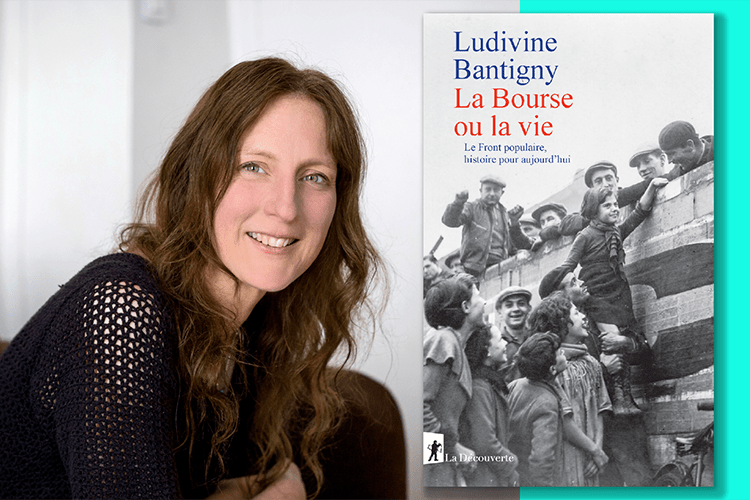
A book on French colonialism, published this month, revealed how French politicians dealt with their former colonies, especially Algeria, which is considered the country most affected by heinous colonial practices. The author focused on the tricks French politicians used to marginalize the peoples of the colonies and exclude them from participating in elections and thus entering French state institutions.
The book, titled “The Stock Exchange or Life: The Popular Front, History of Today,” published by “La Découverte, April 2026,” by historian Ludivine Bantigny, addresses a period in the life of the French state, or the phase when the “Popular Front” ruled, which witnessed the growth of liberation awareness among Algerians, led by the leader of the Algerian National Movement, Messali Hadj.
The “North African Star” party, founded by Algerian activists in the 1920s before Messali Hadj took over its leadership, was dissolved by the “Popular Front” in 1937, after French authorities became convinced that the party’s radical orientations, which introduced ideas unprecedented in the political engagement of Algerian activists with French colonialism, were a threat.
“Echorouk” reviewed excerpts from this book, which touched upon the challenges facing the French colonial empire before the outbreak of World War II. The author paused at what she called “the duality of a project aimed at achieving progress, but which reproduces the colonial hierarchy.”
Ludivine Bantigny quoted Larbi Tahrat, the delegate of the Constantine Governorate to the French Council, as saying: “There can be no sincere cooperation between two peoples treated differently.”
She added: “This observation, according to the author, aroused distrust in the ruling party, as French politicians had always had financial interests in the colonies, and reinforced the imperial system, where freedoms were violated daily and trampled by corruption, while the inhabitants were dispossessed of their lands, their property plundered, and their resources seized and confiscated for the benefit of oligarchies.”
In response to the Algerian delegate’s words, the socialists promised a break with the past, granted amnesty to convicts, abolished exceptional regimes, provided education for all children, initiated major public works projects, postponed agricultural debt payments, established a fund for the unemployed, and opened up freedoms and fully implemented social legislation.
It was decided to “extract the maximum social justice and human potential from the colonial situation,” according to the same source.
Ludivine Bantigny wrote in the book: “Under the grip of colonial domination, the voice of the inhabitants is almost unheard, because institutions grant the colonies only minimal representation, through limited councils where indigenous people are clearly absent. Within its empire, France abandoned the declared universality of human rights: indigenous people are excluded from citizenship, a fundamental inequality that contradicts the principles of republican civil law. Through a special system, the colonies escape laws and common law in the name of local needs.”
Colonial officials, according to the author, also concentrated most of the power in their hands, in the absence of any real public debate on the matter. This system was justified by the idea that colonized peoples were not yet capable of enjoying the freedoms of the mother country, based on discriminatory racist ideas with no ethical basis.
The book “The Stock Exchange or Life: The Popular Front, History of Today” included some Popular Front figures who were tasked with managing the colonies’ affairs, most notably Maurice Violette, acting Minister of Colonies during Marius Moutet’s leave. She stated that he was a man of his time, meaning he was imbued with colonial thought.
The author did not mention a central event that Algeria experienced during the Popular Front era and which caused a change in Algerian awareness against France, namely the convening of the Islamic Congress in 1936, where an Algerian delegation led by Sheikh Abdelhamid Ben Badis and Dr. Ben Djelloul traveled to Paris on July 23, 1936, and met with French Prime Minister Léon Blum, handing him what was called the Charter of Demands of the Muslim Algerian People, but the French authorities did not respond to it.