Additional Gas Supplies to Partners Will Be at Current Prices
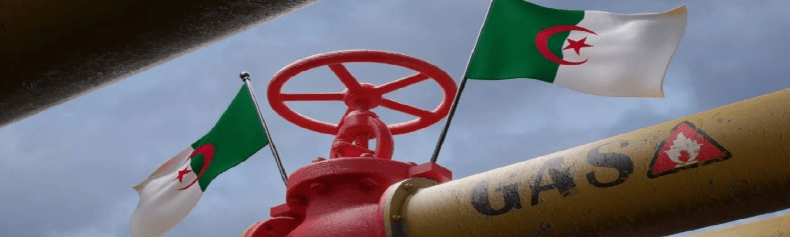
The potential repercussions of the ongoing war in the Middle East on Algeria’s energy sector show that if European partners want additional quantities of Algerian gas via pipeline, they will be forced to negotiate with Sonatrach at current international market prices, not the old prices stipulated in long-term contracts, Energy expert Baghdad Mendouche said.
In this context, expert Mendouche told Echorouk that closing the Strait of Hormuz would lead to a 20 million-barrel-per-day shortage in global supply, which currently stands at 100 million barrels per day. He explained that Iraq, for example, transits 90% of its production through the strait, while approximately 75% of Saudi Arabia’s production also passes through it.
Given the high demand for energy and crude oil, and the fact that Algerian crude is not affected by the Strait of Hormuz, the expert added that Algeria has always respected its allocated quotas within the OPEC+ alliance. Therefore, it is unlikely that Algeria will increase its crude oil production beyond the ceiling set by the alliance. He explained that adhering to these quotas is more of a moral obligation than a legal one, and that Algeria’s respect for these decisions has earned it the respect of all members of the organisation and positions it as a reliable partner.
According to the expert, Brent crude opened at $81 per barrel on Tuesday, up approximately $12 in just one week. He emphasised that the continued closure of the Strait of Hormuz could push the price of Brent crude to between $120 and $150, and possibly even reach $200, given the supply shortages and the risks to oil and gas tankers in the region, particularly in the Middle East, where they could be sunk, attacked, or destroyed.
Regarding Algerian oil, the analyst, who previously served as general manager of a Sonatrach subsidiary, pointed out that Algerian oil, known as “Sahara Blend,” is among the best light and ultra-light crudes globally. Its premium value ranges from $2 to $6 above Brent crude, depending on supply and demand, meaning that Algerian oil has approached $90 per barrel.
Mendouche explained that demand for this oil is high, especially after the disruption of production in part of Saudi Arabia due to attacks on the Ras Tanura refinery. This led to a shortage of oil for fuel production, in addition to a shortage of fuel exported from Saudi Arabia via the Strait of Hormuz. He pointed out that Saudi Arabia has an East-West pipeline that reaches the Red Sea, but it only allows the transport of 3 million barrels per day, which does not cover the previous quantities that were transported through the Strait of Hormuz, amounting to 20 million barrels per day.
Regarding natural gas, the expert explained that Qatar was forced to shut down its gas facilities, including liquefaction plants and wells, despite exporting approximately 81 million tons of liquefied natural gas (LNG) annually through the Strait of Hormuz. This led to an immediate price surge.
The expert confirmed that Qatar’s decision to close its gas export facilities led to a more than 50% increase in gas prices. He noted that the price of 1 megawatt-hour was $28 in December 2025 and rose to $42 at the beginning of February 2026, with expectations that it could reach $100 if the current situation persists.
Regarding Algerian gas, the former Sonatrach executive explained that Algeria is considered an alternative among other countries, but it cannot meet the full demand that was previously generated by Qatar, which produced 80 million tons annually. He indicated that Sonatrach will likely be asked to increase its LNG (liquefied natural gas) volumes or pipeline capacity.
The spokesperson indicated that Algeria has seven LNG carriers with capacities ranging from 45,000 to 127,000 cubic meters, with the larger capacity allocated to distant customers, particularly Asian ones like China. He noted that Europeans might request additional LNG supplies from Algeria as an alternative, given their previous imports from Qatar, especially considering the very high prices of LNG from the United States.
An energy expert indicated that Sonatrach is prepared to supply some Arab countries, such as Egypt, Jordan, and possibly Lebanon, to compensate for any potential shortfall in Qatari liquefied natural gas (LNG). He emphasised, however, that these quantities are small compared to the needs of major consumers in the European Union, China, India, and Japan.
Regarding exports via pipelines to both Italy and Spain, the spokesperson explained that Italy exceeded its gas needs in 2025 by a total of 27 billion cubic meters, with an additional potential of about 5 billion cubic meters via the Transmed (Enrico Mattei) pipeline, in addition to 3 or 4 billion cubic meters via the Medgaz pipeline to Spain and Portugal.