Algerian Diplomacy Steals the Headlines in Africa
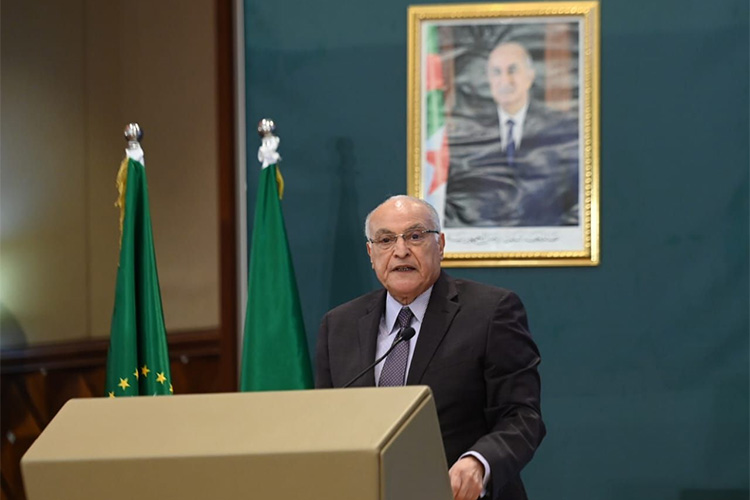
The issues of historical justice and regional peace and security dominated the African diplomatic scene this week, with Algeria serving as a pivotal meeting point for the continent by hosting two significant events.
The first was a conference on criminalising colonialism in Africa, held under the auspices of President Abdelmadjid Tebboune. The second event was part of the “Oran Process,” an annual high-level forum that delves deeply into issues related to peace and security in Africa.
The event in Algeria this week was not merely an academic gathering, but a high-level platform that brought together a select group of African ministers, legal experts, and historians aiming to forge a unified and comprehensive African position on critical issues affecting the very existence and dignity of the continent’s peoples.
The high level of representation and strong official presence of senior African officials clearly demonstrates the strategic importance of the two meetings. Algeria hosted nearly ten foreign ministers from influential countries on the continent, including the Ivory Coast, Botswana, Togo, Namibia, Angola, the Sahrawi Arab Democratic Republic, and Tunisia, in addition to a large number of deputy foreign ministers from countries such as Ghana, Liberia, Somalia, Sierra Leone, Egypt, and South Africa.
Beyond the high-level representation, Algeria organised these two prominent events within the official frameworks and structures of the African Union and in accordance with the agenda of this regional bloc, which officially adopted the “Oran Process” in 2013 as a central forum for discussing peace and security in Africa. This explains the presence of senior African Union officials, led by the African Union Commissioner for Political Affairs, Peace and Security, Bankole Adeoye, alongside the United Nations Assistant Secretary-General for Peacekeeping Operations, Jean-Pierre La Croix, and the UN Deputy Secretary-General and Permanent Representative to the African Union.
By organizing this dual event, Algeria affirms that its diplomatic weight allows it to truly establish itself as a leading force uniting Africans, enabling it to transform from a significant regional player into an architect reshaping the map of African priorities, particularly by linking its revolutionary past through the issue of “historical justice” with the present in discussions on peace and security in Africa.
In other words, Algerian diplomacy has succeeded in building a bridge connecting Africa to its past struggles for a future that guarantees African sovereignty in its political decisions.
Algeria, drawing on its rich revolutionary and historical legacy, understands that true sovereignty begins with restoring memory and rectifying historical injustices. Its success in internationalising the issue of criminalising colonialism and adopting the “Algiers Declaration” is not merely a symbolic victory, but a diplomatic act that places Algeria at the forefront of the battle for historical memory, aiming to end dependence on the colonial past and empower Africans to exercise their complete sovereignty and African identity.
In contrast to the demand for historical justice, Algeria is positioning itself as a guarantor of stability on the continent through its commitment to peace and security. This is underscored annually by the Oran Process, which emphasises the need for African solutions to African problems, free from external interference, and the activation of regional coordination mechanisms to address transnational challenges such as terrorism and organised crime.
Based on these facts, it is clear that Algeria enjoys considerable respect on the African stage and its voice is heard by its African brothers, contrary to the narrative promoted by certain hostile circles. These circles attempted to divert attention by organising a local meeting in Morocco under the title “Victims of Terrorism in Africa.” However, this manoeuvre to overshadow the “Algiers Conference on Criminalising Colonialism in Africa” and the “Oran Process” failed miserably, both in form and substance. In form, the failure was evident in the low level of representation and participation by African states, as confirmed by the reluctance of influential countries to engage in this superficial, merely artificial gathering.
In terms of content, the Kingdom of Morocco lacks the experience and mechanisms to become a continental reference in countering terrorism and preserving regional security. Addressing terrorist threats requires a political, legal, and even military environment that the Rabat meeting does not provide, which confirms once again that the latter was merely a failed regional attempt to divert attention from Algeria’s pivotal role in shaping the African agenda.