Benjamin Stora: Algerian-French Relations Will Never Return to Their Pre-2024 Situation
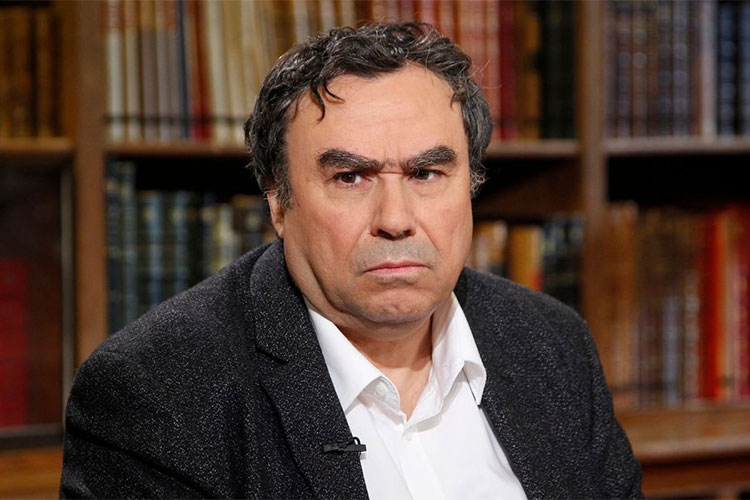
No matter how much Algerian-French relations improve, they cannot return to the level they were at before the summer of 2024, historian and head of the French committee for the memory, Benjamin Stora, said.
Stora accused certain French parties of using the memory issue as a “commercial commodity” in the political conflicts within the French state apparatus.
Benjamin Stora explained that Macron had made “some progress on the issue of memory” by acknowledging the French state’s responsibility in the assassinations of some figures of the Algerian War of Independence, such as the martyr Larbi Ben Mhidi and Ali Boumendjel, as well as figures of other nationalities who supported the revolution, like the activist Maurice Audin. He also noted the opening of the French archives and the commemoration of the October 17, 1961, protests. However, he added that this remained insufficient.
“Progress can be made on some issues, such as security, but we must be cautious. We cannot, under any circumstances, return to the pre-summer 2024 situation, because the Algerians were deeply disappointed by that step.” He was implicitly referring to the letter sent by French President Emmanuel Macron to Moroccan King Mohammed VI on July 30, 2024, in which he affirmed Paris’s support for the Moroccan regime’s alleged sovereignty over the occupied Sahrawi territories.
French Interior Minister Laurent Nuñez reiterated in a press statement on Thursday that he remains ready to travel to Algeria to discuss outstanding issues between the two countries, at the invitation of his Algerian counterpart, Saïd Sayoud. However, the visit’s date has not yet been set, and French media sources indicate it will not take place before the end of this month, suggesting potential obstacles.
The head of the French committee for memory, speaking on the French public television program “C à Vous” on Thursday evening, criticised those who claim Algeria is using the memory file as a “commercial commodity” for political gain. He explained that this file is extremely sensitive for the Algerian people, contrary to what some in France portray it to be, because 132 years of occupation have left real cultural and political scars that are difficult to overcome quickly.
The advisor on memory at the Élysée Palace called for “a complete rebuilding of relations between Algeria and Paris, politically and economically, but also on the level of memory,” because “a thorny and difficult issue cannot be resolved in two or three years, and a great responsibility lies with France, because millions of Algerians live in France.”
Stora said he encountered this difficulty while preparing the report on historical memory that he submitted to the French presidency in 2021. He revealed a petition signed by the descendants of Harkis to prevent the commemoration of Gisèle Halimi, the French lawyer who championed the Algerian cause. This was in response to the aforementioned report, despite 60 years having passed since the end of the war. According to Benjamin Stora, this indicates that the scars of the past do not disappear in one or two generations. This requires a specific kind of demagoguery, taught in schools, cinema, and television—a trend that the French president, Stora, added, began in 2020 and was completely abandoned in 2024 after siding with the Moroccan regime in the Western Sahara conflict.
The expert on Algerian-French relations stated that the French side is also using the memory issue politically, and asserted that the right-wing and far-right parties, which to this day still bring up the topic of Algeria, do so in the context of lamenting the loss of a part of French territory, considering that Algeria was occupied and administratively attached to the French state, and not as is the case for both Tunisia and the Kingdom of Morocco, which were merely French protectorates.